

Old Lyme Zoning Survey Finds Support for Flexibility, Not Major Change
Residents want to preserve Old Lyme’s small-town feel by allowing accessory apartments, limiting data centers and ensuring a say in the future of Halls Road.
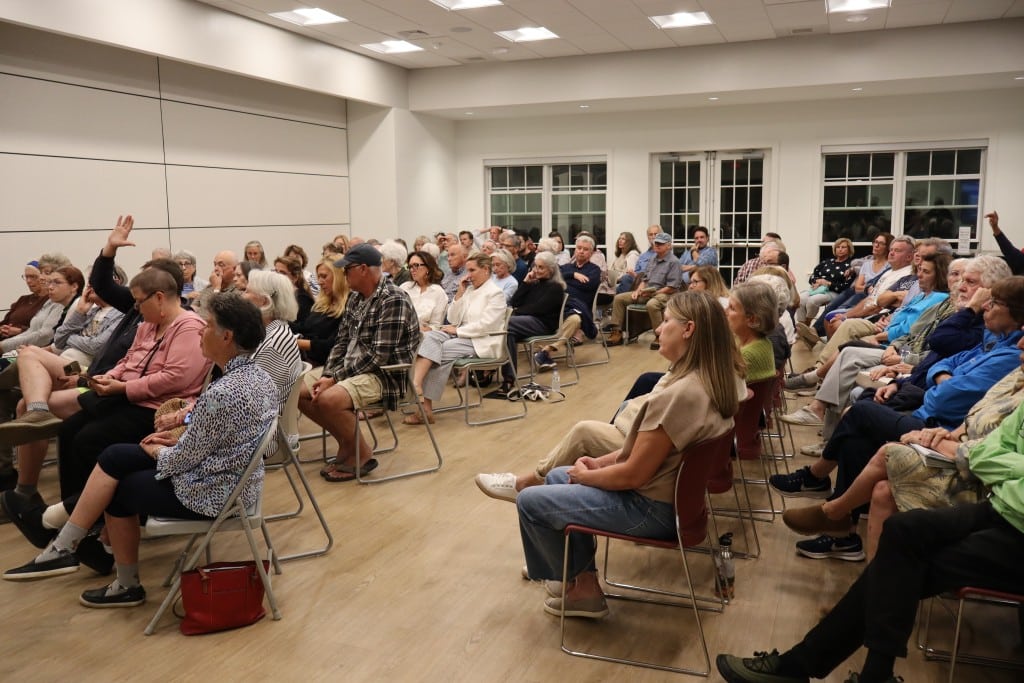
OLD LYME, CT – While residents of Old Lyme want the historic character of the town preserved, they also want to make it easier to get the go-ahead to install apartments for their aging parents.
More flexibility in the permit process for accessory or in-law apartments is a recurring theme in responses to the 2026 Zoning Update Survey.
The survey was completed Sept. 18.
In an Oct. 1 summary of the results, town officials noted that support for preserving Old Lyme’s natural, small-town feel and making regulations more flexible, understandable and consistently administered were top concerns.
The survey will be used to guide an ongoing, comprehensive rewrite of zoning regulations, Land Use Coordinator Eric Knapp said in a phone call Tuesday.
In total, 962 people responded to the survey, which was available online or at Town Hall, Knapp said.
He noted the town has 7,700 residents, some of whom live there all year and others who are seasonal. Most respondents have lived in the town for around 20 years and are about 60 years old, which Knapp said was not unusual.
“Most of the people who showed up at the last community forum were older,” he said. “People who show up in Old Lyme tend to be older.”
As part of the rewrite process, he expects the Zoning Commission to address concerns about tight rules around accessory apartments.
“We have, as of right now, probably the most restrictive accessory apartment regulations in the state of Connecticut,” Knapp said. “So there’s definitely pressure to loosen those rules.”
The town a few years ago opted out of the state law requiring municipalities to allow accessory apartments known in statutory parlance as accessory dwelling units (ADUs). Knapp said the state statute was very permissive and would be a radical change from the existing regulations.
Since the town was not doing a rewrite at the time and had no community input, officials didn’t want to make such a change without input, according to Knapp. Now there’s a better opportunity to come up with something more “Old Lyme-sensitive,” he said.
He noted that while the survey points to the need to relax the restrictions, there is equal pressure not to increase crowding or traffic in already dense areas. He said respondents were clear that restrictions should only be eased in rural areas.
“If you have an acre or two of land, you can probably add an apartment and your neighbor is probably not going to notice,” he said.
Another often-relayed viewpoint in the survey was opposition to data centers.
Data centers contain a lot of computer power for artificial intelligence and intensive computer uses, Knapp said. Because the computers generate heat, they require a lot of cooling, and that takes water.
In Old Lyme, there is already limited water.
“The concern is you’re going to take clean water and turn it dirty to cool computers,” he said. “Many communities don’t think that’s a good use of clean water.”
There are no data centers in the town and no zone where they could go, he said. In addition, there are no areas of town suited to them as they require a great deal of space and water and most of the town relies on well water.
Still, he said the rewrite will likely include a prohibition on data centers.
“I’m not sure there’s any imminent threat that we would get a data center,” he said. “But, if that’s what people are afraid of, we can certainly make sure that’s addressed.”
Another recurring worry was “that forces outside of Old Lyme,” such as the state of Connecticut, are intruding on life in the town, Knapp said.
Residents are happy with the way things are going and want to maintain control of their lifestyle, he said.
Last year, the state law known as Public Act 25-1 was passed, Knapp said. The law is intended to make it more difficult for officials to use parking requirements as a means to prevent residential development, according to Knapp.
“You’re allowed to create two carve-out zones where you still consider parking,” he said. “That’s not something that the town would’ve done itself, obviously.”
Knapp said the state wants more residential development and is making it more difficult for municipalities to deny projects.
“I think that there is a sense that the state is putting its finger on the scale here,” he said.
Another frequently raised concern was about Halls Road.
With the Big Y supermarket, Dunkin and Andy’s Deli & Market, Halls Road is a major commercial strip in the town. The area dates back to the mid-1900s and is showing its age, Knapp said.
While folks are concerned the centers are not current, they also have fears about how the area could be transformed, Knapp said. They don’t want apartments, a hotel or a big parking lot.
The defunct Halls Road Improvements Committee proposed bringing buildings closer to the road to make the area more walkable and wanted to add residential spaces, but the proposal led to widespread opposition and was not adopted.
Now, residents are concerned because the two shopping centers have recently been sold, he said.
“There’s a sense that something might happen and there’s an unease,” Knapp said.
He recalled a couple of informal conversations before the plazas changed hands, but said no one has come to him with definitive plans for the shopping centers.
Overall, Knapp said the survey indicated that people are generally happy with what the town offers but would like to see more opportunities for community use, such as restaurants where folks can gather and walkable downtown areas.
“I think there was some sense that we could have more of that here to create more of a sense of community,” he said.
The town has hosted three public sessions on the upcoming rewrite of zoning regulations, Knapp said. One was on environmental regulations and one on residential regulations. The most recent, which was held in September, was on commercial and industrial regulations.
The sessions have grown in popularity from about 30 people at the first to 300 attendees at the last, according to Knapp.
“There’s been this building sense of interest in the regulations change,” Knapp said.
The survey results will factor into the updated regulations.
“We want to make sure the regulations reflect the priorities of Old Lyme,” Knapp said. “The goal of all this is to try and listen.”
Earlier this year, the initial phase of the rewrite process was completed. Regulations were updated for the first time in 25 years to clean up outdated language, streamline the format and keep current with state laws. Next is creating new regulations, which Knapp expects to take some time.
The rewrite will start this fall and likely won’t be ready for a vote until the middle of next year, he said.
Related Articles

Berke Wins as Campbell Falls Short in Third Region 18 School Board Bid
Democrat Devin Berke defeated Republican Brandy Campbell in Tuesday’s special election, extending the Democratic Party’s hold on all nine seats.

Lyme’s Lisa Holmes Takes Farmers’ Stories From Field to Film
A documentary from Lyme resident Lisa Holmes digs into the challenges facing independent farmers and the changing landscape of American agriculture.
Shoemaker Overrides Historic District Commission Denial With Blue and Gold Star Memorials at Old Lyme Town Hall
Shoemaker said she is standing up for veterans by adding the markers to the military monument. The commission said they belong near the ground in a garden.
Comments (0)
There are no comments on this article.