

Old Lyme Residents Grapple With How to Preserve Identity While Planning for Housing Change
Residents weighing the future of residential development at a workshop this week debated whether protecting the town’s identity means resisting change or guiding it.
OLD LYME, CT – Questions about change in a town that prides itself on staying the same didn’t yield easy answers this week for the consultants charged with guiding an overhaul of the local zoning regulations.
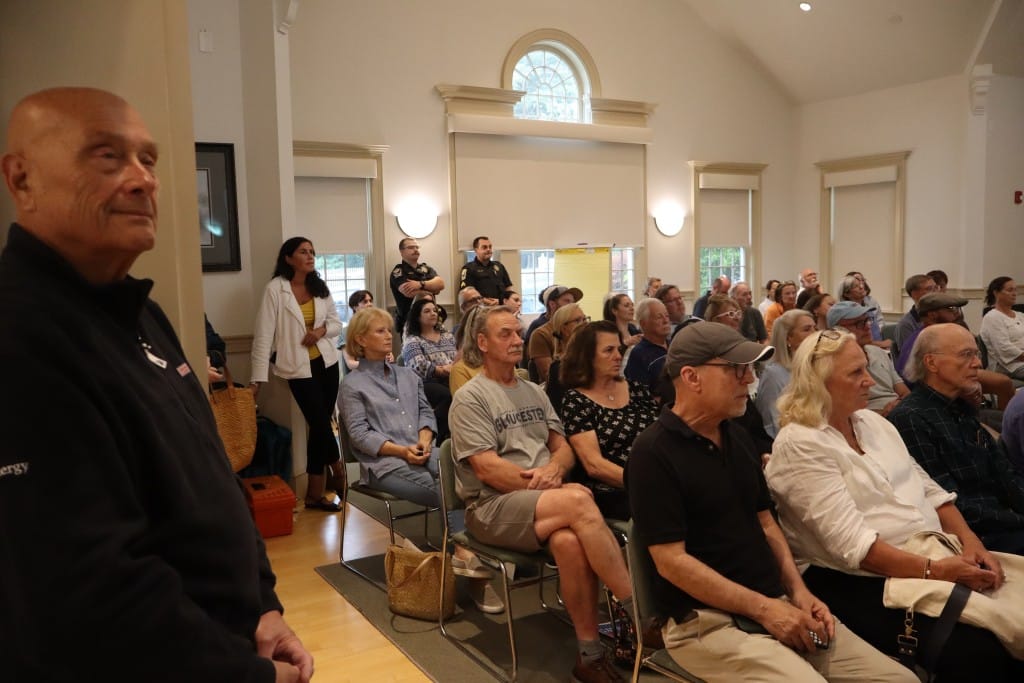
Eighty-six residents filled the Town Hall meeting room Wednesday for a zoning workshop to discuss the future of housing in town. Against the backdrop of outdated local regulations combined with state efforts to address Connecticut’s housing shortage, consultants from IMEG Corporation heard from residents concerned that too much development could turn Old Lyme into another East Lyme or Old Saybrook.
A central question emerged over the course of the two-hour workshop: whether preserving what makes Old Lyme unique requires resisting change or steering it.
During one of three breakout sessions, lead consultant Francisco Gomes asked residents what they wanted for their community.
One resident wanted “the state to leave us alone,” while another wanted “nothing to change.”
Another distanced himself from the idea of staying the same.
“I think we should have a bit of change,” the resident said. “My concern is that we don’t have enough affordable housing. I’d like my kids to come back here one day. There’s no chance of that right now.”
The idea garnered support from residents who suggested the current options largely ignore younger adults and older adults who don’t need single-family homes on large lots. There was broad support for senior housing, as well as for easing restrictions that prevent some residents from renting out accessory apartments such as carriage houses and in-law units.
The large turnout was partly driven by tension over a contested Zoning Commission vacancy earlier this month, as well as broader concerns about state housing mandates.
A similar-sized crowd packed the July 13 Board of Selectmen meeting, where former First Selectwoman Bonnie Reemsnyder, a Democrat, won appointment to the seat over six-year alternate Michael Barnes, unaffiliated.
At Wednesday’s workshop, former Republican Selectwoman Jude Read spoke up from the audience to advise Gomes to prepare for a larger crowd at future workshops on other zoning topics, including commercial development.
“People are starting to pay more attention,” Read said.
Two uniformed police officers stood at the back as the event unfolded. First Selectwoman Martha Shoemaker on Friday said officers are typically present when larger crowds are anticipated in case attendance exceeds capacity.
By the Numbers
An informal survey of those in the room, limited by 50 electronic polling devices shared among 80-plus attendees, showed 60% of respondents had lived in town for more than 20 years.
When it came to whether the town needs more housing overall, 48% clicked yes and 48% clicked no. Four percent were undecided.
While 54% of residents said the town needs a greater diversity of housing types, a visual preference exercise revealed widespread disapproval of any type of housing that veered from traditional single-family homes on large lots.
Respondents were more decisive about what they didn’t like than what they did.
The 1 to 5 voting scale spanned “not good” at 1 to “I like it” at 5.
A photo of a high-density, three-story apartment-style building in Brookfield designed to look like a barn drew laughs and a 91% “not good” rating, while a rowhouse-style development with nine connected rooflines received an 85% negative rating.
A traditional single-family farmhouse-style home and a Cape Cod surrounded by trees received the strongest approval, earning the top “I like it” rating from 53% and 50% of respondents, respectively.
The clearest consensus in a series of policy questions emerged around accessory dwelling units, with 69% of attendees supporting regulatory changes to allow more of the small, independent living units located on the same lots as single-family homes. A similar majority, 66%, wanted development in coastal areas more restricted.
Attendees were largely skeptical of density: 54% opposed allowing multi-family housing in more locations, and 53% opposed more mixed-use development.
8-30g
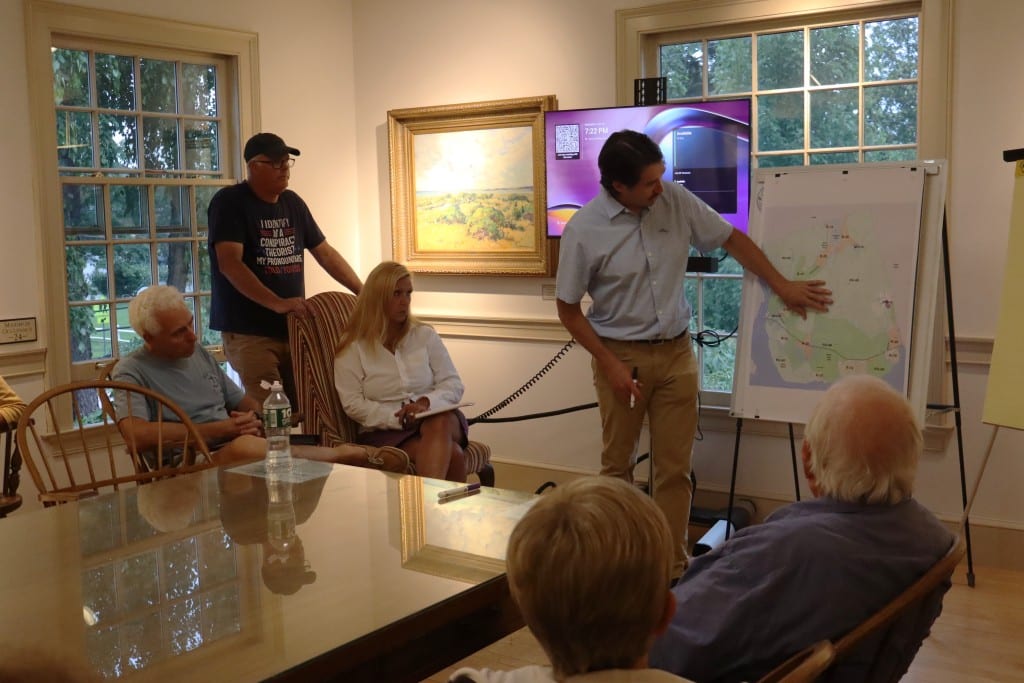
Residents in the breakout session led by Gomes expressed frustration with a state law that allows developers to bypass local zoning rules in towns that do not have 10% of their housing stock designated as affordable. It’s a threshold they said Old Lyme is unlikely to reach.
Efforts by the state over the past three decades to promote affordable housing have relied heavily on the statute, known as 8-30g, which makes it possible for developers to sue the town if their plans for affordable housing are rejected. The burden of proof in such cases shifts to the municipality to show the risk to public health or safety outweighs the need for affordable housing.
The earliest iteration of the law went into effect in 1990 as a response to rising housing costs and limited supply. Lawmakers then and now argued that restrictive zoning in many communities contributed to a shortage of affordable housing options.
Municipalities are beholden to the requirements of 8-30g until 10% of their housing stock is deed restricted as affordable. Once the threshold is met, developers no longer get an automatic court appeal when they put forth plans that don’t meet zoning regulations.
According to the most recent list published by the state Department of Housing, 81 housing units in Old Lyme are considered affordable by state standards. That amounted to 1.62% of the town’s 4,988 units in 2025. Only 21 of the state’s 169 municipalities have a lower percentage of affordable housing – including Lyme at 0.90%, North Stonington at 1.39% and Haddam at 1.53%.
Based on those numbers and assuming only affordable housing units were built, the town would need to add 464 units to reach 10%. But affordable housing developments often consist of market rate units as well.
Gomes acknowledged that while adding market rate and affordable options may help stabilize prices, adding market rate units can make it harder to reach the 10% goal because affordable units become a smaller percentage of the overall housing stock.
A moratorium exempts municipalities from the provisions of 8-30g for four years if officials demonstrate sufficient progress since the law’s implementation or their last moratorium. The intent is to give towns time to pursue affordable housing on their own terms rather than waiting for developers to come in with proposals that may not align with local preferences.
Teri Lewis, a real estate agent and former co-chair of the Harbor Management Commission, was doubtful the town would ever achieve the 10% threshold.
Gomes didn’t disagree.
“In communities like Old Lyme, it’s unlikely, but it doesn’t mean there isn’t a need for more housing that’s affordable. It’s just that 10% is way off and difficult for communities like Old Lyme to achieve,” he said.
Lewis said she was not opposed to affordable housing, but questioned what she saw as a loss of local zoning control through laws like 8-30g.
“I’m just trying to envision where or how somebody can override everything that we’re trying to do here in Old Lyme and those developers can just take us to the next level,” Lewis said.
The statement resonated with other attendees, like one who asked “What’s the point of zoning?” and another who questioned the state’s motivation: “What’s this all about? Why are you doing this?”
Guiding Change
Some participants argued that Old Lyme should create opportunities for modest housing growth to retain greater control over future development.
Resident Mike Hansen, who was elected to the Region 18 Board of Education in November, suggested the town could encourage smaller-scale, community-oriented housing designed to fit Old Lyme’s existing neighborhoods rather than risk larger projects proposed by developers under 8-30g.
He described clusters of duplexes built around shared green spaces and said the town should consider ways to attract development that reflects community values.
“If we proactively, as the town, invite that in – whether it’s through some tax incentive or whatever – and we develop that piece of property the way we want it, then that property is spoken for,” he said. “It’s done now.”
But others argued that inviting any development could build on itself until, as one resident put it, Old Lyme gets “steamrolled into Old Saybrook.”
Gomes cautioned that Old Lyme has many physical factors that limit what developers can do. The availability of drinking water, wastewater capacity, roads and ledge all constrain where higher-density development can occur.
“You already have a lot of natural controls on development,” he said.
After the meeting, Gomes emphasized his goal as a consultant is to help the town update its zoning regulations “to respond to the community’s needs and desires.”
“We don’t have an agenda coming into this,” he said. “We weren’t hired to find ways to develop more housing.”
He said when communities tell him they don’t want more housing, then the discussion becomes about maintaining the regulations as they are and making minor updates as needed.
In Old Lyme’s case, he said what he heard Wednesday evening wasn’t outright opposition to more housing.
“It was all about the scale of housing and how that housing is built and, I think, where it’s located,” he said.
The longtime planner said he was not there to tell Old Lyme how to act, but said he’s learned along the way that preserving what a community values sometimes requires a new approach.
“If you want to keep things the same, you actually have to change how you do things,” he said.
Business owners, property owners, and residents are asked to provide input on revisions to the town’s zoning regulations through an online survey. Click here to share your feedback. More information is available on the town website.
Author

Comments (4)
Comments are closed.
Related Articles
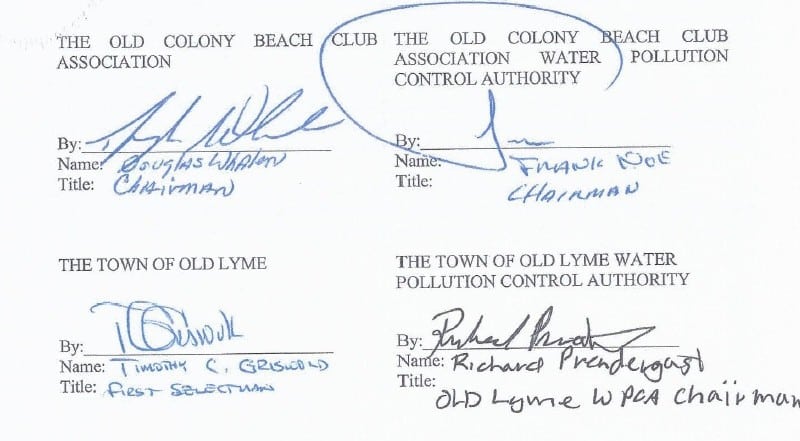
In Old Lyme, Town and Private Beach Associations Clash Over $1.5 Million Sewer Bill
The town says it never became a party to an agreement requiring it to share sewer project costs. Three beach associations disagree to the tune of $1.5 million.
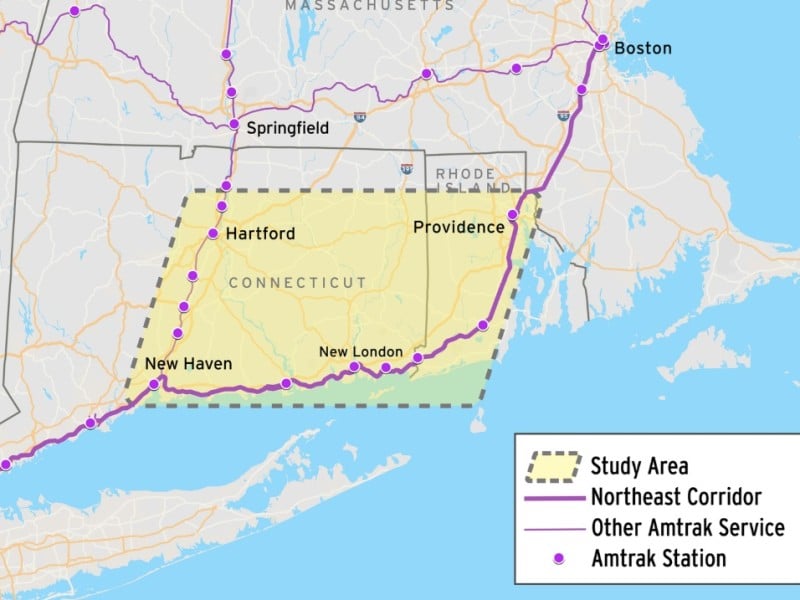
Amtrak Embarks on New Study, Stoking Decade-Old Concerns as Old Lyme Officials Seek Answers
After being left out of a previous rail study that residents said would have devastated the town, Old Lyme officials want a seat at the table for Amtrak’s new study of potential rail changes.

Radio Talk Host Lee Elci’s Challenge of Martha Marx is Complicated
CT Mirror Capitol Bureau Chief Mark Pazniokas examines the dynamics behind radio talk host Lee Elci’s challenge of incumbent state Sen. Martha Marx.
I would greatly appreciate a response to my earlier post regarding ADU’s. Could I talk to someone in the zoning department?
Hi, Christine – Thanks for commenting. You can reach out to the Old Lyme Land Use Department through the information provided on their website at https://www.oldlyme-ct.gov/213/Land-Use-Zoning.
I, too, will continue to look into issues like these to provide as much context as possible in future articles.
I moved to Old Lyme from Stonington 6 years ago. I have always loved Old Lyme for its quiet, private feel so I can understand our population not wanting that to change. However there is lack of places for young people and those with limited means to live in. As the town grapples for the next bunch of years as to what to do or not do about low income housing/mixed use housing or dense neighborhoods – why can’t we get the right to use ADU’s to address these issues in a low impact way? I think we all know that there are many homeowners in Old Lyme currently renting out secondary buildings on their properties “under the radar”. It has been going on for years. The truth is, this practice does not change the character of the town at all and provides places for people to live affordably without disrupting anything. ADU’s can increase housing supply, provide affordable housing, multigenerational housing and provide additional income to allow people to keep their homes and boost property values. All this requires clear regulation, but so many other communities allow ADU’s and are making it work – why can’t we? I would love to know what made Old Lyme opt out of a practice that so many other lovely towns allow without issue.
I think what needs to be discussed first is what constitutes “affordable”,whether a permanent house or a rental space.One looks at the homes around the Rogers Lake area as well as along the Boston Post Road and some of the small side roads off of it and can see a late 1940s/early 1950s attempt at affordable housing along the lines of what other places were doing to mimic Levittown.This coincided with the white flight from the cities and rise of the new middle class.So,it isn’t a new problem.Were they well built?Yes and no.My family homestead was built around 1961 and has had no end of internal issues.Hard to believe it was presented at the time as The Day paper’s home design of the week!So,is any new housing, no matter what form or size, going to be well made or will the price of post purchase repairs drive new, first time owners to sell at a loss?As a self-confessed “tree hugger”,I ask if we are going to keep bulldozing forests, streams and meadows to achieve a state mandate?People do come here for those areas and they do much for my own peace of mind.Much of the taxpayer money from a town such as Old Lyme to Hartford never comes back.It usually goes to paying for projects in urban areas.Fine idea.Only those urban areas continue on their downhill slide.This is hardly the fault of the citizens of a small town and if the state wishes us to do this perhaps all of our money should come back to here.Do you care what building project needs funding in New Britain or Waterbury?I don’t.We haven’t even discussed beach access and parking, which though Father Ned Coll is long deceased, the state will come at us again over.Our town government needs to use every lever about expanded housing or others in the state capital and developers will.