

Amtrak Embarks on New Study, Stoking Decade-Old Concerns as Old Lyme Officials Seek Answers
After being left out of a previous rail study that residents said would have devastated the town, Old Lyme officials want a seat at the table for Amtrak’s new study of potential rail changes.
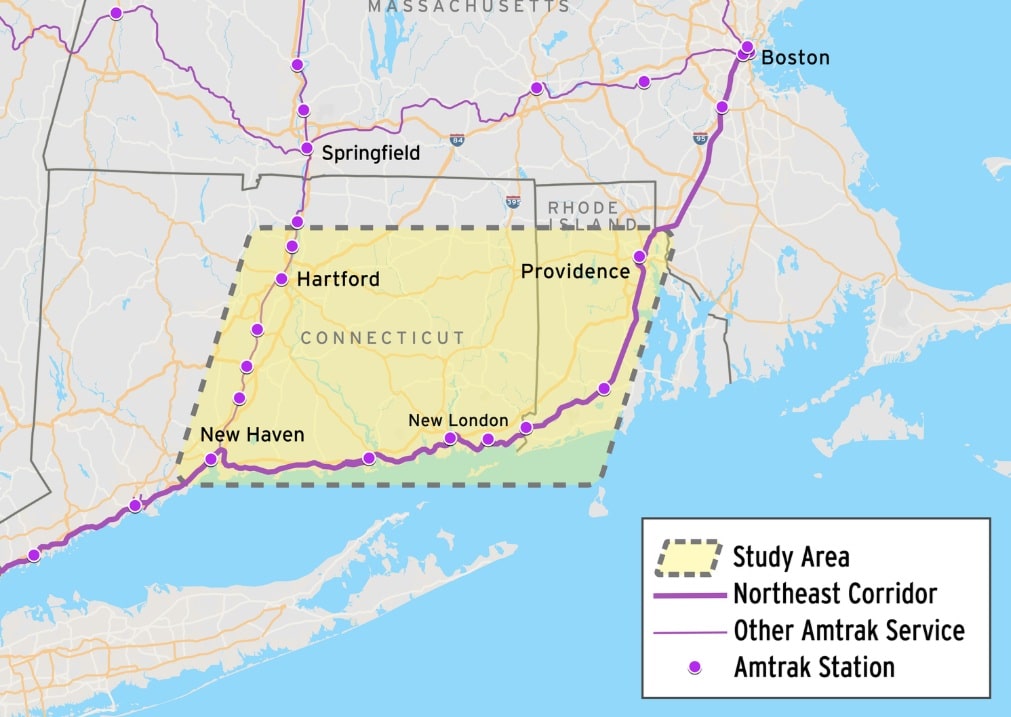
OLD LYME, CT – A decade after residents and elected officials mobilized in opposition to a plan for a high-speed rail bypass through Old Lyme’s historic Lyme Street, officials on the Old Lyme Historic District Commission (HDC) are urging vigilance as Amtrak embarks on a new study of potential rail improvements between New Haven and Providence.
The Board of Selectmen this week agreed with a July 31 memo from HDC co-chairmen Russ Todd and John Noyes calling on the town to closely monitor Amtrak’s two-year study.
The chairmen warned the process “could well result” in a plan for increased ridership and faster travel “at the expense of Old Lyme.”
Selectmen Jim Lampos said the time to start asking questions – and holding railroad officials accountable for the answers – is now.
“I think the selectmen really should engage with Amtrak proactively,” Lampos said. “I think we should get ourselves at the table.”
The discussion came after Joe Barr, Amtrak’s senior director for state partnerships and development, told municipal officials during a June webinar that the New Haven to Providence Capacity Planning Study will consider improvements to existing rail lines, as well as possible new routes.
He acknowledged the Federal Railroad Administration (FRA) NEC FUTURE initiative, which met staunch resistance across Connecticut and Rhode Island, included an approach to public outreach that “was not working.”
In Old Lyme, the situation made activists out of residents and officials as they protested being left out of the decision-making process. A belated FRA effort to hold a meeting in Old Lyme only stoked the flames when residents were not allowed to ask questions.
Opponents argued the proposed route would devastate the town’s artistic institutions, schools, library, private property, wetlands, open space and natural resources, threatening the way of life in an area recognized on the National Register of Historic Places.
Barr in his presentation to municipal leaders emphasized the need to “start fresh” with a community conversation after the last attempt at a study. But he did not rule out the reemergence of some previously discussed options.
“Some of those ideas were quite controversial. We’re not going to necessarily ignore those, but we’re not just saying, ‘Oh, here’s what NEC Future tried to do. We’re just going to keep going with that,’” he said.
He emphasized the main goal of the New Haven to Providence Capacity Planning Study is ensuring connectivity within a project area that runs from New Haven to Hartford, over to Providence and back down to New Haven.
“We wouldn’t be looking at alignments that completely bypass Providence, or completely bypass New Haven, or just take a completely different route to get there,” he said.
Amtrak describes the study as an alternatives analysis intended to determine potential future commuter and intercity rail services and identify ways to preserve and improve capacity and performance along the Northeast Corridor.
“What improvements can we make to existing rail lines, and also what new alignments might be out there that might make sense?” Barr said. “We’re looking at those holistically and trying to keep an open mind about what’s possible, but also understand what might not be possible.”
Old Fears Return
The HDC chairmen credited a “huge public outcry” with prompting the FRA’s decision nine years ago to postpone action.
“We believe similar intensive town-led efforts are required now – indeed, we believe time is of the essence. We’re prepared to work with and support the Board of Selectmen and other entities in town on this undertaking,” the memo said.
Lampos told selectmen the town’s involvement is critical whether railroad officials decide to improve existing lines or deviate from the current path.
“I mean, obviously, not plowing through the historic districts is a no-brainer, but even using the existing right-of-way, it goes through the Connecticut Water wells,” he said.
He also questioned how the recently approved Connecticut River Bridge replacement project fits into any potential changes to rail service through Old Lyme.
The ongoing, $1.3 billion project is replacing the existing 119-year-old bridge with a new two-track movable span just south of the current crossing, with completion expected around 2030-31. The new bridge is designed to allow increased speeds, up from about 45 mph to 70 mph, along the existing right-of-way.
“If they are planning an entirely new parallel system – if that’s going to run through here instead of up through Mansfield and Hartford – then we have to be at the table now, and not after they’ve begun evaluating their stuff,” Lampos said.
Amtrak Seeks Input
Amtrak’s presentation to municipal officials emphasized community engagement.
Barr said the agency expects to communicate with municipalities and elected officials periodically through group briefings and individual discussions.
“If an elected official has a concern, wants to talk to us off-cycle or outside of those organized events, we will absolutely make ourselves available to have those conversations,” Barr said.
Amtrak also established an Agency Advisory Committee and is developing a Public Advisory Committee. The study will include stakeholder interviews, website and email outreach, pop-up events and open houses.
The most recent pop-up event was held Aug. 15 at Rocky Neck State Park in East Lyme. Barr emphasized that the pop-ups are for information gathering only: what people are thinking about, what concerns them and what excites them.
“We’re not at the stage of showing anyone, ‘This is what we’re proposing,’” he said.
He said regional planning organizations, known in Connecticut as councils of government, will be integral to the process.
“We want to try to make sure that we keep in touch with as many people as we can and hear from as many people as we can, with good two-way communication,” he said.
The HDC’s memo asks the selectmen to lobby Amtrak for measures including a formal public comment period before alternatives are eliminated; publication of comments and municipal correspondence; written responses to substantive comments; and timely publication of the scoring matrix, weighting, assumptions, ridership projections, cost assumptions and criteria that will be used to evaluate alternatives.
The chairmen also suggested that Amtrak hold a public hearing in Old Lyme after draft alternatives have been developed but before a preferred alternative is selected.
Included in the memo were concerns that the conceptual study doesn’t include federal environmental or historic preservation oversight.
While Amtrak said such review would come later, the HDC chairmen warned that federal changes to the regulatory framework currently under consideration by the administration of President Donald Trump “could eliminate or adversely affect the ability in the future to consider vital environmental and historic preservation impacts when rerouting railroad tracks.”
Town Seeks Answers
First Selectwoman Martha Shoemaker at the selectmen’s meeting said she has reached out to a Connecticut Amtrak representative and continues to receive updates every few months from a federal-level contact for the railroad company.
She told selectmen she will be asking for more information about Amtrak’s plans for community forums and will request answers to the questions raised by the HDC.
Amtrak is focused on getting community input for this study after “they kind of botched the first one,” according to Shoemaker.
“There have been no decisions,” she said. “It’s a two-year study.”
Selectman John Mesham acknowledged some of the HDC’s questions may be ahead of where Amtrak is in the current study, but argued it’s up to the railroad company to communicate that to the town.
“If they don’t know yet, then that should be their answer,” he said.
He reiterated the HDC concern that terminology being used by Amtrak officials, including references to increased capacity and performance, is similar to the priorities expressed the last time around.
Mesham said engaging Amtrak now will help show whether the study is just “a kind of repackaging of what they’ve already done,” or a real effort to engage communities in the final product.
“I think we should try to get those answers,” he said. “And that would be a good starting spot, because that will also give us a feel about how upfront they’re going to be about things.”
Author

Comments (2)
Comments are closed.
Related Articles

Berke Wins as Campbell Falls Short in Third Region 18 School Board Bid
Democrat Devin Berke defeated Republican Brandy Campbell in Tuesday’s special election, extending the Democratic Party’s hold on all nine seats.

Lyme’s Lisa Holmes Takes Farmers’ Stories From Field to Film
A documentary from Lyme resident Lisa Holmes digs into the challenges facing independent farmers and the changing landscape of American agriculture.
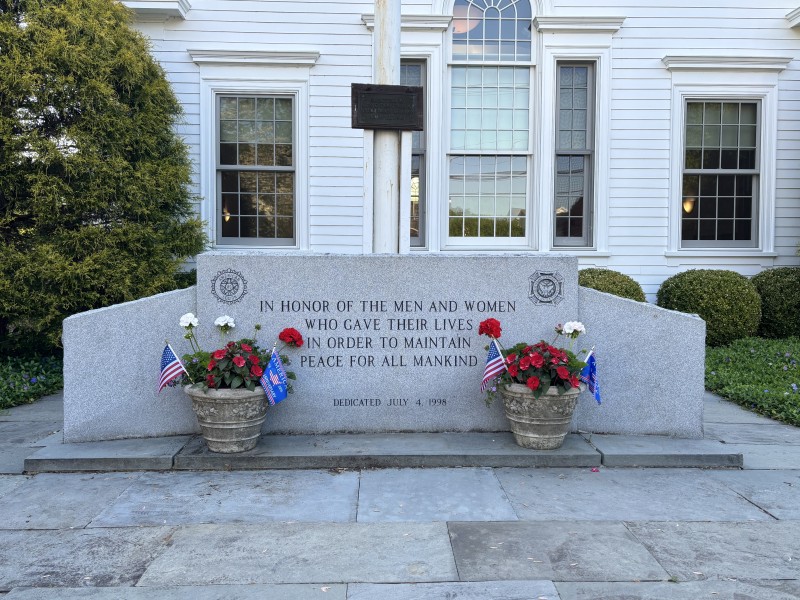
Shoemaker Overrides Historic District Commission Denial With Blue and Gold Star Memorials at Old Lyme Town Hall
Shoemaker said she is standing up for veterans by adding the markers to the military monument. The commission said they belong near the ground in a garden.
We don’t do high speed rail well here in the states.Actually,we don’t do rail travel/transport of any kind well at all.Aside from having the Chinese government come in and build us a rail network as part of their “Belt and Road Initiative”,it is hard to see this current bunch getting the job done well at all.It is from that thought where my worry stems.The attempt to gain public relevance would be for a spectacular rail system project where it can be proclaimed that “Rail is back!”,the president appears to cut a ribbon, and full network TV coverage makes many want to jump onboard to experience it.The problem is, how much of the Connecticut and Rhode Island countryside will they have torn apart to achieve their goals?I say “their” because I’m doubtful if Americans will stop driving and use rail travel to move about.We just aren’t set up for it and the time to do it has long passed.Aside from these broader concerns,Old Lyme,or any other town, should not be dug up for the goal of slightly higher travel speeds.Many of us live here because of the woodlands, fields and lack of development.I would like it to stay that way and I believe that many share my view.Whoever can stop this impending bulldozing should be in charge of running things’ here as this is the main threat to Old Lyme.
As John Mesham said is this just repackaging of the last study? What HAS CHANGED is current construction of a new bridge over the CT river. Once finished one can’t help but think the FRA will seek to utilize it to full extent I.e. rework the shore route to speed things up entailing massive environmental sacrifices not to mention the human aspect. “Fore warned is for armed”. “Bypass” should mean abandon ANY future shoreline route changes and stick to technology upgrades.