

DEEP Touts Long Island Sound Water Quality Gains Amid Old Lyme Sewer Uncertainty
Aboard a new research vessel, state officials cited declining nitrogen levels in Long Island Sound and reiterated support for Old Lyme’s participation in a regional sewer project.
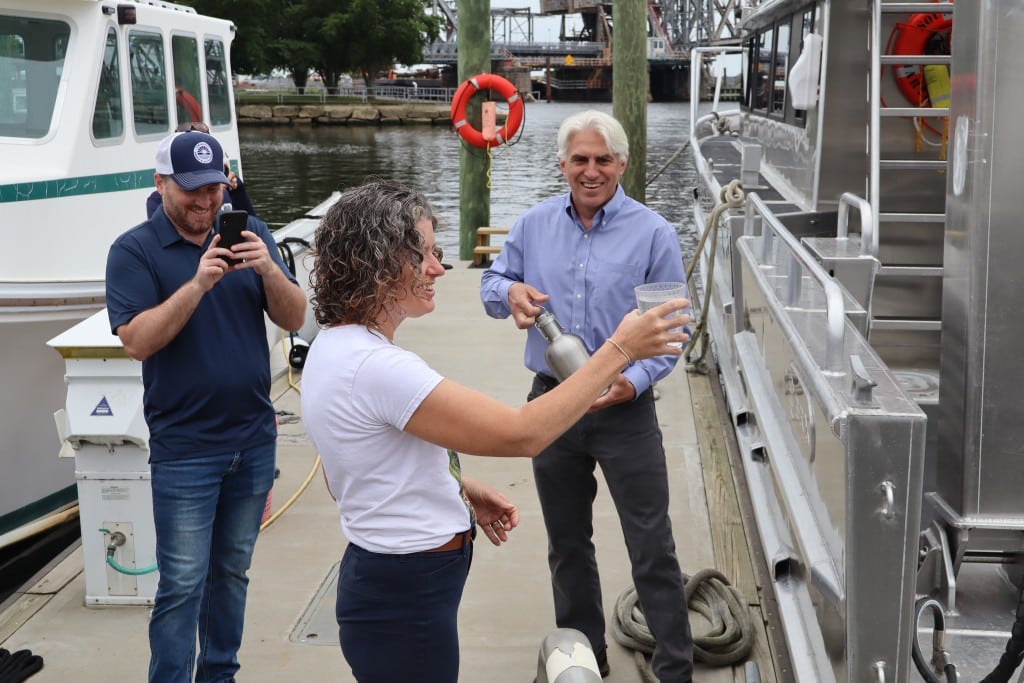
OLD LYME, CT – A christening cruise aboard the state’s newest Long Island Sound research vessel Friday offered environmental officials a chance to reflect on decades of improving water quality and the work they say still needs to be done.
The Sound Outlook is the new $2.2 million research vessel used by the state Department of Energy and Environmental Protection (DEEP) to monitor water quality in Long Island Sound. Officials say nitrogen levels there have declined significantly over the past four decades largely due to wastewater treatment plant upgrades.
Those gains, discussed on the water between DEEP’s marine district headquarters on Ferry Road in Old Lyme and the Essex Boatyard, formed the backdrop for a discussion about Old Lyme’s uncertain participation in a sewer project that state officials say would further reduce nutrient pollution entering the Sound from shoreline septic systems.
The town’s status has been in question since voters in December rejected additional funding for sewers in the publicly controlled Sound View Beach area, even as three neighboring beach associations continue to move forward under a 2018 consent order from the state.
Opponents have criticized rising costs that would be borne by ratepayers and argued there is no evidence of a current pollution problem.
Graham Stevens, the agency’s chief of water protection and land reuse, said aboard the vessel that discussions with Old Lyme First Selectwoman Martha Shoemaker are continuing. He defended the agency’s position that even code-compliant shoreline septic systems cannot remove nitrogen as effectively as centralized wastewater treatment plants.
While boat Capt. Tommy Seda showed off the $2.2 million vessel’s zero-turn capabilities at multiple points on the roundtrip, environmental analyst Matthew Lyman described surface and deep-water sampling conducted at 17 sites since 1991.
“There’s definitely been an increase in temperature throughout the period of record,” he told DEEP Commissioner Katie Dykes in response to her question about the most notable trends in the data.
But there has also been encouraging news.
“The best thing I’ve noticed is nitrogen levels are actually coming down,” Lyman said.
Dykes and Stevens said a 74% reduction in nitrogen over the past several decades is largely attributable to wastewater treatment plant upgrades driven by the state and supported by Clean Water Act funding.
It’s only within the past six years that officials have finally begun to see treatment plants meet the nitrogen pollution levels set by regulators, according to Stevens.
“The improvements that we’ve seen are the result of billions of dollars of infrastructure investment at our 93 wastewater treatment plants across Connecticut,” he said.
He cited massive upgrades to the Metropolitan District Commission plant in Hartford during the mid-2010s and upcoming improvements to two Bridgeport plants.
“Just imagine what Bridgeport is going to be able to do,” he said. “Those discharge directly to the Long Island Sound. Those don’t go through a dilution cycle of being carried by a river to the Sound.”

Stevens acknowledged the DEEP “needs to do a better job” explaining the implications of the Old Lyme sewer project to local officials and residents.
The total cost, including the four internal systems and a shared pump station and force main, was estimated at upwards of $70 million at the time of the failed referendum, with about half to be covered by federal grants and a forgivable loan from the DEEP.
“There’s not been a better deal that’s been put forward to a beach community in the history of the Clean Water Fund Act more than what’s been offered to the town of Old Lyme,” he said.
He emphasized there’s still an opportunity for the town to participate in the project, which local beach association officials have said is slated to begin this summer.
“When we do spend more time with the town, hopefully that will help the town and the residents to understand,” he said. “What’s the real implication here? What is the cost? What is the process?”
Asked about the lack of recent data showing Sound View is polluting groundwater and Long Island Sound, Stevens said there is no scientific basis for assuming sewage discharges from beach communities have improved over time.
He maintained connecting to the New London wastewater treatment plant remains the “best and cheapest” option.
He pointed to a 2017 town-commissioned study, funded 55% by DEEP, that recommended connecting the three private beach associations and Sound View Beach area to New London.
“That is what the three beach communities are moving forward with, and what the town may move forward with in the future – hopefully with additional discussions and explanation, and a better outreach to the community at large to explain this complicated and scientific challenge,” he said.
He conceded some residents have upgraded their septic systems, but said many non-compliant systems remain.
“And even the code-compliant septic systems do not have the technology that wastewater treatment plants have to remove the nutrients,” he said. “So those nutrients are making their way into the groundwater, which is eventually discharging to the Long Island Sound.”
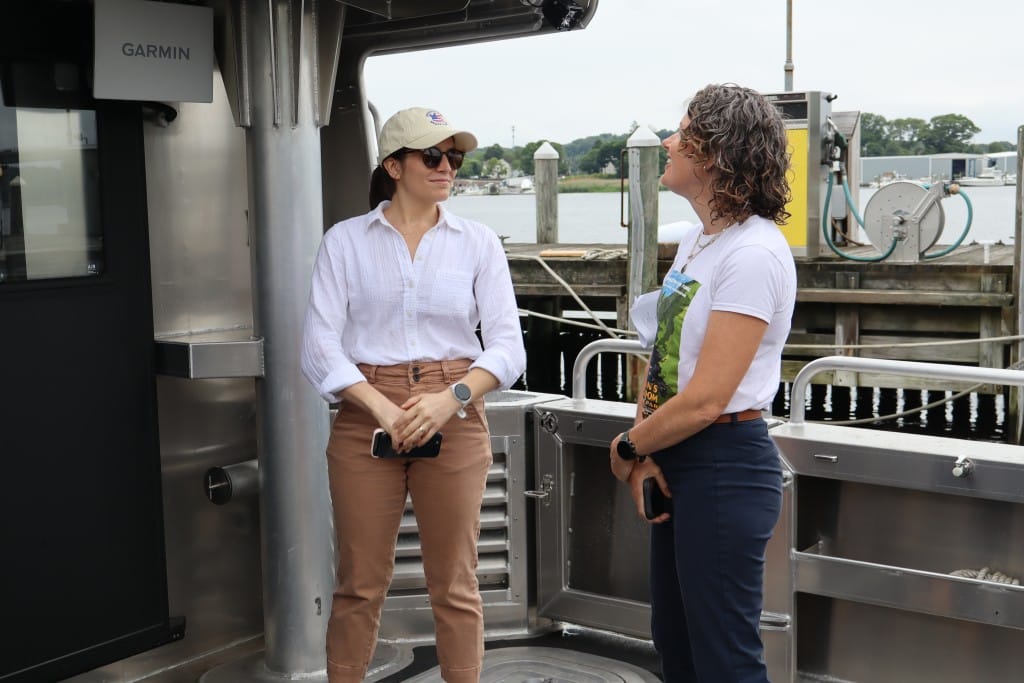
Shoemaker on Friday evening said she has not heard from Stevens or Deputy Commissioner Emma Cimino since April, when the agency reached out for historical information going back to the formation of the Old Lyme Water Pollution Control Authority in the 1990s.
Shoemaker said she doesn’t yet know what the future holds for Old Lyme’s participation in the sewer project.
“I think our standing is that we need to work together to explore the possibilities in front of us,” she said.
The Board of Selectmen earlier this year directed the Old Lyme Water Pollution Control Authority to broaden its focus to overall wastewater oversight — including septic regulation, groundwater testing and ordinance review — in a shift away from the sewer project. Four members subsequently resigned.
Shoemaker did not dispute Stevens’ contention that the agency needs to do a better job explaining the project.
“I asked DEEP to come to a meeting prior to the referendum – prior to Thanksgiving – and they said they were too busy to come,” she said.
The first selectwoman said residents are confused when they see reports of good water quality in the area, including an A+ rating for Sound View Beach in the 2026 Save the Sound Beach Report.
“It’s hard for people to understand how the Sound near this community can be so clean, and then tell them there are groundwater issues,” she said.
She said she expects another conversation with DEEP officials next month.
The town had been participating voluntarily in the project at the time of the referendum, unlike the three private beach associations obligated to act under the eight-year-old consent order. But in a December letter to Shoemaker following the referendum defeat, Stevens signaled that voluntary cooperation was coming to an end, and that a legally enforceable consent order would likely be issued once a “path forward” is agreed upon.
Aboard the Sound Outlook Friday, Stevens’ messaging was collegial when asked if a consent order is coming.
“We look at municipalities as a huge partner in restoring their shared environment, and that’s the way that we’re working with the town of Old Lyme at this point,” he said.
Author

Related Articles

Safe Futures’ Oct. 4 Walk Supports Those Affected by Domestic Violence Across Southeastern CT
Safe Futures works throughout New London County, including Lyme and Old Lyme, to address domestic violence, sexual assault, stalking, trafficking, elder and child abuse.

Lyme-Old Lyme Teacher Brett Eckhart Goes From Classroom to Stage With ’90s Alt-Rock Reunion
Long before Brett Eckhart was a favorite teacher at Lyme-Old Lyme High School, he was the frontman for Radiotricity. More than 30 years later, the band is back together for a reunion show.

What’s open, closed on Labor Day 2026
This CT Mirror roundup reveals what’s open and closed on the holiday. And don’t forget: Lyme and Old Lyme town halls and transfer stations will be among Monday’s closures.