

‘Not Written for Lyme’: Planning and Zoning Commission Works to Adapt New State Housing Law
The commission this week debated its response to new housing provisions in state law taking effect July 1. Members said the law does not take small towns into account.
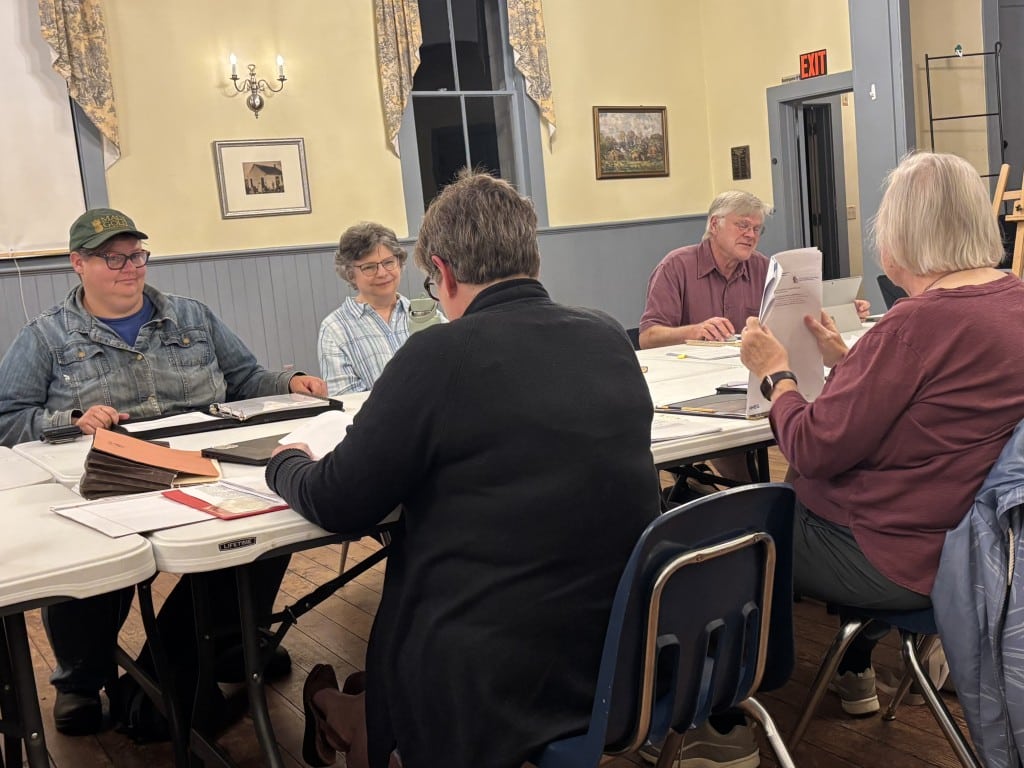
LYME, CT – The town’s Planning and Zoning Commission this week grappled with the implications of a state housing law that members say was not written with small towns in mind.
The commission on Monday reviewed proposed regulations addressing two major components of Public Act 25-1 that go into effect on July 1. The law is part of decades-long efforts to increase the supply of housing people can afford in a state where demand exceeds supply.
One key provision limits the town’s ability to require off-street parking for new residential housing, while the other requires towns to allow housing in commercial districts through a streamlined approval process.
Member Frederick Gahagan acknowledged the need for more housing in the state. But he was critical of the law, which municipalities and regional planning organizations across Connecticut have been working for months to interpret amid widespread confusion about how it is meant to be implemented.
“The statute ignores the physical reality of the truly rural town,” Gahagan said.
Members cited Lyme’s network of narrow, winding roads, its lack of commercial development and the prevalence of open space as factors not seen in more densely populated communities.
Mary Stone, the commission chair, put it this way: “This law was not written for Lyme.”
Commission member Anne Littlefield said the commission faces a tight deadline because the state law takes effect July 1, whether Lyme’s regulations are ready or not. She warned that the town could have fewer tools to address concerns about parking, safety and local oversight until it decides for itself how to implement the new state guidelines.
Littlefield served as chair of the subcommittee charged with creating draft regulations in consultation with the engineering and design firm IMEG Corporation. The company was made available to the town for free through the Lower Connecticut River Valley Council of Governments (RiverCOG), which has been working to help area cities and towns understand the new law.
Jennifer Tiffany, the other subcommittee member along with Stone as ex officio, reiterated the commission must act soon to implement the law on its own terms rather than letting developers come in under the state’s default rules.
“We’re on a time crunch here,” she said. “The longer we postpone this, the more vulnerable we are.”
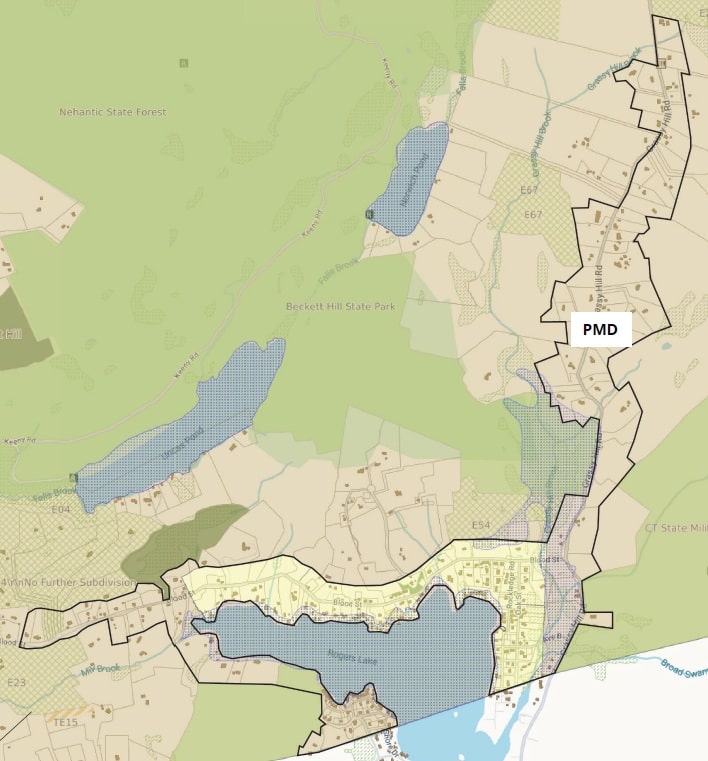
On-Street Parking
Under Public Act 25-1, towns generally may not require off-street parking for residential developments containing 16 units or fewer, with narrow exceptions.
The American Planning Association has cited the state as a leader in parking reforms intended to make housing development more financially feasible and encourage the use of public transportation.
But Zoning Enforcement Officer Ross Byrne said the town isn’t laid out for on-street parking.
“Almost all the roads in Lyme are not safe to park on the street,” Byrne said.
The law allows towns to establish Parking Management Districts covering up to 8% of municipal land area that allow for limited parking requirements in up to two specifically delineated sections of town.
Outside those districts, developments of 16 or fewer units would not be required to provide off-street parking unless they have an adverse effect on public health or safety that can’t be mitigated through specific requirements set by the commission.
Tiffany said she analyzed areas that would be most dangerous for on-street parking when mapping overlay districts focused on the Hamburg and Rogers Lake areas.
“That was where our focus was, on safety,” she said.
The subcommittee’s review focused on safe roadside parking and maintaining access for emergency vehicles, according to Stone.
“We were looking for twisty, windy streets, small lot sizes and areas where the topography prevented the full use of the lot” for off-street parking, she said.
The subcommittee recommended placing the Parking Management Districts in the more densely populated Rogers Lake and Hamburg Cove areas. But Byrne and others suggested assigning them to areas with higher traffic speeds that are more likely to be developed in the future, like Beaver Brook Road.
Byrne argued existing development around Rogers Lake leaves little room for growth.
The commission postponed a decision on district boundaries while members gather additional information to come up with boundaries members can agree on.
Littlefield underscored the significance of the issue.
“We have one tool under 25-1 to establish stricter controls about parking in up to 8% of our acreage here in Lyme,” she said, adding it should be applied “where it would provide the most protection.”
Mixed-Use Housing
Commissioners also reviewed regulations drafted to comply with a section of the law requiring municipalities to allow housing developments of two to nine residential units in commercial zones without a public hearing.
Francisco Gomes of IMEG, who has advised Lyme, Old Lyme and other RiverCOG towns, said municipalities can choose whether they want to allow residential-only developments, mixed-use developments or both in their commercial districts.
There was broad agreement with the subcommittee’s recommendation to require mixed-use developments, which would include commercial space on the first floor and apartments above, behind or to the side.
But Gahagan called out the lack of any draft language requiring developers to set aside some of the units at rates that households making less than the median income can afford.
He described the state law as an effort to address a shortage of affordable housing across Connecticut and questioned why the statute would exist without provisions requiring reduced rents or sales prices.
“We have so little commercial space,” he said. “To see it taken up for residential that doesn’t address our problem of affordable housing, to me, is a non-starter.”
Littlefield, Tiffany and Stone said the state law does not require the town to establish an affordability component, so the subcommittee held off on recommending one to avoid delaying adoption of the broader rules.
“That was why we decided, at this time, it would be a cleaner process to go forward without it and get something in place that protects the town and then address affordability later,” Stone said.
Gahagan was not convinced.
“What are we protecting the town from?” he said.
Members agreed to adopt requirements specifying at least one out of every four units must be deed-restricted for at least 30 years to remain affordable for households earning less than 80% of the area median income.
Based on current state Department of Housing income and rent limits, 80% of the region’s $129,200 median income for a four-person household equates to $103,360. The monthly rent for a family at that income level cannot exceed $2,236 a month for a three-bedroom unit to be considered affordable.
Next Steps
The commission agreed to meet July 7 to continue revising the proposed regulations before forwarding them to the Connecticut River Gateway Commission and the state Department of Energy and Environmental Protection for review.
A public hearing is tentatively planned for Aug. 10.
After the meeting, Gahagan said the debate highlighted what he sees as a disconnect between the state’s housing goals and the practical concerns facing Lyme.
“These aren’t affordable housing issues,” he said. “These are safety issues.”
Editor’s Note: The documents below include draft regulations and maps reviewed by the Planning and Zoning Commission on June 22. Commission members made revisions during the meeting, and additional changes are expected before updated drafts are brought to public hearing.
Author

Related Articles

Labriola Calls for Common Sense Approach in 23rd District Run
The Old Saybrook treasurer is running for the 23rd District seat on a platform of affordability, local control and bipartisan cooperation.
Old Lyme Library to Lend Laptops to Eligible Residents
Libraries are partnering with the state to close the digital divide. The goal is to expand access to the tools people need to use important services online.
Old Lyme Zoning Survey Finds Support for Flexibility, Not Major Change
Residents want to preserve Old Lyme’s small-town feel by allowing accessory apartments, limiting data centers and ensuring a say in the future of Halls Road.