

Talking Transportation: A Century of Flying
On American Airlines’ 100th birthday, Jim Cameron traces its evolution from airmail routes and sleeper berths to jets, loyalty programs and modern pricing.
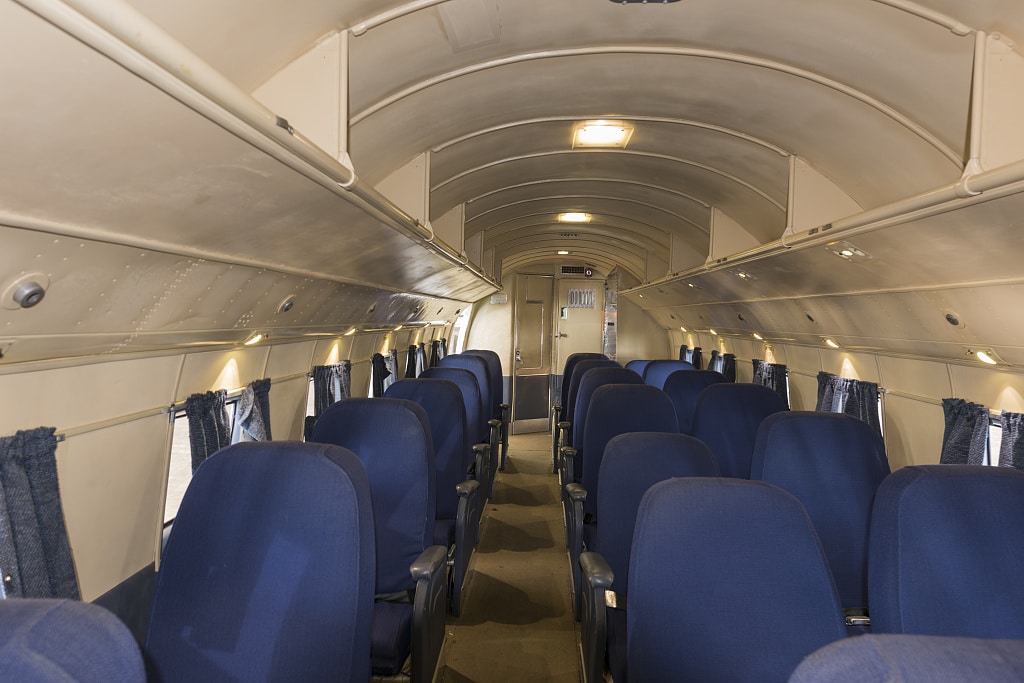

Happy 100th birthday to American Airlines, which traces its roots to April 15, 1926, when it first flew a contract airmail route between Chicago and St. Louis.
The airline began as Robertson Aircraft Corporation. Among its first pilots was Charles Lindbergh, well before he made his historic trans-Atlantic flight the next year.
By 1934 American Airlines was organized after assembling 80+ smaller carriers, using lucrative airmail contracts to develop passenger service. Crucial to this growth was the introduction of the DC-3.
Compared to earlier planes, the DC-3 was far more comfortable (thanks to the addition of heat in the cabin), relatively quieter and staffed with stewardesses, originally hired as nurses to calm nervous passengers, serving the plane’s 28 passengers. For night flights the airline had special “sleeper” planes equipped with 14 berths, akin to a railroad sleeping car. The DC-3 could travel up to 1,500 miles at an amazing 200 mph.
Marketed under the slogan “fly while you sleep,” the service allowed passengers to board early evening in Newark, New Jersey, enjoy a hot meal and arrive the next afternoon in Los Angeles after intermediate stops in Chicago and Dallas (still giant hubs for the airline today). One-way sleeper fares were the equivalent of roughly $3,000 to $4,000 in today’s dollars. The daytime flights cost half as much.
Compared to today’s jets, the service was slower and far less comfortable. The planes flew no higher than 10,000 feet – through the weather, not above it – making them much more prone to turbulence. And the cabins were not pressurized.
American began flying from Bradley Field in Hartford in 1939, serving LaGuardia and Newark in New York City as well as Boston and Albany. Chicago flights connected to points west.
The success of passenger service in the 1930s marked a turning point for the airline industry and fueled explosive growth. By the 1940s the DC-6 came along, flying higher (20,000 feet), faster (300+ mph) and farther (4,000+ miles) with as many as 80 passengers.
In 1959 American introduced its first jet, the Boeing 707, which cut transcontinental travel time to about five hours. Working with IBM, in 1964 the airline debuted SABRE, the first large-scale real-time airline reservation system. And in 1981 they launched AAdvantage, the first major airline loyalty program.
Today, AAdvantage generates about $6 billion in annual revenue for American from the sale of “miles” to credit card companies, supplementing the airline’s thin margins on the capital-intensive business of actually flying its planes.
Those innovations along with government deregulation in 1978 allowed the airline to introduce dynamic pricing and “yield management,” i.e. whatever they could get away with. American could finally fly where and when it wanted, and charge the highest fares competition would allow.
Post-pandemic, the airline is focusing on premium fare business flyers who represent a disproportionate share of revenue, especially on domestic routes. Last minute bookings cost more, as we all know.
American is still the biggest airline in the US (measured by passenger traffic) and one of the biggest in the world, carrying 226 million passengers a year using 1,500 aircraft serving 350 airports.
From sleeper berths to basic economy, American Airlines has come a long way in 100 years. The planes are faster, the fares are cheaper and the experience is tighter, sometimes literally. Progress, it would seem, depends on your seat assignment.
About the Author: Jim Cameron is the founder of the Commuter Action Group and advocates for Connecticut rail riders. His column is published by several publications in the state. ”Talking Transportation” won first place in the general column/commentary category in the 2024 Connecticut Society of Professional Journalists Excellence in Journalism Contest.
Author
Related Articles

Talking Transportation: The Speed Camera Revolt
The challenge isn’t proving that speeding is dangerous, according to columnist Jim Cameron. It’s convincing drivers that speed cameras are truly about safety.

Talking Transportation: Could Metro-North Be Next for a Strike?
The LIRR strike should be considered a warning for Connecticut commuters in a system where one rail shutdown could trigger regional traffic chaos.
Talking Transportation: No Lines for Gas … Yet
Jim Cameron paints a bleak picture of summer travel as war-driven fuel costs and supply chain disruptions ripple through the global economy.