

Talking Transportation: Could Your Mail Really Stop?
Jim Cameron says the problem is simple: “First-class mail is dying. Not sick. Not struggling. Dead … replaced by email, autopay and whatever app you’re using to read this.”

You may not get any Christmas cards this year. Or bills. Or junk mail. The U.S. Postal Service is once again warning it’s in real trouble, and this time, they’re not whispering.
You want to see someone speaking truth to power, check out Postmaster General David Steiner testifying to a House Oversight Subcommittee. “Without action,” he told the pols, “the Postal Service will run out of cash.”
Without Congress doing something, the USPS won’t stop your home deliveries, at least not every day. But we may lose Saturday mail. And see smaller post offices close. And first class rates could zoom up to about $1 per letter.
The problem is simple: First-class mail is dying. Not sick. Not struggling. Dead … replaced by email, autopay and whatever app you’re using to read this.
Think of it. How much “real” mail do you get each day? I mean letters from people, not just companies trying to sell you something. How many letters do you send and how many stamps do you buy? Compare your volume of paper mail to your email and you’ll understand the problem.
Not that the USPS hasn’t innovated on technology. I love their “Informed Delivery” option telling me (ironically, by email) what will be delivered to my real mailbox later in the day.
There’s been a 50% drop in first class mail since the early 2000s. And it’s first class where the USPS has historically made its real profits, not with marketing mail or packages. In 2019 a stamp was 55 cents. Today it’s 73 cents. And despite that jump, the Postal Service is losing about ten cents per letter in delivery cost vs revenue.
That’s what we call a death spiral: raising prices to cover losses, only to drive away the customers you needed to survive … just like on our commuter rail lines.
The problem is worsened because the Postal Service has to deliver to every address in the U.S. In Connecticut that means everywhere from Hartford to Union (population 785, so small it doesn’t even have its own zip code).
To do its job, the USPS maintains a fleet of 257,000 vehicles, from trucks to delivery vans, serving 168 million delivery addresses. It has over 530,000 employees, making the USPS one of the largest employers in the country.
And those employees, while they presumably enjoy the jobs, are also promised nice pensions. Long-time workers (hired before 1984) can retire with pensions of 60%+ of their final salary.
Despite staffing reductions of 25% between 2008 and 2015, the Service is looking at $10 to $15 billion in annual pension and retiree health benefits in the next few years, long subject to pre-funding requirements.
The USPS also supports more than 33,000 physical post offices nationwide, making it the largest retail network in the U.S., roughly the same as Starbucks and McDonalds combined, but with a lot fewer customers. That’s a lot of overhead.
How will the Congress respond to the Postmaster General’s dire warnings last week? Probably by letting USPS borrow even more money beyond its current $15 billion cap, because nothing says “long-term solution” like more short-term debt.
So pick your poison: higher prices for stamps, fewer post offices, reduced deliveries, all of the above … or just “kick the can down the road”? Which do you think Congress will choose in this election year?
About the Author: Jim Cameron is the founder of the Commuter Action Group and advocates for Connecticut rail riders. His column is published by several publications in the state. ”Talking Transportation” won first place in the general column/commentary category in the 2024 Connecticut Society of Professional Journalists Excellence in Journalism Contest.
Author
Comments (2)
Comments are closed.
Related Articles

Talking Transportation: The For-Profit Railroad
Should Connecticut’s commuter railroads be privatized?
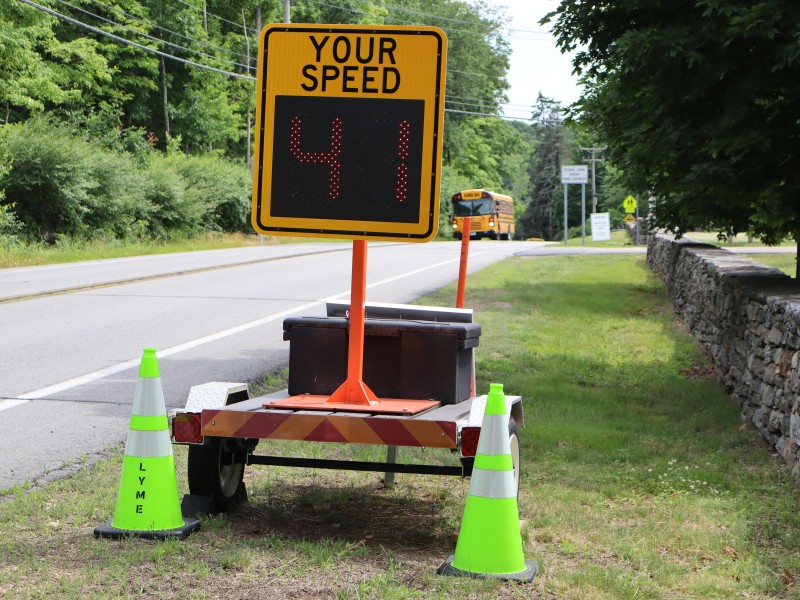
Talking Transportation: The Traffic Calming Illusion
Why do we speed through other neighborhoods but demand calm in our own? Jim surveys the engineering tricks used to enforce what signs alone can’t.
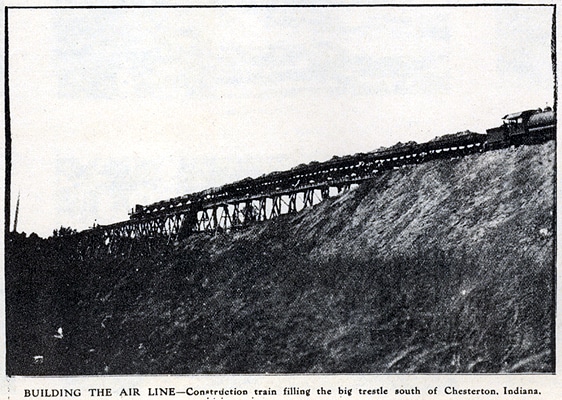
Talking Transportation: The High-Speed Railroad Never Built … 120 Years Ago
A 10-hour trip between Chicago and New York seemed brilliant in 1905. But when money ran out, the railroad never made it out of Indiana.
This article saddened me. I agree that the most mail I receive these days is junk mail, and most of it is thrown into recycling, and not even read. However, I still love receiving cards on birthdays and holidays, local news magazines and invitations to special events. I still receive insurance and bank statements, bills, and license and subscription renewals by mail, and look forward to hearing the mail delivery truck most days. Yeah, I guess I am old fashioned, but I would really miss getting paper mail, and I would miss talking to Steve at the South Lyme Post Office. I hope mail service continues for many more years.
I would include Priority Mail to that list. 2 of the last three times the “Priority” envelope which I paid $10 for never arrived. The tracking history of the envelope was fascinating. 20 plus days and visited 5 different states.