

Blizzard Rescue Highlights Lifesaving Cooperation of Lyme Volunteers
Artist Michael DesRosiers feared for his 95-year-old mother when she became ill during the blizzard. He called it heroism when neighbors came to help.
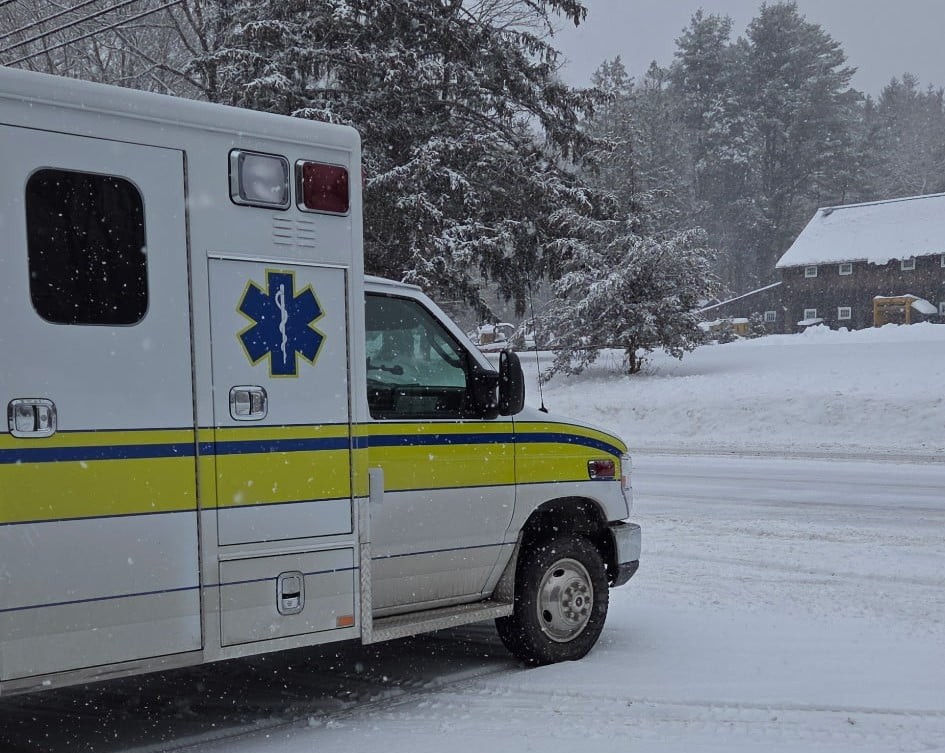
LYME, CT – From a concrete and glass fortress overlooking Route 156 during the height of the recent blizzard, artist Michael DesRosiers called 911, fearing his mother would be a casualty of the storm.
A week later, he credited Lyme emergency services volunteers and a plow contractor with saving her life.
“This assembled group of people, this brigade of help, came into the house, stabilized her with oxygen and got her ready to go,” he said in a phone interview from Middlesex Hospital’s Intensive Care Unit.
Ninety-five-year-old Marianne DesRosiers DesRosiers had nausea, chills and no appetite that Sunday evening as PBS played on TV like it always did. The fluids Michael attempted to introduce with feeding syringes, typically used for his pet cockatoo, weren’t keeping her hydrated. He said his plans to call his mother’s primary care physician during normal weekday business hours “fell off a cliff” around 1:30 a.m. Monday as the snow piled up on the steep driveway winding up to the house.
He called 911 more to ask what to do than anything else. It seemed impossible when the dispatcher said an ambulance was on its way.
He recalled putting Titus, the cockatoo, in the back of the house to keep him quiet when first responders arrived.
“By the time I walked out front, I already saw the plow truck surging up the driveway,” he said. “And right behind him was the ambulance. I don’t know how they got there that fast. It was just astounding.”
A volunteer from the Lyme Fire Department’s Hamburg station, identified by the department only as “engineer 756,” made a couple of passes with the department plow truck to create a path through the rapidly accumulating snow.
Responding Lyme Ambulance Association EMT Jason Howell, a carpenter by trade, said in a phone interview that he had been staying overnight at the Hamburg fire station. While volunteers in town are typically on call from their homes, he bunked on the fire station couch to be near the four-wheel-drive ambulance when a call came in.
On his way to the call, he swung by the other on-call EMT’s home, just a mile from the station, to pick her up. According to DesRosiers, she turned out to be his neighbor.
Howell estimated the straight drive on a plowed state road kept their response under 10 minutes, faster than the ambulance company’s average of 11 minutes.
“If it had been a back road, this would have been a totally different conversation,” he said. “I think we kind of got lucky with the location being right there.”
Howell and his partner were in radio contact with the firefighter in the plow truck as the crew prepared their equipment. Among the many logistical concerns was shielding the stretcher and a pile of blankets from the snow and wind as they entered the house.
“Once a patient that’s not doing well gets chilled, it’s very hard to bring them back to warm,” Howell said.
Inside, Howell and his partner stabilized the patient and began their assessment. A paramedic from Middlesex Health – which deploys roving advanced life-support units across the region – arrived within five minutes to set up a cardiac monitor and perform a rapid heart scan. They determined Marianne DesRosiers had to go to the hospital.
Her son, who said ambulance protocol prevented him from riding along to the hospital, stayed behind to secure the house and wait for a call from the emergency room doctor. When it came, the prognosis was grim.
He told the doctor he was on his way.
“He said, ‘Well, I don’t know how you’re going to get here,’” DesRosiers recalled. “I said, ‘You let me worry about that.’”
The answer came when DesRosiers sent a text message to Lyme Fire Department Chief and constable John C.L. Evans, who enlisted Lyme resident and landscaping contractor Steve Deveaux to clear the driveway again.
“In the worst possible situation, it’s nice to see that there are people that step out of themselves and do amazing things,” DesRosiers said. “And that’s what I felt that night in the storm. Twice.”
He said the responders not only ensured his mother could get to the hospital, but also that he could get there to advocate for her. He called it “heroism magnified by two – which means a million.”
For Howell, the path to volunteer service began during the early days of the COVID-19 pandemic. Driving past the station while working on a renovation project, he noticed a sign asking for volunteers. The retirement of some longtime members had been hastened by the coronavirus threat, leaving critical openings to cover 28 weekly shifts. The ambulance association promised training for anyone willing to step forward.
Though he had no formal medical background, he brought years of CPR training, lifeguarding experience and mountaineering knowledge – including winter camping and ice climbing in New Hampshire’s White Mountains and California’s High Sierra.
Lyme Ambulance Association Deputy Chief Ariana Eaton credited Howell, as one of 13 active volunteers, with working three shifts per week. While most members take on a single shift, those like Howell sign up for more to ensure the town is always covered.
She said extra volunteers would help spread out the workload. The independent, nonprofit association recently began hiring paid EMTs for the two most hard-to-fill shifts but continues to pride itself on volunteerism.
“We are not missing calls,” she said. “But it’s only because of the huge dedication on the part of these special volunteers.”
Howell said he didn’t realize until he joined the Lyme Ambulance Association what happens on the other end when someone picks up the phone to call for help.
“A lot of people think you call 911 and it’s guaranteed, instantly, that someone’s going to show up. But there’s a lot of people that work really hard to make sure that happens,” he said. “And people have to be willing to do it.”
DesRosiers, speaking from the hospital he said has given his mother exemplary care, was hopeful she’d make a full recovery.
“And had it not been for the volunteers in our town, we would have had a different update,” he said.
A lifelong artist who grew up in Texas before attending art school in New York City, DesRosiers said he’s lived in Lyme for almost 50 years. He spent decades on 23 acres of Joshuatown Road, turning an 18th-century Cape Cod-style home into a sprawling artists’ retreat once featured in The New York Times. After selling the property in 2016, he took a modernist approach with the new home on the corner of Bill Hill Road.
He acknowledged the house is controversial, as much for its industrial exterior as for the lawn he mows just once a year to support native wildlife.
But differing opinions on aesthetics don’t stop neighbors from helping neighbors in Lyme.
“When you face a wall of impossibility, and then you have the response of your community, it’s just an unbelievable epiphany what it really means to be in a hometown,” he said.
Author

Related Articles
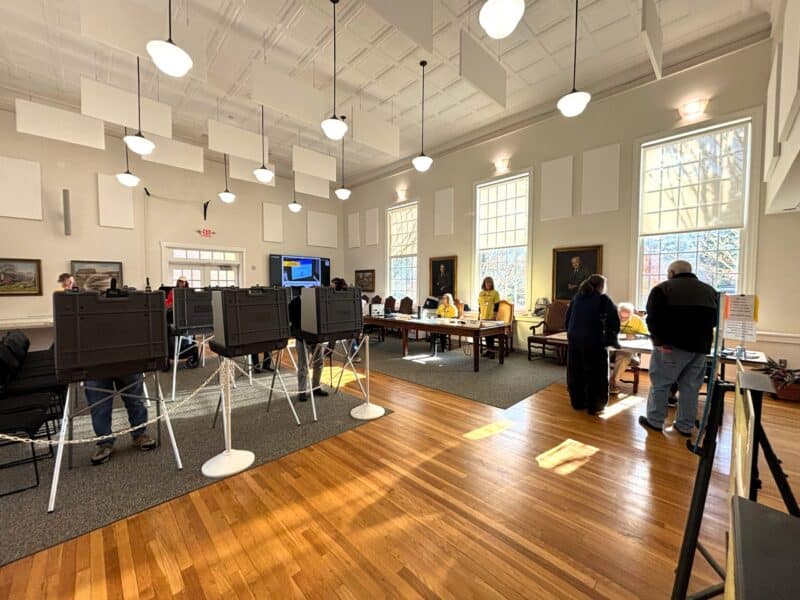
Election 2026: What to Know Before You Go
It’s time to vote. Find early voting and Election Day hours and locations, along with profiles of the local candidates, in your handy LymeLine election guide.

Labriola Calls for Common Sense Approach in 23rd District Run
The Old Saybrook treasurer is running for the 23rd District seat on a platform of affordability, local control and bipartisan cooperation.
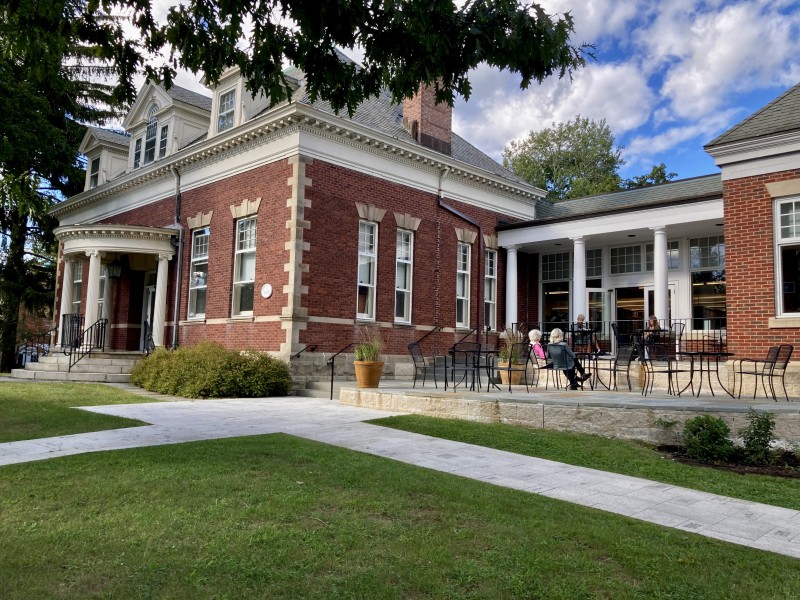
Old Lyme Library to Lend Laptops to Eligible Residents
Libraries are partnering with the state to close the digital divide. The goal is to expand access to the tools people need to use important services online.