

Lyme Anthropologist Works to Bring Nehantic Story to New and Old Audiences
John Pfeiffer has spent decades researching Nehantic history, archaeology and descendants ahead of Saturday’s Nehantic Heritage Day.
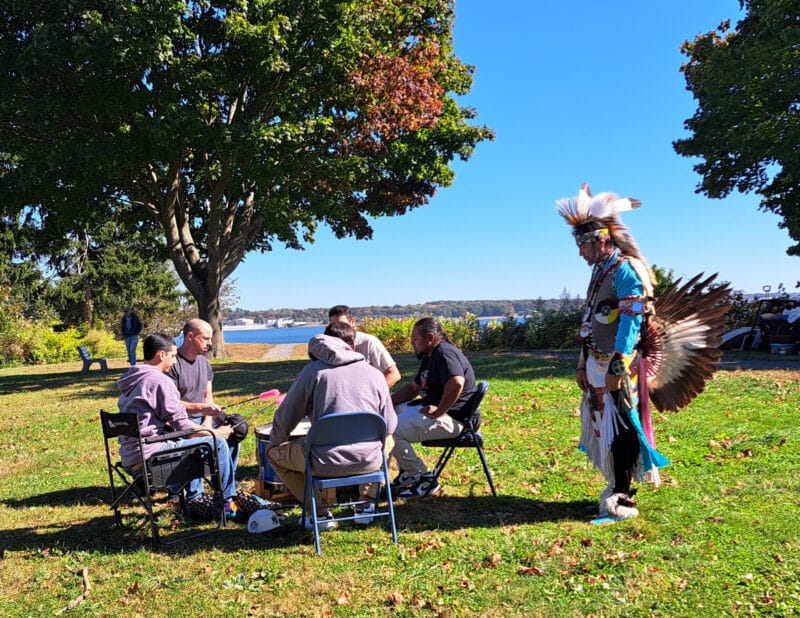
LYME, CT – John Pfeiffer, an honorary member of the Nehantic Native Nation and an anthropologist who has spent decades unearthing and preserving its history, is changing the narrative of a people long described as extinct.
His mission will be on display at Saturday’s Nehantic Heritage Day at McCook Point Park in East Lyme. It’s also reflected in “Coloring Nehantic,” a 544-page book about the survival of the Indigenous people who traversed the region’s forests, rivers and coastline over thousands of years in a territory spanning Westbrook to Waterford.
Pfeiffer, of Lyme, earned a doctorate in anthropology from the State University of New York at Albany and has devoted more than half a century to researching the history and archaeology of Native American tribes across southern New England. Almost 40 of those years have been spent exploring Nehantic history and finding descendants.
“It is my duty to get people to really understand what their story is,” he said. “What their values were, and what they are today.”
The Nehantic tribe was declared extinct by the state in 1870 after a combination of disease, outward migration, intermarriage and discrimination led to a population decline and the sale of its reservation in what is now the Niantic section of East Lyme.
Nehantic Heritage Day, on the site of the former reservation and burial grounds, will honor the service of more than 25 Nehantic men known to have served in the American Revolution. The free community event returns for its sixth year on Oct. 2 from 10:30 a.m. to 3:30 p.m.
In an interview this week at the Old Lyme Phoebe Griffin Noyes Library, Pfeiffer said his interest in Native American culture dates back to his days as a first grader in Old Lyme. That’s when he was first exposed to the discrimination faced by his two closest friends because of their race.
He recalled adults using derogatory terms while questioning his mother about allowing him to play with the boys.
“People with a native background had a hard time,” he said.
A middle school science fair excavation project solidified his penchant for anthropology when judges told him his project was interesting, but not science.
“So, that’s why I went and got my Ph.D.,” he said. “It is science. It clearly is.”
The third in a triad of experiences shaping his life’s work came in the form of a shoebox of bones. The bones were found in the basement of a house as East Lyme’s Crescent Beach neighborhood was expanding in the 1980s, according to Pfeiffer.
His resulting investigation led to the discovery of four or five burials. In 1988, a sewer project in the area unearthed more. He has estimated the burial ground contained the remains of more than 450 Nehantic people.
Pfeiffer said his efforts to protect the burial ground intensified after research showed the state lacked legal title to the property it had sold to a developer. After being told by the state attorney general that he had no standing to challenge the sale because he was not Native American, Pfeiffer began a decades-long effort to identify Nehantic descendants.
He said the shoebox of bones brought his experience “full circle,” linking the study of ancient civilizations to the deep exploration of a culture that has been marginalized by modern society.
He cited research, culled from 18th- and 19th-century reservation lists, land records, probate lists, U.S. Census data and personal diaries, that helped locate upwards of 150 Nehantic descendants across the United States. He found them in places like Massachusetts, Pennsylvania and Brothertown, Wisconsin, where Christian members of numerous southern New England tribes came together in the 1700s to preserve their culture and identity.
The anthropologist described Nehantic Heritage Day as an education for the descendants whose heritage, in some cases, was hidden even from them. It’s also intended to help southeastern Connecticut residents better understand the Nehantic people who walked the region’s glaciated landscape for thousands of years.
Evidence of the Past
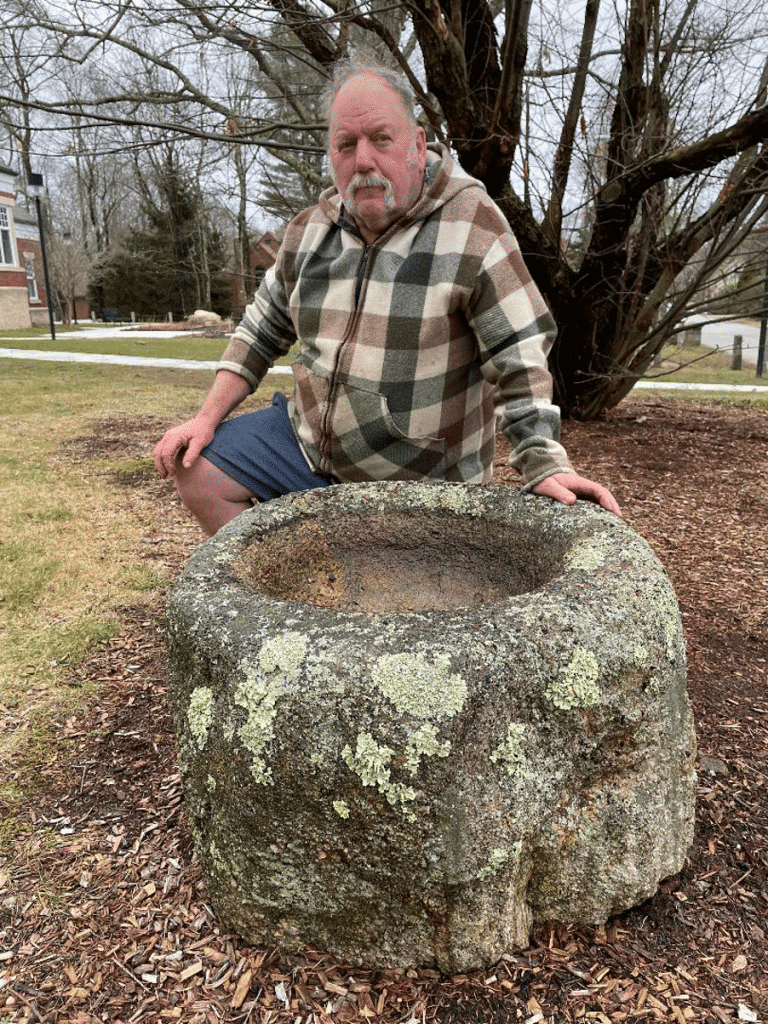
Pfeiffer has traced a Nehantic path through southeastern Connecticut spanning millennia.
“I can document Nehantic as being present as the group in this area back to about 4,000 years ago,” he said. “There’s pretty good continuity from that point on.”
He described a Nehantic territory stretching roughly from the shoreline north to Colchester and Haddam.
In addition to villages in modern-day East Lyme’s Oswegatchie Hills along the inner Niantic Bay and at Black Point, he said historical documents point to a village at the mouth of the Connecticut River in Old Lyme now known as Griswold Point.
Other sites were more seasonal, like the Ames Rock Shelter, an overhang in Old Lyme’s Ames Open Space accessible today from Boggy Hole Road.
The rock formation served as an encampment from which the Nehantics hunted and trapped while waiting out the winter, according to Pfeiffer.
“That was a prehistoric site that was used from at least about five thousand years ago,” he said.
At Old Lyme Land Trust’s Watch Rock preserve, he unearthed artifacts that told the story of hundreds of people living there at a time when they would drop hot stones into clay vessels to boil water.
“It’s one of the earliest sites for the use of ceramics,” he said.
Radiocarbon dating revealed the pottery was about 3,500 years old, according to Pfeiffer.
He said the location of Nehantic villages would shift when the women and children responsible for collecting firewood had exhausted the local supply.
“After 15 or 20 years, you’ve gone out so far that it’s more practical to establish a new village,” he said.
Nehantic Service
Pfeiffer said his research points to Nehantic participation in every military conflict except the Mexican-American War.
Among those who served in the Revolutionary War, he said five fought at Bunker Hill in 1775 and some served aboard Connecticut’s navy ship known as the Oliver Cromwell.
Nehantics captured by the British included Philip Occuish, whose father was the minister at the Nehantic reservation in the 1770s. Occuish was captured in 1779 and imprisoned aboard the British prison ship Old Jersey in New York Harbor. An estimated 11,000 men died but Occuish, who was charged as a minister’s son with caring for the sick, survived.
Pfeiffer said members of the Nonesuch family, whose descendants are expected to attend Nehantic Heritage Day, were also prisoners on the ship.
“We’re here,” Pfeiffer said of his honorary family. “We, too, made sacrifices for all of us, and we’re asking everybody to come to celebrate the achievement.”
Nehantic Heritage Day begins with a 10:45 a.m. ceremony at the point overlooking Wigwam Rock. A reading of the names of the Nehantic Revolutionary War veterans will be followed by a military salute and lighting of a ceremonial fire.
Author

Related Articles

Roger Tory Peterson Estuary Center Draws Record Crowd for Annual Gala
A celebration of the art of bonsai helped make the Roger Tory Peterson Estuary Center’s annual gala fundraiser the best-attended in its 11-year history.

Republican Brandy Campbell to Face Democrat Devin Berke in Region 18 BOE Special Election
Old Lyme voters will choose a successor to departing school board member Scott Brown during a special town meeting on Oct. 6.
Lyme Urges Residents to Sign Up for New Emergency Alert System as Nor’easter Hits Area
Amid heavy rain and strong winds, Lyme officials urge residents to enroll in Lyme Notify, a new alert system for emergency updates by phone, text and email.
Comments (0)
There are no comments on this article.