
Old Lyme Beach Sewer Project Could Break Ground by Summer
Construction could begin in June or July as three private beach associations move forward. Questions remain over how the town will react to state pressure on pollution issues.
OLD LYME, CT – After years of shifting timelines on a project to bring sewers to several beach communities in Old Lyme, the state Department of Energy and Environmental Protection (DEEP) has signaled construction could begin within months.
DEEP spokesman Bill Flood in an April email said officials expect to break ground in June or July.
The beach associations governing Old Lyme Shores, Old Colony Beach and Miami Beach are moving forward with the project despite a failed December referendum that left the town without authorization for additional sewer spending in the Sound View Beach area.
Flood said the three beach associations are on track to begin constructing sewer systems in their individual communities, as well as a shared pump station and pressurized sewer pipe known as a force main.
According to Flood, the department since January has approved construction contracts and the scope of work. The move allows project engineering firm Fuss & O’Neill to move forward with permitting and funding applications.
Doug Whalen, chairman of the Old Colony Beach Club Association Board of Governors and a key figure in the association’s sewer project, said Wednesday that he expects to file the application for the state’s Clean Water Act funding within days. Once funding is secured, the associations plan to execute financing agreements and move directly into construction.
He placed his prediction on the early side of the DEEP’s timeline.
“Our goal is to have a shovel in the ground sometime in June,” he said.
He pointed to preliminary work already underway, including coordinating with contractors, working with residents to identify staging areas for equipment and lining up subcontractors.
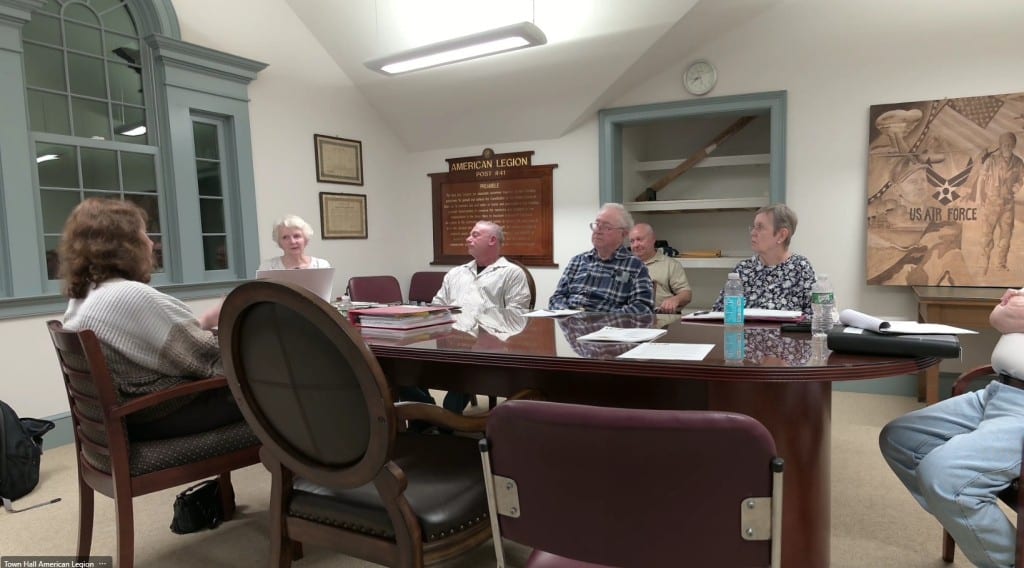
He noted First Selectwoman Martha Shoemaker and members of the Old Lyme Water Pollution Control Authority (WPCA) attended this month’s construction meeting on Monday.
He cited a positive relationship with the officials and held out hope the town will rejoin the project “sometime in the near future.”
“But we’re not holding our project up waiting for Old Lyme,” he added. “We’re going to move forward.”
The project dates back more than a decade and led to a 2018 consent order requiring the three private beach associations to move forward with a sewer system. Voters later approved funding to extend sewers to the publicly controlled Sound View Beach area, but rejected an additional appropriation last year amid rising costs.
The state agency has made it clear in written communications with the town and press statements that the latest referendum vote does not absolve the town of the need to address pollution in the Sound View Beach area.
“The department is continuing to engage with the town on its next steps to address town-controlled areas with pollution and we will share more information when available,” Flood said.
On Tuesday, the reconstituted Old Lyme WPCA discussed plans to test wells in Sound View over the spring, summer and fall to determine for itself whether there’s actually a pollution problem.
Earlier this year, the resignation of four WPCA members signaled a shift from the agency’s previous focus on sewers. The WPCA since then has returned to its charge under a 1995 ordinance calling for the regulation of underground wastewater systems and a “sewer avoidance” approach that emphasizes septic alternatives.
Beach association officials, including Whalen, have maintained the town remains obligated for its portion of the pump station and force main under a cost-sharing agreement signed in 2020. WPCA documents presented in August estimated the town’s cost for the shared infrastructure project at $3.3 million after state funding.
Shoemaker on Wednesday declined to comment on whether the town is responsible for a portion of the infrastructure project.
Meanwhile, she said the town is “trying to work cooperatively” with the state DEEP. She expects to know more about the agency’s expectations after a scheduled call with DEEP Deputy Commissioner of Environmental Quality Emma Cimino during the second week of May.
“They know that we took a vote. The referendum vote failed. And we have to make a plan of where we go from here,” she said.
The town had been participating voluntarily in the project, unlike the three private beach associations obligated to act under the terms of the 2018 consent order.
In a December letter to Shoemaker following the failed referendum, DEEP Bureau Chief Graham J. Stevens signaled that voluntary cooperation was coming to an end, and that a legally enforceable consent order would likely be issued once a “path forward” is agreed upon.
Author

Related Articles

Controlled Burn Planned Friday at Nehantic State Forest in Lyme
Lyme Fire Company says DEEP plans a Friday controlled burn at Nehantic State Forest, weather permitting, as part of its statewide habitat management program.

Old Lyme’s Arts Scene Recognized with $68,000 in State Support
The grants for four Old Lyme arts organizations were awarded as part of a $946,398 investment in cultural groups statewide.

150-Unit Shore Road Housing Plan Pitched in Informal Old Lyme Zoning Discussion
The informal plan drew a blunt response from one Zoning Commission member: “I don’t want this in town.”
Comments (0)
There are no comments on this article.