

Old Lyme Launches “Under the Oaks” Partnership with Barbizon, France
Old Lyme and Barbizon, France, are launching a 2027 exchange program to build on their shared artistic heritage.
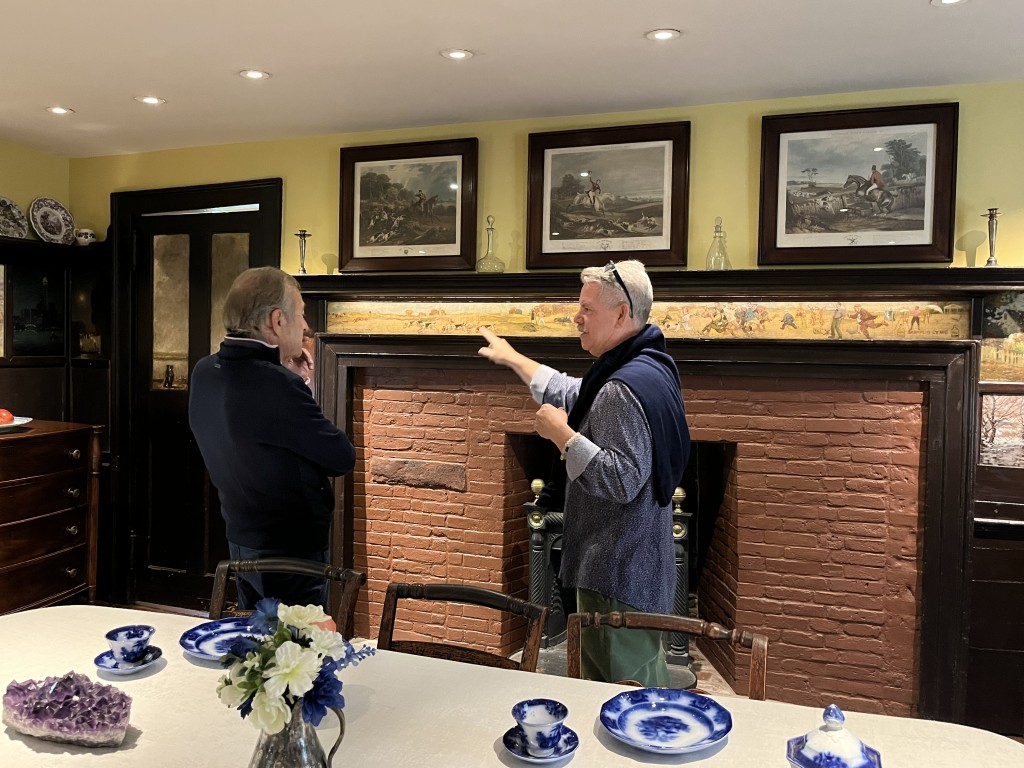
OLD LYME, CT – The town and four local cultural organizations are launching a partnership with the village of Barbizon, France, whose artistic tradition inspired early painters at the boarding house now home to the Florence Griswold Museum.
First Selectwoman Martha Shoemaker in a news release this week announced the informal “Under the Oaks” partnership, which will begin with a pilot year in 2027, with plans to work toward a more formal partnership during that time.
“I am so excited for the town to embark on this journey with Barbizon. It is a beautiful way to honor our shared heritage as artist enclaves in both countries,” Shoemaker said. “This partnership will enrich our towns through cultural, educational, municipal and artistic opportunities, reminding us that, while we are separated by an ocean, we are permanently linked by our passion for the arts, preservation and community spirit.”
The partnership includes the Florence Griswold Museum, Lyme Art Association, Roger Tory Peterson Estuary Center and Lyme Academy of Fine Arts. The initiative will bring together artists, art historians and others to exchange ideas and experiences, deepen cultural connections and raise awareness of the two villages’ places in art history.
“Under the Oaks,” which translates to “Sous les Chênes,” is a play on the French Barbizon artists’ term sous-bois, referencing the practice of painting beneath the forest canopy. The initiative has three interconnected themes, each offering opportunities for collaboration: “Roots” explores the towns’ shared cultural heritage; “Branches” connects the communities through artist exchanges; and “Trails” promotes environmental awareness with lectures and art-history woodland walks.
Old Lyme’s artistic connection to Barbizon began with Henry Ward Ranger, an artist living in New York City and mastering the landscape painting approach he called “Tonalism,” which was heavily based on the works of Barbizon artists including Théodore Rousseau and Jean-François Millet.
Ranger arrived at Florence Griswold’s boarding house in 1899, remarking that the gnarled oak trees and low rolling countryside looked like “Barbizon, the land of Millet.” He invited artist friends to return with him to Miss Florence’s the following summer, filling the boardinghouse with fellow artists to paint in the Barbizon style. The art movement soon became synonymous with the village.
In the 1982 exhibition catalog “Old Lyme: The American Barbizon,” Jeffrey W. Andersen, then director of the Florence Griswold Museum, wrote that about 30 artists participated in the art colony during this time, generally at Ranger’s invitation.
Although magazines and newspapers often referred to the colony as “the American Barbizon,” the artists identified themselves as the “School of Lyme.” The name reflected their ambition to help shape a new era of American art.
However, the colony’s attention soon turned to American Impressionism with the arrival of artist Childe Hassam in Old Lyme in 1903 to paint en plein air (outdoors) in the style associated with another French village, Giverny, the home of Claude Monet.
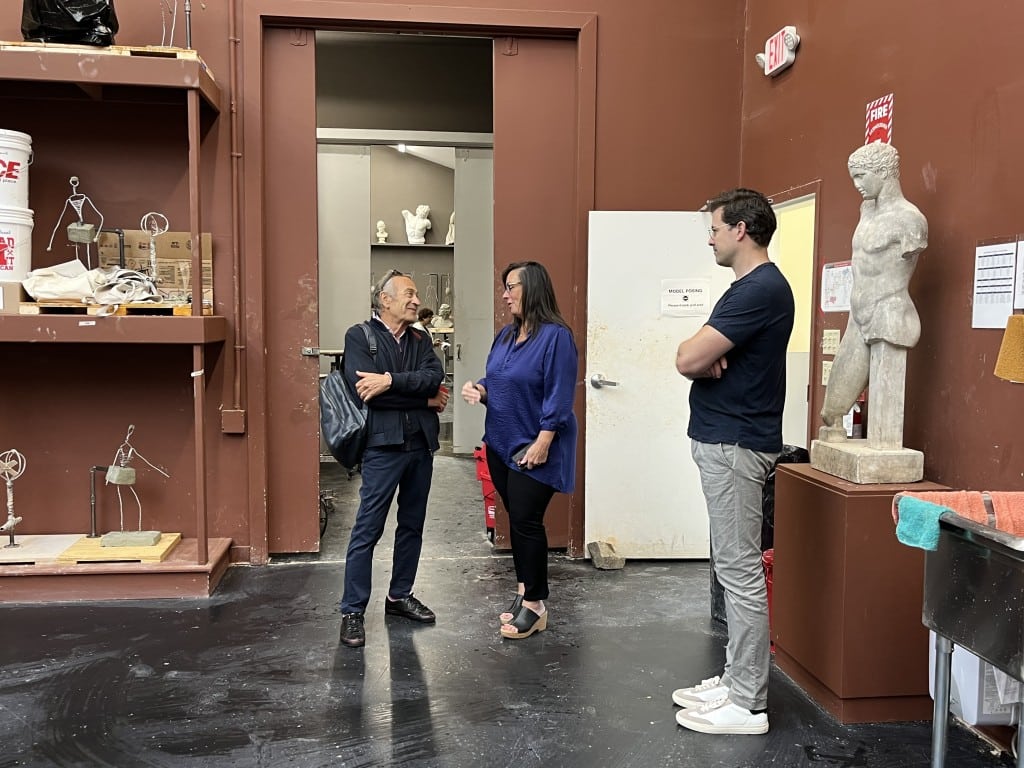
Jean Luc Vanot, a member of the Barbizon mayor’s team, visited Old Lyme during the weekend of Oct. 9. His visit included tours of the partner organizations, a visit to the Barbizon Oak on the Town’s Champlain North property and an evening of jazz at the Side Door Jazz Club.
Vanot said the parallels between Barbizon and Old Lyme are even more extensive than he had expected.
“We share a very similar landscape, with oak forests and large rocks, which make for interesting subjects for en plein air painters,” he said. “But we also share very similar arts organizations. Our Auberge Ganne, which is now a museum, was a 19th-century inn that served as a gathering place for artists who would come to Barbizon to paint. We have art galleries, a jazz program and a new sculpture association. It is remarkable and exciting to think about the many ways we can bring people together.”
Peter Steere, executive director of the Florence Griswold Museum, said he welcomes the opportunity to build on the communities’ shared heritage.
“This opportunity to exchange ideas, artists and culture between two communities with such rich and parallel histories is a wonderful gift. That Barbizon wishes to explore and celebrate art, nature and history couldn’t be a better match for what makes this area special,” he said.
Related Articles
Election 2026: What to Know Before You Go
It’s time to vote. Find early voting and Election Day hours and locations, along with profiles of the local candidates, in your handy LymeLine election guide.

Labriola Calls for Common Sense Approach in 23rd District Run
The Old Saybrook treasurer is running for the 23rd District seat on a platform of affordability, local control and bipartisan cooperation.
Old Lyme Library to Lend Laptops to Eligible Residents
Libraries are partnering with the state to close the digital divide. The goal is to expand access to the tools people need to use important services online.
Comments (0)
There are no comments on this article.