

Needleman Weighs Housing Needs, Rural Concerns in Bid for Fifth Term
The state senator seeking a fifth term says Connecticut’s new housing law considers rural communities’ needs. He also discusses affordability, open space, utilities and education funding.

State Sen. Norm Needleman, D-Essex, says Connecticut’s new housing law takes rural communities’ needs into account, despite objections from Lyme officials who say the legislation wasn’t written with towns like theirs in mind.
Needleman is seeking his fifth term in the 33rd Senate District against Charles Ferraro of Clinton, a former state representative. The district stretches from Portland to Westbrook and includes Lyme.
Since the passage of Public Act 25-1 in November, Lyme Planning and Zoning Commission members have been critical of the new legislation for ignoring the physical realities of the rural town.
But Needleman – whose 33rd Senate District includes Lyme – called Public Act 25-1 “the result of a full year of the legislative process in Hartford” and noted the original legislation was vetoed by Gov. Ned Lamont and then retooled over the course of several months, before receiving final passage by lawmakers last November.
In an interview with LymeLine, Needleman noted he voted against the first version of the housing bill because it would have had a negative impact on rural communities.
“Connecticut is a state with 169 towns and that largely means there are 169 best practices,” Needleman said. “What works in Hartford and New Haven doesn’t directly translate to rural towns, and we need to make sure our policies apply to that standard as well.”
He said the original bill’s “most extreme” provisions were replaced with “collaborative aspects,” such as replacing mandates with housing growth plans, incentives and development options.
The law changes local zoning requirements, including restricting towns’ ability to require off-street parking for smaller residential developments and requiring approval of certain multifamily developments of two to nine units in commercial districts. It also requires municipalities to plan for housing growth.
“I’d say there was certainly some effort to make sure it reflects the challenges of all of Connecticut’s communities, no matter their size,” Needleman said.
But does that mean the bill is perfect? No, said Needleman.
“There’s the potential that municipal officials can work with legislators in the coming year to find ways this bill can be improved,” Needleman said. “And I’d be happy to be a part of those discussions.”
He said recommendations could include reviewing rural communities’ water and sewer systems to ensure they can sustain development.
“Everything has to be contingent on what the community can support regarding safety, public health and water,” he said. “No town should be forced, for example, to add a sewage system or public water to accommodate development.”
Parking has been a particular concern for Lyme officials, who argue that the town’s roads are ill-suited to on-street parking.
The law allows zoning commissions to map out zones, covering no more than 8% of a town’s total land area, where limited off-street parking requirements may be imposed.
Needleman acknowledged the issue is “certainly a concern,” adding he understands that “small communities could see roadways hampered by on-street parking.”
Town officials have also asked why, if a goal of Public Act 25-1 is to address a shortage of affordable housing across Connecticut, the statute does not have provisions requiring reduced rents or sales prices in developments of two to nine units that zoning commissions must now allow in commercial districts.
Needleman noted the original version of the bill had language that would mandate affordable housing units – language that was “heavily criticized” and ultimately removed from the bill before its passage.
“I’m not sure state legislation impacting the free market would go over well with members of the public or property owners,” he said.
Needleman said there are simply not enough available housing units.
“A constrained amount of supply with consistent high demand, given that Connecticut’s population is growing, is going to lead to higher prices,” he said.
Needleman described affordable housing as an important piece of the puzzle that “needs to be adopted at a higher rate.”
He said he was confident the bill could be improved in future legislative sessions.
As an example, he suggested expanding grant programs to better address rural affordable housing.
Open Space and Affordability
Lyme residents have also not been shy about their fondness for open space. In a 2024 survey of residents, 91% responded that open space was important or extremely important – compared to just 38% of respondents who saw housing availability as an important or extremely important issue.
Needleman said he’s “fully in support” of preserving open space, citing Connecticut as a leader in the field.
“I regularly advocate for our towns to receive support through programs like the Open Space and Watershed Land Acquisition Grant Program and am fully in support of groups like the Lyme Land Conservation Trust, as they work to protect acres upon acres for our communities,” Needleman said. “Fully supporting their efforts while also recognizing a need for increased housing opportunities is something I can certainly balance.”
Not just Lyme but across the state, Needleman noted there is an “affordability crisis” – and said the issue has been repeatedly brought up to him by voters while out on the campaign trail.
“People are facing death by a thousand cuts on their bills, and that’s one of the primary problems legislators need to tackle in 2027,” he said.
He said he’s focused on “putting new controls on our utilities to prevent out-of-control electric costs” and making sure people can afford home heating oil, which he said has nearly doubled since the start of the war in Iran.
Priorities Going Forward
Needleman cited his experience in the Senate, six terms as Essex first selectman and leadership of Tower Laboratories in Centerbrook as qualifications for another term.
“I have deep knowledge of the legislative process in Hartford, the demands faced by our local municipalities and the requirements and demands faced by business owners in the current marketplace,” he said.
If reelected, Needleman said there are a number of issues he hopes to tackle in his next term.
“I’m hopeful we can do more to address the affordability crisis worsened in multiple ways by federal leadership, including a continued focus on holding our utilities accountable and investments to support the efforts of the Federal Cuts Response Fund,” he said.
Connecticut’s Federal Cuts Response Fund was established by Gov. Ned Lamont and the General Assembly in 2025. In a press release, the governor’s office said the fund was established to help the state respond to significant federal policy and funding changes affecting Connecticut.
The fund has been used six times, including earlier this month when $12.7 million was authorized to supplement the Connecticut Energy Assistance Program this winter. Approximately $250 million remains in the fund.
Needleman said the state also needs to invest more in schools.
“And I’m confident we can do more to improve the Education Cost Sharing formula and municipal aid, building on the successes of this year’s state budget that delivered local support and helped prevent property tax increases,” he said.
Filling vacant positions would also be a priority.
“We need to connect workers to Connecticut’s 80,000 unfilled jobs,” he said. “Improved job training and workforce pipeline connections will help accomplish that goal.”
Needleman expressed confidence that voters will give him a chance to tackle those issues, but said he’ll continue pushing for his fifth term until all votes are counted.
“There’s no celebrating until the results come in on Election Night,” he said.
Related Articles
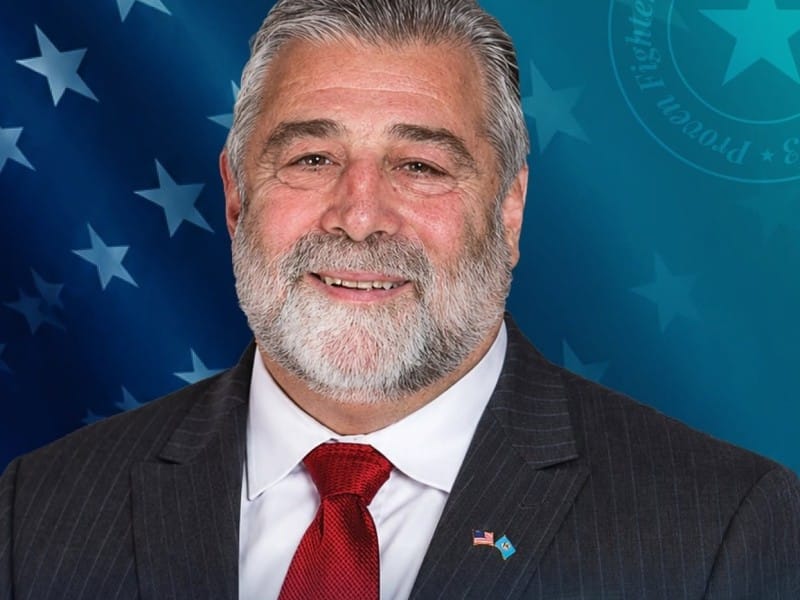
Ferraro Aims to Return to State Office
Charles Ferraro, a former state representative, is challenging Norm Needleman on housing, energy costs and local control.

Wisialowski Focuses on Education, Human Services in Second Bid for 23rd House District
Since her 2024 run, she has joined the Old Saybrook Board of Selectmen, building on her local government experience and career serving vulnerable populations.

Embalming Amendment Goes Missing, Zoning Hearing Goes Cold
A 2024 amendment allowing embalming was omitted from a recent zoning regulation revision, derailing a hearing on a proposed Shore Road funeral home.
Comments (0)
There are no comments on this article.