

Old Lyme Housing Planning Continues to Take Shape Under New State Law
Old Lyme officials are working with RiverCOG to determine future housing needs as the town builds a team to navigate the new law.
OLD LYME, CT – As cities and towns await guidance on how much housing they will be asked to create to address a statewide shortage of affordable units, Old Lyme’s framework for implementing a new state law is slowly taking shape.
From the Lower Connecticut River Valley Council of Governments (RiverCOG) to Old Lyme’s Housing Strategic Planning Steering Committee, the message filtering down to the local level is that the state law known as Public Act 25-1 is meant to guide local planning rather than impose strict housing mandates.
The law includes changes to local zoning requirements and calls for towns to work toward more affordable housing within their borders.
Housing is affordable under the state definition when it is deed-restricted for at least 40 years so that low-income, very low-income or extremely low-income households don’t spend more than 30% of their annual income on it.
Local officials are waiting to hear from RiverCOG about just how many housing units regional planners think the town needs to create in order to address the statewide housing shortage. Once housing needs are calculated – with a June 1 state-imposed deadline guiding the process – municipalities will have 30 days to decide whether to participate in a regional housing growth plan or create their own local plan.
RiverCOG Community Planner Eliza LoPresti on Wednesday said the exact formula for determining the number of units to be allocated across the region will be devised with input from the RiverCOG Regional Housing Committee. The group is made up of representatives from 17 towns spanning Middletown to Old Lyme.
Under the law, the formula must include factors such as household size, income, how much of that income is spent on housing, the number of housing units and the availability of affordable units. Other factors, like seasonal units, overcrowding and homelessness, could also be considered.
According to LoPresti, the formula will be influenced – but not dictated by – regional housing growth targets issued by the state Office of Policy and Management (OPM) for each of the state’s nine planning regions. The targets are set to be released no later than Dec. 1.
She expects the state’s estimate to be similar to RiverCOG’s estimate when it comes to the amount of housing necessary to meet projected demand in the region.
“So, we will consider the state number and keep it in mind, but we are doing our own thing that we believe will be more tailored to the region,” she said.
The next step is the creation of a regional Housing Growth Plan, due in July 2028, to turn those numerical targets into a realistic, on-the-ground strategy. The same deadline applies to towns that decide to create their own plans instead of participating in the regional one.
Strategic Planning
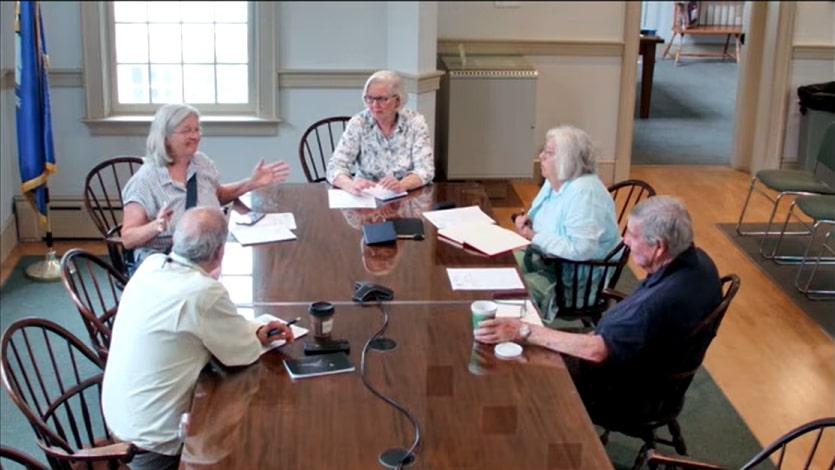
Locally, it’s the Old Lyme Housing Strategic Planning Steering Committee that’s charged with making recommendations to selectmen about how to comply with the state law. The group first met in March and includes representatives from the town’s planning, zoning and affordable housing commissions.
At the Sept. 8 Old Lyme Board of Selectmen meeting, selectmen unanimously selected recent Zoning Commission appointee and former First Selectwoman Bonnie Reemsnyder, a Democrat, to fill a vacancy on the committee.
First Selectwoman Martha Shoemaker said Reemsnyder was the only person to apply for the steering committee opening. Reemsnyder also serves with Democratic Affordable Housing Commission Chair Sheila Riffle as Old Lyme’s representatives to RiverCOG’s Regional Housing Committee.
With Reemsnyder’s appointment to the local steering group, there are four Democrats, one Republican and a remaining vacancy for a representative from the Affordable Housing Commission.
Shoemaker said the committee follows state minority representation rules specifying no more than two-thirds of members can be from one party. The remaining vacancy must be filled by a Republican or unaffiliated member, according to Shoemaker.
Selectman Jim Lampos said the committee’s role is to understand how the law is going to impact Old Lyme and to determine strategies “to mitigate that impact.”
That means filling the remaining vacancy will require selectmen “to double down on diversifying this committee,” according to Lampos.
“I think the broader discussion that we can have now, the more information that we can have injected into this, the better off we’ll be,” he said.
He also acknowledged a request from Housing Strategic Planning Steering Committee Co-Chair Howard Margules to consider adding a member from the Economic Development Commission (EDC) to the committee due to the requirement in the law to allow housing in commercial districts.
“Having the EDC on, I think, is a very good suggestion,” Lampos said.
In a town dominated by single-family homes and limited commercial options, proposed developments or zoning changes have historically generated significant debate over the effect on community identity, traffic and infrastructure.
The most recent state Department of Housing figures show 81 housing units in town are considered affordable by state standards. That amounted to 1.62% of the town’s 4,988 units in 2025.
Talking Points
At a Sept. 3 steering committee meeting with Reemsnyder participating as a guest, Margules said residents should not confuse the housing targets with a mandate from state officials to ensure the units are built.
“They want to see a plan,” he said.
Reemsnyder emphasized that the regional approach is intended to recognize individual community needs rather than relying on goals set by the state.
The new law comes after a failed predecessor that would have allowed OPM to set each town’s affordable housing quota under a “Fair Share” framework. Early projections in 2025 showed Old Lyme could have been assigned anywhere from 388 to 452 deed-restricted units on top of its 4,557 existing homes at the time, based on a needs assessment from the ECONorthwest public policy firm contracted by the state.
Reemsnyder said the process is “more about getting the towns to talk about it and focus on it” than about achieving a certain result at this point.
“Maybe that’s a bite our town can start working with,” she said. “And we have to just keep repeating that, because people are going to grab on to a number and they’re going to say ‘This is crazy. Look at what they’re trying to do.’ And we’re going to become the bad guys.”
Margules at the meeting noted it had been difficult to reach a quorum at steering committee meetings due to vacancies and to poor attendance by member Todd Machnik, the committee’s lone Republican.
Shoemaker said she would reach out to Planning Commission Chairman Rob McCarthy about whether he would like to make a recommendation to replace Machnik.
McCarthy on Wednesday said he had not heard from Shoemaker about the steering committee’s membership, though the issue was raised in June.
“It’s not something that has been a topic of discussion recently,” he said.
Editor’s Note: This article was updated to reflect Margules’ status as co-chair of the Housing Strategic Planning Steering Committee.
Author

Comments (1)
Comments are closed.
Related Articles
Old Lyme Zoning Survey Finds Support for Flexibility, Not Major Change
Residents want to preserve Old Lyme’s small-town feel by allowing accessory apartments, limiting data centers and ensuring a say in the future of Halls Road.

Berke Wins as Campbell Falls Short in Third Region 18 School Board Bid
Democrat Devin Berke defeated Republican Brandy Campbell in Tuesday’s special election, extending the Democratic Party’s hold on all nine seats.

Lyme’s Lisa Holmes Takes Farmers’ Stories From Field to Film
A documentary from Lyme resident Lisa Holmes digs into the challenges facing independent farmers and the changing landscape of American agriculture.
Unfortunately many in town do not apply to volunteer because only people who agree with the first selectwoman are appointed. And IF appointed they find that the outcome has already been predetermined by our current administration. They then resign because they feel they are wasting their time!