

West Nile Virus Detected in Old Lyme Mosquito Sample
West Nile virus has been detected in a mosquito sample from Old Lyme. Find out what that means and how to protect yourself from mosquito-borne illnesses.
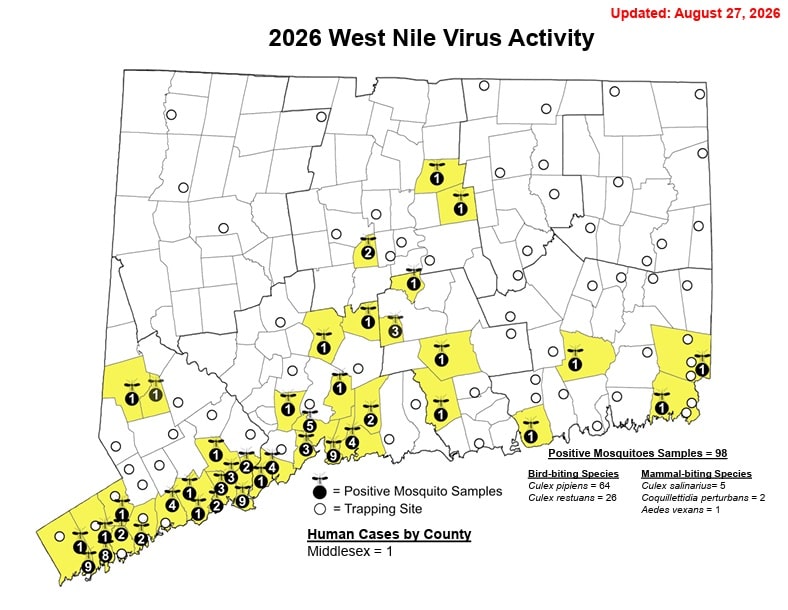
OLD LYME, CT – The Connecticut Agricultural Experiment Station (CAES) has announced West Nile virus was detected in a mosquito sample collected in Old Lyme earlier this month.
The positive sample was collected on Aug. 13.
The latest statewide testing results, updated Thursday, show mosquitoes carrying West Nile virus have been detected in 32 Connecticut towns so far this year. Middlesex County is the only county currently reporting a human case of West Nile virus.
No mosquitoes infected with Eastern Equine Encephalitis (EEE) have been reported in Connecticut this season, according to the state’s latest surveillance data.
CAES is part of the state’s Mosquito Management Program. From June through October, more than 25 scientists and staff members trap and identify mosquitoes at 108 permanent locations throughout the state, testing them for viruses that can cause disease in humans.
CAES scientists were the first in North America to grow and study West Nile virus from infected mosquitoes in 1999. The scientists found which mosquito types spread the virus the most and identified the American robin as a common host for the virus-carrying mosquitoes.
Some mosquitoes that live near saltwater and freshwater marshes can transmit West Nile virus from infected birds to people, according to CAES.
Bite Prevention
State health officials recommend residents take precautions to reduce their risk of mosquito-borne illnesses.
Residents should:
- Minimize time spent outdoors between dusk and dawn when mosquitoes are most active.
- When it is necessary to be outdoors, use mosquito repellents containing an EPA-registered active ingredient, including DEET, Picaridin, IR3535, oil of lemon eucalyptus, para-menthane-diol (PMD), or 2-undecanone.
- Wear shoes, socks, long pants and a long-sleeved shirt when outdoors for long periods of time, or when mosquitoes are more active. Clothing should be light-colored and loose-fitting and made of tightly woven materials that keep mosquitoes away from the skin.
- Wear clothing and gear treated with permethrin. Permethrin is an insecticide that kills or repels mosquitoes and ticks.
- Be sure door and window screens are tight-fitting and in good repair.
- When sleeping outdoors, use tents or mosquito netting in an unscreened structure. Treat camping gear with permethrin when possible.
- Cover strollers and baby carriers with mosquito nets when outside.
For more information, visit the CAES website on mosquito management.
Related Articles

Old Lyme Zoning Survey Finds Support for Flexibility, Not Major Change
Residents want to preserve Old Lyme’s small-town feel by allowing accessory apartments, limiting data centers and ensuring a say in the future of Halls Road.

Berke Wins as Campbell Falls Short in Third Region 18 School Board Bid
Democrat Devin Berke defeated Republican Brandy Campbell in Tuesday’s special election, extending the Democratic Party’s hold on all nine seats.

Lyme’s Lisa Holmes Takes Farmers’ Stories From Field to Film
A documentary from Lyme resident Lisa Holmes digs into the challenges facing independent farmers and the changing landscape of American agriculture.