

Talking Transportation: Is it Time to Tax Electric Vehicles?
The hypothetical “average driver” in CT pays about $209 a year in gas tax while EV drivers pay nothing, according to Jim Cameron. Is that fair?
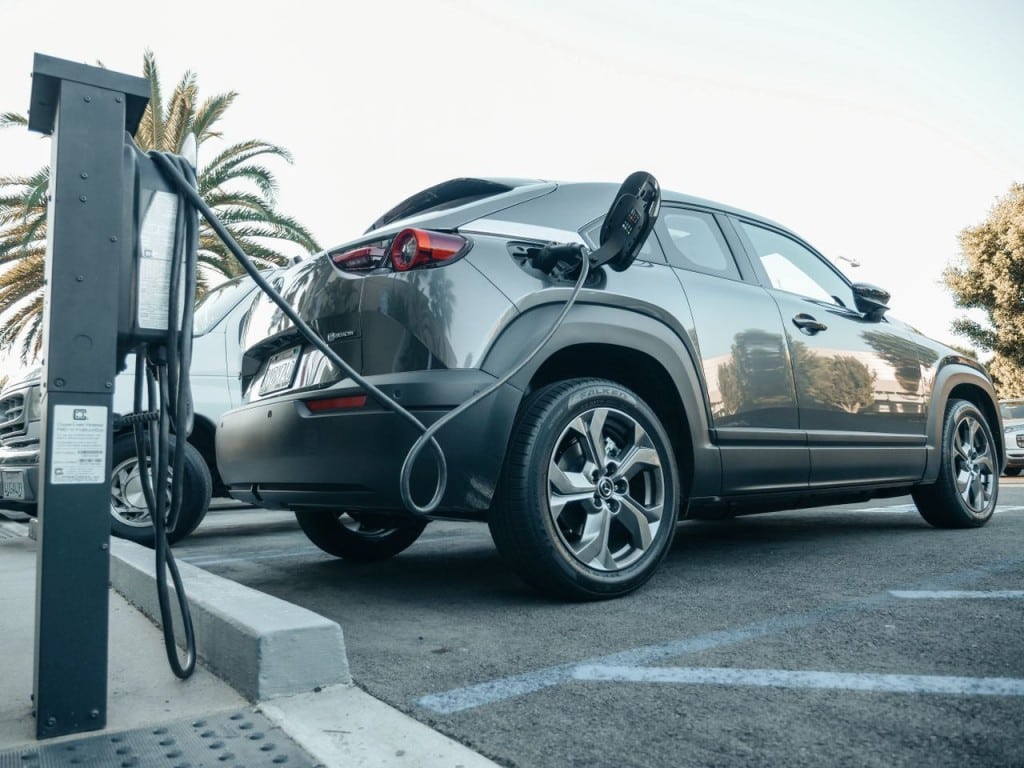
Why do electric vehicles (EVs) get a free ride on our highways?
Why do traditional ICE (internal combustion engine) car owners pay about 43 cents per gallon in gas taxes while EV owners pay nothing … and yet their cars are thought to cause more wear and tear on our highways because they’re so heavy (due to their batteries)? Is that fair?
Those were the questions posed last spring when the legislature considered a bill to make EV (and hybrid) owners pay their fair share. But HB 5568 never got out of the Finance, Revenue and Bonding Committee after a single public hearing brought unanimous, vocal opposition: 54 testified against, zero in favor … not even close.
As of December 2025, there were more than 73,156 electric and plug-in hybrid vehicles registered in Connecticut, a 20% increase over the previous year. But while those numbers are climbing, EVs and hybrids still represent less than three percent of all vehicles registered in the state. Still, it seems that you see (but often don’t hear) them all the time, whooshing around almost silently, their drivers wearing that smile of money-saving satisfaction.
If you’re the hypothetical “average driver” in CT and you drive about 12,000 miles a year, you’ll end up paying about $209 a year in gas tax. Drive 15,000 miles and that number jumps to about $250 a year. And that assumes your car gets about 24.5 mpg.
Those gasoline taxes flow into the Special Transportation Fund, paying for road repairs, the DMV and mass transit that many drivers never ride but benefit from anyway (more people taking mass transit = fewer on the roads).
Opponents of a tax on EV’s and hybrids fear it would discourage their adoption, running counter to Connecticut’s state policy of reducing auto emissions.
Connecticut is one of only eight states that don’t tax EVs. In Pennsylvania the fee is $250 a year for EV owners and $62.50 for plug-in hybrids. In Vermont it’s $89 and $44.50, respectively.
The Connecticut bill, if it hadn’t died in committee, would have raised registration fees for battery electric vehicles to $345 every three years and for plug-in hybrids to $233 every three years, with standard gas vehicles remaining at $120.
Right now EVs only pay $57 registration fees every three years, further incentivizing their adoption.
Lawmakers (and the CDOT) argue that the Special Transportation Fund is in trouble if EV adoption rates continue and gas tax revenues continue to fall.
Why did the bill die in Committee? Why didn’t it have the name of any lawmaker(s) as its sponsor? Because it’s an election year and nobody wanted their fingerprints on a bill that hurts affluent EV drivers … or the environment. “Bad optics,” as they say.
Never mind that CDOT recently replaced new, electric trains on Shore Line East with diesel locomotives belching exhaust as they run between New London and New Haven. I guess saying you’re ‘green’ is easier when you ignore the obvious.
We used to think of the necessary reform of our Social Security system as the “third rail of politics.” Maybe taxing electric vehicles is the same thing? Or there’s always the idea of tolls.

About the Author: Jim Cameron is the founder of the Commuter Action Group and advocates for Connecticut rail riders. His column is published by several publications in the state.
Author
Related Articles

On the Food Scene: Favorite Recipes for the Grill
Connecticut food writer Stephen Fries shares grilling recipes for bacon-wrapped asparagus, Buffalo chicken kebabs, ribeye steaks and an elevated burger in this “taste of summer.”

Talking Transportation: P.T. Barnum’s Bridgeport Was No Circus
Barnum’s genius wasn’t just in filling circus tents. The showman and Bridgeport mayor also understood logistics: how to move goods, people and opportunity efficiently.

The Movie Man: Christopher Nolan’s ‘The Odyssey’ is worth the wait
Christopher Nolan’s epic delivers memorable performances and breathtaking practical effects, making it well worth seeing in IMAX.
Comments (0)
There are no comments on this article.