

Old Lyme Brings in Partners to Explore Solar Project on Closed Landfill
Old Lyme officials hope the project can bring long-term savings on municipal electric bills amid expiring federal tax incentives.
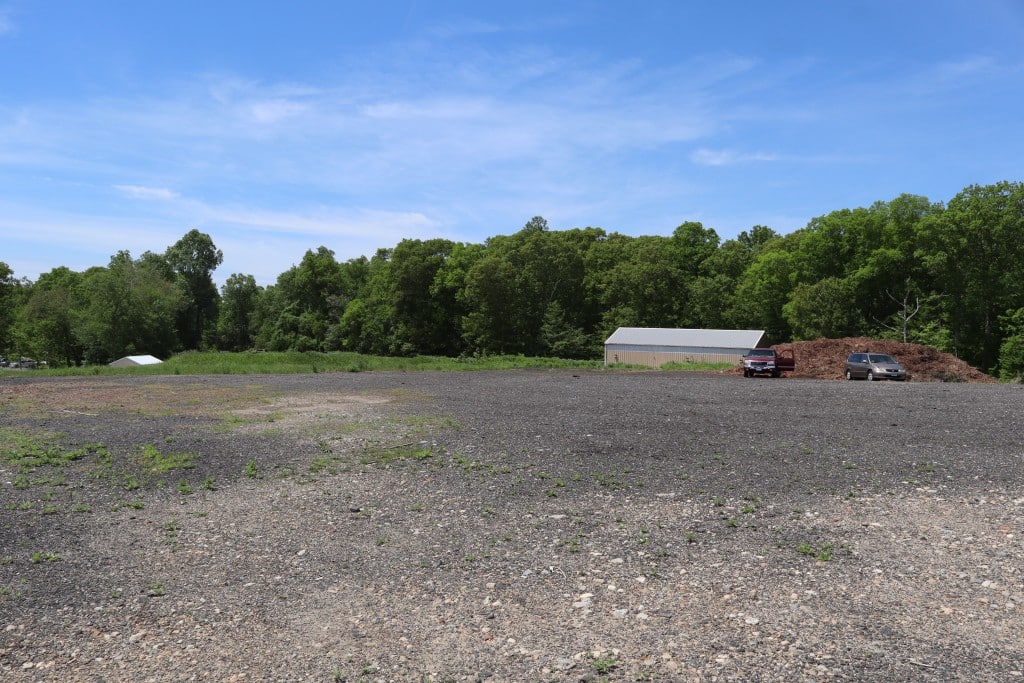
OLD LYME, CT – The Board of Selectmen is moving quickly to explore a solar energy project on a closed landfill at the town transfer station that officials said could generate long-term electric bill savings with no upfront cost to the town.
The urgency is driven by upcoming changes to federal solar tax incentives, according to selectmen. They voted unanimously this month to bring in consultants from CSW Energy and Klee Sustainability Advisors to spearhead the project.
The consultants said acting now could qualify the project for current, more favorable federal tax credits, even if construction on the solar array doesn’t start until after the incentives expire on July 4.
First Selectwoman Martha Shoemaker this week said the specifics of the project – including the number and layout of panels – will be determined by the developers responding to a request for proposals issued Friday.
The solar array at 109 Four Mile River Road would generate electricity credits applied to municipal accounts across town, not just the transfer station site.
A request for proposals (RFP) issued Friday by the town outlines a base proposal for a 305-kilowatt system on the capped landfill designed to offset roughly 400,000 kilowatt-hours of municipal electricity use annually. Bidders can also propose larger designs where feasible, up to a maximum of 5,000 kilowatts, which could generate credits for other eligible municipalities.
Shoemaker credited local Board of Finance member Andy Russell with bringing the issue to her attention and resident Bill McNamara, an industry professional not involved in the project, with educating her about clean energy. She met with New London Mayor Michael Passero and the city’s public works director, Brian Sear, who outlined the process used in their project, which was spearheaded by the same consultants.
The Day newspaper previously reported a 991-killowatt system installed on a capped landfill at Bates Woods Park in New London was expected to result in a roughly $110,000 annual drop in the city’s electric bills.
Shoemaker said the New London officials spoke “extremely highly” of the consultants, who helped the city select a developer through a competitive bidding process and acted as the owner’s representative throughout construction.
In a special meeting this month, Old Lyme’s Board of Selectmen authorized Shoemaker to engage the same firms.
“And this is no cost to the town,” she said.
Under the agreement, the developer selected for the project will pay the consultants. CSW will be paid 7 cents per watt and Klee Sustainability Advisors will receive 3 cents per watt.
Principal Rob Klee is an attorney and was the state Department of Energy and Environmental Protection commissioner from 2014 to 2019.
The project must be selected by the state Public Utilities Regulatory Authority through the competitive Non-Residential Renewable Energy Solutions (NRES) program. The consultants emphasized that choosing a developer through the RFP process doesn’t guarantee the state will select the project to move forward.
If approved, the solar array would not be operational until late next year at the earliest, according to the consultants.
Klee in an email this week said there are no out-of-pocket costs to the town for the RFP process and that the consultants don’t foresee “any significant long-term risks” to the town from the project. He added that common solar development risks can be mitigated through careful developer selection and contract terms.
On Thursday, Shoemaker signed a conflict-of-interest waiver previously discussed among selectmen. The document acknowledges Klee also represents Groton, New London, Portland, Waterbury, Southington and Stonington on clean energy projects, which could potentially compete against Old Lyme’s for limited slots and funding in the state’s incentive program. If that happens, the waiver specifies Klee would no longer be able to represent the affected towns.
Included in the RFP is a timeline for a developer site visit on May 27, a June 10 proposal deadline, an award decision on June 12 and a contract signing around June 15.
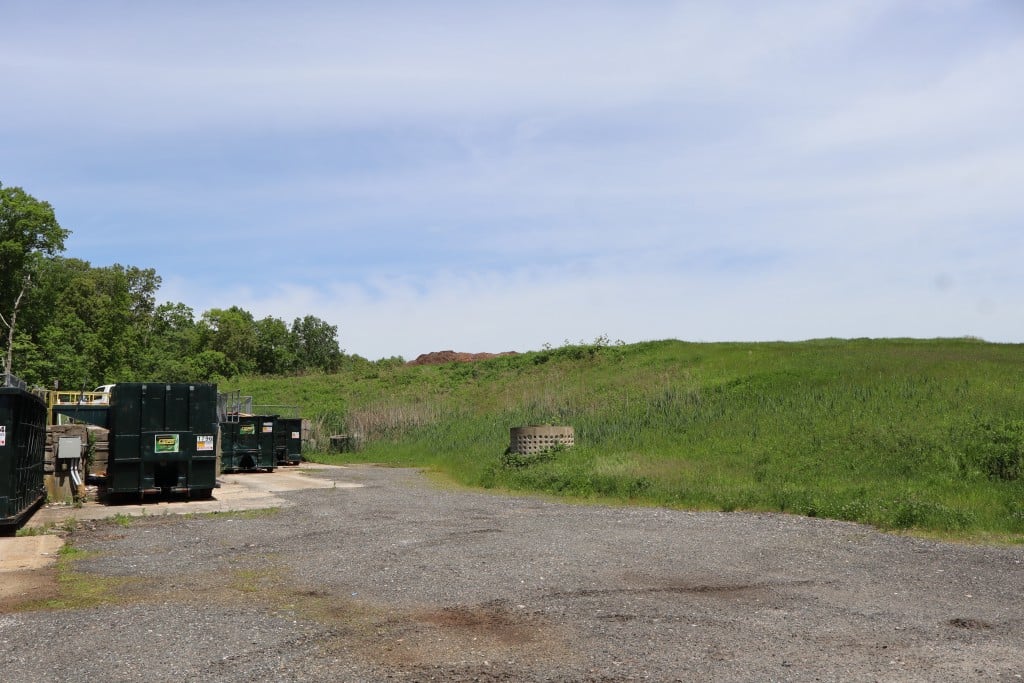
At a May 4 Board of Selectmen meeting, Klee and CSW Energy co-founder and managing partner Allen Sabins outlined the project as a privately developed solar array built on the capped landfill.
The developer would finance, construct, own and maintain the system under a long-term lease agreement with the town, and would be required to decommission the system and restore the site at the end of the 20-year contract period.
Sabins said the firm’s role is to advise municipalities through the process. CSW handles the financial, engineering and technical aspects of the project, with Klee providing legal and policy guidance.
“We are not a developer. We do not build the projects. We do not own the projects,” Sabins said.
He said the landfill project is considered attractive to developers because of state and federal incentives, including an additional 10% federal tax credit, aimed at encouraging development on contaminated land.
“You have a closed landfill, which is a coveted asset for the sake of this program, both at the state and federal level,” he said.
The program relies on a virtual net metering approach, which feeds electricity generated by the solar array into the regional electric grid. The town receives credits on its electric bills based on what the system puts out.
Sabins said there may be an option to extend the contract, though the energy technology landscape is likely to look different by then.
“In 20 years, we are not sure what that next thing might be that might actually replace it,” he said.
Based on a site visit and drone survey, Sabins and Klee said the landfill site appears well-suited for solar development despite initial concerns about slopes they saw in GIS mapping data.
“It looked a little bit more favorable than expected,” Sabins said.
This week, Selectman John Mesham described the project is “a win” for the town.
“The repairs, the maintenance is all on the qualified developer vendor,” he said. “And then they would be responsible for decommissioning after 20 years.”
He pointed to the potential transition to an electric bus fleet as a driving force behind the project. The town’s bus depot sits on the same property as the transfer station.
State law currently specifies 90% of school buses in the state must run on zero-emission fuel or alternative fuel by 2040.
“There’s potential down the road to help with that, and offset our electricity costs,” Mesham said.
Editor’s Note: This article was updated to correct John Mesham’s name.
Author

Related Articles

Radio Host Lee Elci Enters State Senate Race Against Martha Marx
Recently registered Republican Lee Elci of East Lyme is challenging the two-term Democrat on issues including the treatment of police, local control and state spending.

Lyme-Old Lyme Basketball Coach Brady Sheffield Leaving for Mitchell College
After three seasons and a state championship at Lyme-Old Lyme, Brady Sheffield is moving to the college ranks as an assistant coach at Mitchell College.

Old Lyme’s Chase Gilbert Directs Gatorade Grant to Ticks Lacrosse
Ticks Lacrosse will receive a $1,000 Gatorade Community Grant from Chase Gilbert, who says her years with the program helped put her on track for a record-setting high school running career.