
Lyme Officials Call For Unity In The Face Of New State Housing Law
Town officials are urging a unified local strategy on affordable housing in the face of a new state law signed by Gov. Ned Lamont to encourage regional cooperation amid complex and sometimes vague mandates.
LYME, CT – Town officials are urging a unified local strategy on affordable housing in the face of a new state law signed by Gov. Ned Lamont to encourage regional cooperation amid complex and sometimes vague mandates.
HB 8002, which became law on Nov. 26, was created to address Connecticut’s long-standing housing shortage. That’s where consultants hired by the state recently found the number of low-income families exceeds available affordable units by more than 120,000.
The law, among other things, calls on the state Office of Policy and Management (OPM) to reevaluate how many units must be built to address the shortage, and leaves it up to nine councils of government across Connecticut to create regional growth plans that spread out the need across the cities and towns in their jurisdictions.
Towns can participate in the regional plans or create their own.
The law also requires towns to allow buildings with two to nine residential units – including duplexes, triplexes, cottage clusters, and townhouses – in commercial or mixed-use zoning districts as long as public health or safety isn’t compromised. The requirement goes into effect on July 1.
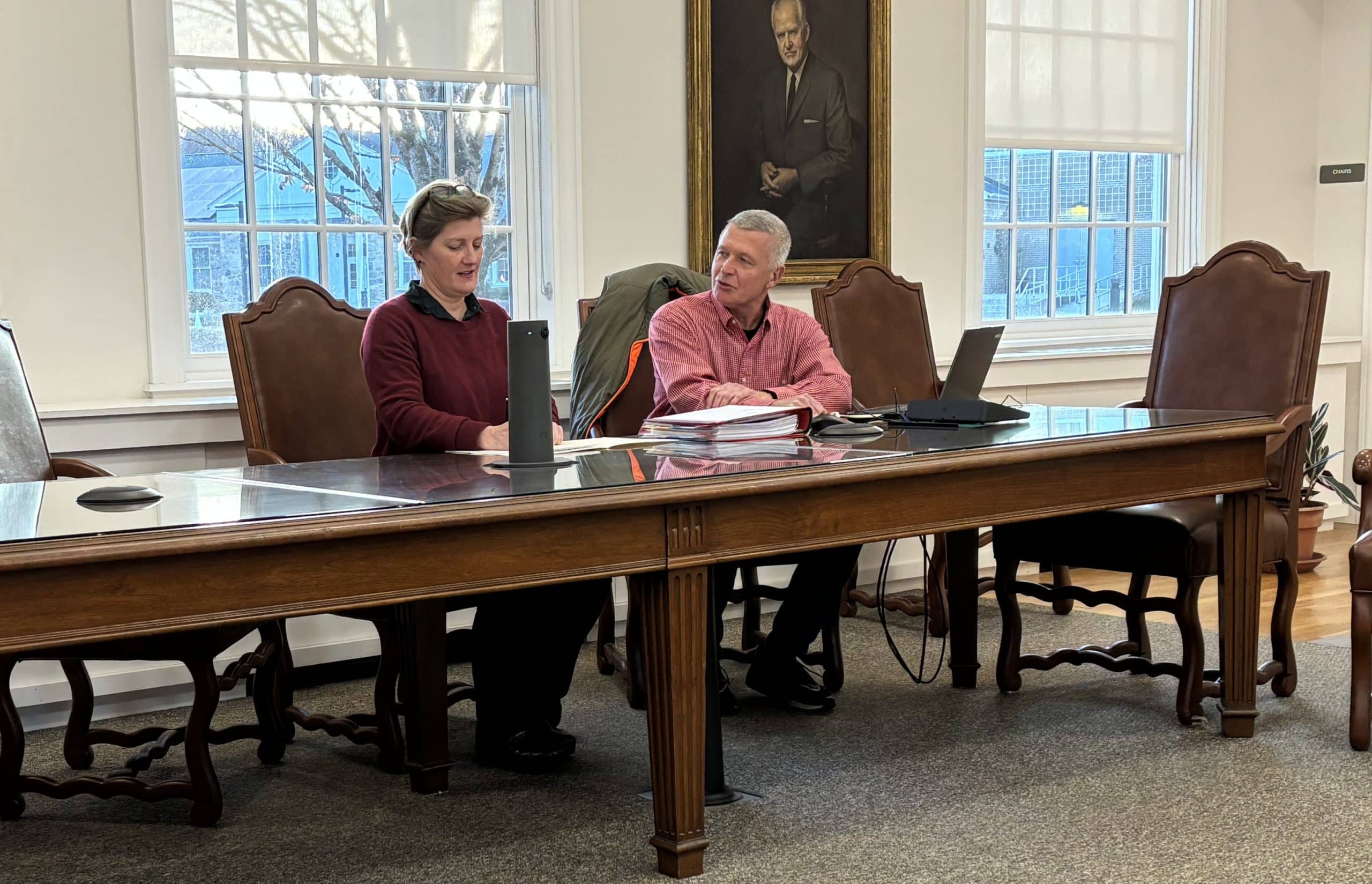
Republican Selectman Tom St. Louis at this week’s Board of Selectpeople broached the locally unprecedented idea of a developer coming in with a housing proposal for the town’s commercial districts.
“That’s all fair game now,” he said.
He emphasized the town needs an “integrated approach” as local officials figure out how to respond to the state’s new affordable housing rules.
It was the first meeting of the new administration headed by unaffiliated candidate Christy Zelek after she defeated St. Louis Nov. 4 in the race for first selectwoman with support from the Democrats. St. Louis, whose campaign revolved around keeping local zoning control out of state hands, received enough votes to secure one of two seats on the board.
St. Louis has said he was motivated to run for office in response to the current law’s failed predecessor, which would have let OPM set each town’s affordable housing quota under a “Fair Share” framework. Early projections showed Lyme could have been assigned anywhere from 122 to 346 deed-restricted units on top of its 1,145 existing homes.
It’s unknown how many units will be assigned under the new framework.
St. Louis called on members of the Affordable Housing Commission, Planning and Zoning Commission, and the Board of Finance to be involved in the conversation about how to respond to new state directives he said will alter “the very fabric of how Lyme is defined.”
Since the early 1960s, the town has updated its foundational planning guide five times, never deviating from zoning and subdivision controls to keep population increases at a minimum. With the exception of farming, most commercial activity in town is limited to two small tracts in the town’s Hamburg and Hadlyme sections.
More than half of the town’s land is protected from development through conservation easements.
“We’ve got to unite,” St. Louis told Zelek on Monday.
Zelek, who campaigned on collaboration and consensus-building, said she agreed.
“I think that should be our goal for everything: Uniting,” she said.
Complicated and Dense
Sam Gold, executive director of the Lower Connecticut River Valley Council of Governments (RiverCOG), on Wednesday said there is no clear, uniform understanding of the new 107-page state law among the regional officials tasked with implementing it.
“This bill is very complicated, very dense, and we are working hard to understand what was passed,” he said.
He said staff members are in the process of flagging issues that might warrant a corrective bill.
While details are scarce, he predicted the number of housing units OPM will assign to the region are likely to be lower than earlier projections for the 17 cities and towns in RiverCOG’s jurisdiction. The council’s territory runs from Middletown to Old Lyme.
“OPM really wants towns to work together and work regionally, and if they allocate numbers that are unreasonable, they’re not going to get that cooperation,” he said.
That can be especially true in some cases because the new law lacks penalties or incentives that a town like Lyme is likely to care about, according to Gold.
The failed Fair Share bill would have rewarded compliant towns by moving them up the priority list for certain state grants, but the new law drops that approach. Instead, compliance makes it easier for towns to qualify for a four-year exemption from an affordable housing law that many critics say undermines local zoning control.
Commonly referred to as 8-30g, the statute says local land-use commissions can only turn down qualifying housing proposals if they can later prove in court that health or safety concerns outweigh the need for affordable units. Once 10% of a municipality’s housing stock meets the state’s definition of affordable – or the town secures a moratorium – Section 8-30g no longer applies.
“Lyme isn’t actively working on trying to get a moratorium under 8-30g, and Lyme isn’t really under a threat of major 8-30g developments. So in that scenario, the penalty for non-compliance is not really relevant,” he said.
Citing one improvement over the Fair Share bill, he argued that shifting the responsibility for assigning local housing targets from OPM to the regional councils will be more transparent and involve more stakeholders.
Each regional council reports to a board made up of the chief executive officers from each member city or town.
“We work for the first selectmen. We are the towns’ chief executive officers’ staff. We do what the towns want us to do,” he said.
That means any decisions on apportioning housing units to towns will come through discussions and negotiations between all the first selectmen – and towns aren’t required to accept those numbers. If the state’s figure seems too high, he said staff may suggest coming up with new numbers and advising towns to base their own plans on that instead.
He also cited the possibility of loopholes in the law.
“Because of the looseness of language, there could be a number of workarounds: Completely unintended, but probably legal,” he said.
One example is the provision requiring towns to allow two- to nine-unit residential buildings in commercial zones. He suggested a small town like Lyme, where commercial land is limited, could rezone those areas as residential and simply allow commercial activity as a permitted use.
“Then under the residential regulations, it’s business as usual,” he said. “If the town of Lyme doesn’t want to allow a nine-unit building in what little commercial (zoning) they have, this is a way of avoiding that.”
‘Doable’ Goals
Affordable Housing Commission Chairman Jim Miller, who is unaffiliated, this week reiterated the complexity of the law while emphasizing the town has until June 2028 to decide how it’s going to satisfy the state’s demands.
“This is a kind of an all hands on deck situation to understand and comply,” he said. “But it’s a fairly long timeline.”
It’s too soon to tell whether Lyme will participate in the regional plan or go off on its own, according to Miller. That will depend on what the regional plan might look like and how many housing units are assigned to the town.
He said projections from the failed Fair Share plan – which could have increased the housing stock by 10 to 30% depending on the chosen methodology – made no sense to him.
“I’m not sure where you would put that,” he said. “Over 50 percent of the land is already in conservation. And the rest of it is all rocks.”
He also reiterated St. Louis’ call for a united approach to addressing the state requirements.
“It’s got to be the Board of Selectmen. It’s got to be the Board of Finance. It’s got to be Planning and Zoning. And it has to be the Affordable Housing Commission, all putting our heads together and figuring out what’s a sensible solution,” he said.
He said his first focus as the newly elected chairman of the Affordable Housing Committee is to follow through with the promise made last month when he took over upon the resignation of co-chairwomen Carol House and Carleen Gerber, both Democrats.
The women at the time said they resigned because new leadership brings new potential. They had led the commission through four years marked by unsuccessful efforts to acquire property so the town could renovate or build small, multifamily units or clusters of single-family homes. The idea is not unusual in Lyme, where Gerber said nine houses have been constructed through efforts involving the town, the nonprofit Lyme Compact and Habitat for Humanity.
The Plan of Conservation and Development approved by the Planning and Zoning Commission last month revealed a “softening” of opposition to affordable housing, according to the report. Authors cited an almost 19% increase among residents in favor of using town funds to increase housing options. But they acknowledged supporters, who totaled 47.9% of respondents in the survey, still do not represent a majority.
Miller called for more immediate and attainable goals to increase affordable housing options, even if they don’t necessarily come with the 40 year, deed-restricted protections pushed for by the state.
“They serve the needs of our citizens and of our town going forward to keep available some smaller homes that we can afford,” he said.
The first proposal would establish what Miller called an “endowment for the preservation of affordable housing” to provide low- or no-interest loans for lower-income households to maintain their homes. The other would give a property tax break of $100 per month to landlords who rent to qualifying tenants, especially tenants who volunteer in the fire or ambulance service.
Miller said his smaller-scale, “doable” proposals pick up on ideas that were discussed previously but got lost in less obtainable goals.
“Our focus right now is to get done the things we already had in process, and then turn to HB 8002 as our next project after we get those things done,” he said. “We have two and a half years to sort that out.”
Editor’s Note: This article was updated to corrected Zelek’s affiliation.
Author

Related Articles
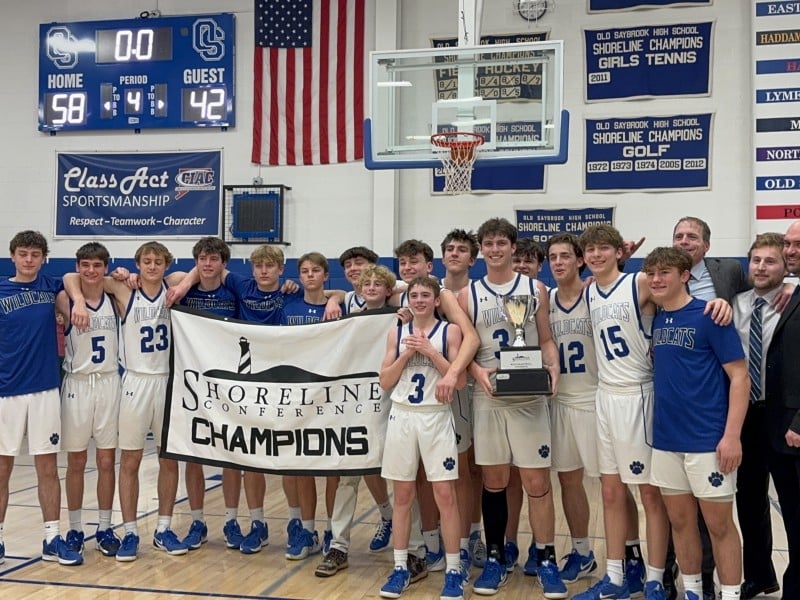
After Another Standout Year, Wildcats Look Ahead Following State Tournament Loss
Head coach Brady Sheffield put it this way: “We picked the wrong night to have a bad night, and unfortunately that is what happens sometimes in sports …”

Hospice Program Recruiting Volunteers and Veteran Companions
Volunteers are needed for companionship, respite opportunities, veteran-to-veteran support and more.

Joel Barlow Ends Lyme-Old Lyme’s State Tournament Run
The Wildcats’ strong season came to a halt Monday with a 51–46 loss to Joel Barlow High School. Stay tuned for a full game story.