

Opinion on Speed Cameras Divided as Old Lyme Awaits Input from Incoming Resident Trooper
With residents divided over the use of traffic cameras to issue speeding tickets, officials say the incoming resident state trooper could help determine whether Old Lyme will join the growing number of towns adopting the technology.
OLD LYME, CT – With residents divided over the use of traffic cameras to issue speeding tickets, officials say a soon-to-arrive resident state trooper could help determine whether Old Lyme will join the growing number of towns adopting the technology.
The Road and Public Safety Committee this year has been reaching out to officials with experience rolling out automated traffic enforcement cameras and has interviewed three vendors so far. The group is charged with making recommendations to the Board of Selectmen about how road safety can be improved in town.
Chairman Greg Futoma earlier this month said the committee is unlikely to make any recommendations until a permanent resident state trooper is selected to replace Trooper Matt Weber, who left last month after five years in town to oversee the State Troopers Offering Peer Support (STOPS) program.
“Given that the resident troopers will obviously be a critical part of this, and the whole police department, it would be great to have the permanent person assigned to that position weigh in and find out what his or her thoughts are,” Futoma said.
While drivers, pedestrians and cyclists largely agree speeding and unsafe driving is a big problem in town, recent survey results collected by the committee show the community is split on whether Old Lyme should use traffic cameras to issue speeding tickets.
First Selectwoman Martha Shoemaker on Friday said the leadership of Troop F in Westbrook, which is overseeing the hiring of Weber’s replacement, are completing the final paperwork for their selected candidate. She was told earlier this week an announcement is likely within a week or two.
The resident state trooper will oversee five Old Lyme constables with full police powers. The resident trooper program provides leadership in more than 50 towns across the state without independent police departments.
The Road and Public Safety Committee last month published survey results from 692 respondents to its summertime questionnaire gauging how locals feel about safety on local and state roads.
Problem areas cited most often in the survey responses include Grassy Hill Road, Rogers Lake Trail, Shore Road, the Hawk’s Nest Beach area, Library Lane and Ferry Road.
Pros and Cons
While the report identified widespread concern over speeding and traffic control, hundreds of written comments revealed a sharp divide when it comes to traffic enforcement cameras. Proponents said the technology could deter speeding and decrease the town’s reliance on property taxes, while opponents described the move as a money grab that would help turn the small, semi-rural town into a surveillance state.
Futoma in a phone interview said the group will continue reaching out to officials from other towns who have implemented the automated enforcement program.
State lawmakers in 2023 authorized cities and towns to install automated speed cameras and to issue tickets.
Information on the state Department of Transportation (DOT) website specifies tickets are mailed to the owner of the vehicle. A ticket cannot exceed $50 for the first offense and $75 for each subsequent offense, with up to $15 for electronic processing. Only warnings are given out during the first 30 days when a camera is deployed.
The committee in the survey told respondents they were considering traffic-calming measures including lowering speed limits, adding speed humps, expanding speed monitoring and enforcement tools like digital signs and automated cameras, and improving crosswalk visibility or adding new ones.
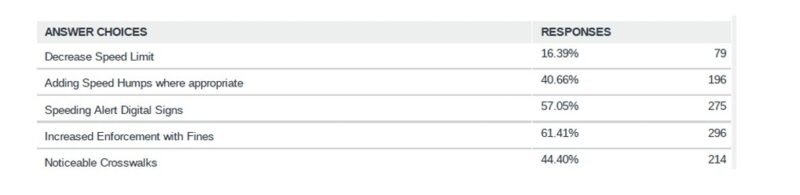
In one multiple choice question, 61.4% of respondents expressed support for increased enforcement with fines. But as one commenter noted, the wording of the available options did not make it clear that “enforcement” referred to speed cameras rather than traditional traffic stops by law enforcement.
“I think it’s telling that you put speed cameras under increased enforcement, when most are likely to believe that means actual police officers,” the commenter wrote in the free response section.
Among proponents, one respondent called for speeding and red light cameras because “drivers in Old Lyme could care less about limits and toothless regulations,” while another said speed cameras are the answer because the police department is often busy with other matters.
“Speeding is not a ‘civil right,’ it is reckless endangerment of others by breaking the law,” another commenter wrote. “I lived in Switzerland for five years. Cameras are prevalent, and fines are issued on a sliding income-related scale so they hurt.”
One person suggested speed cameras “would make a ton of money and taxes could be lowered.”
“It would improve public safety because after getting a few tickets the offenders would probably slow down,” the commenter added. “If they don’t, you can pull their registration, pull their license, send them to driving school at their own expense.”
Others bristled at putting that kind of power in the government’s hands.
“NO SPEED CAMERAS,” one opponent wrote. “Do not turn Old Lyme into a surveillance state.”
“Not a fan of cameras,” another said. “It’s invasive and creates unhealthy incentive for the town to collect revenue vs maintain public safety.”
Others argued people will slow down in areas monitored by cameras while continuing to speed elsewhere and that the technology is “expensive, easily disputed, cumbersome to administer.”
Multiple respondents advocated for police to pull people over the old fashioned way.
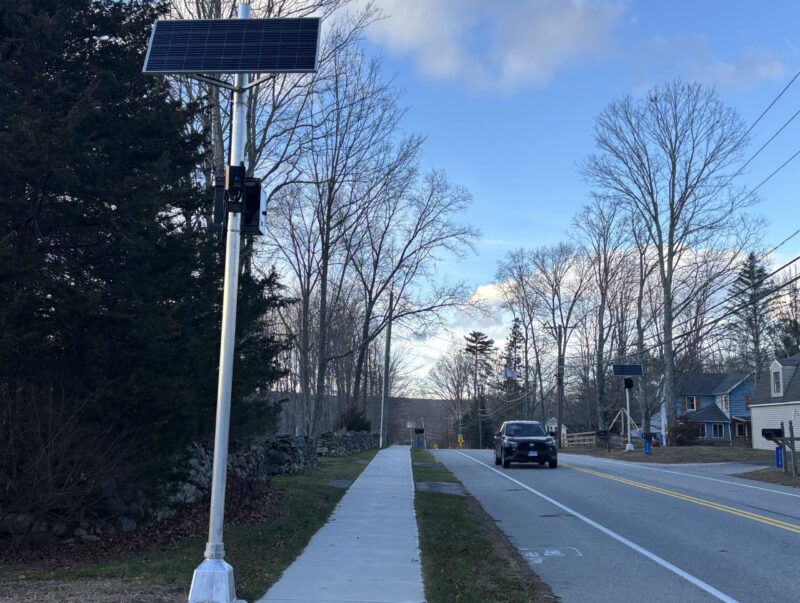
Futoma said the Road and Public Safety Committee plans to use data from existing portable speed display signs to confirm if roads perceived as dangerous in the survey responses are active problem spots. He said the town’s collection of five radar-equipped signs – which can be moved as needed by the police or public works department – record the speeds of approaching vehicles but do not collect any identifying information.
A Growing List
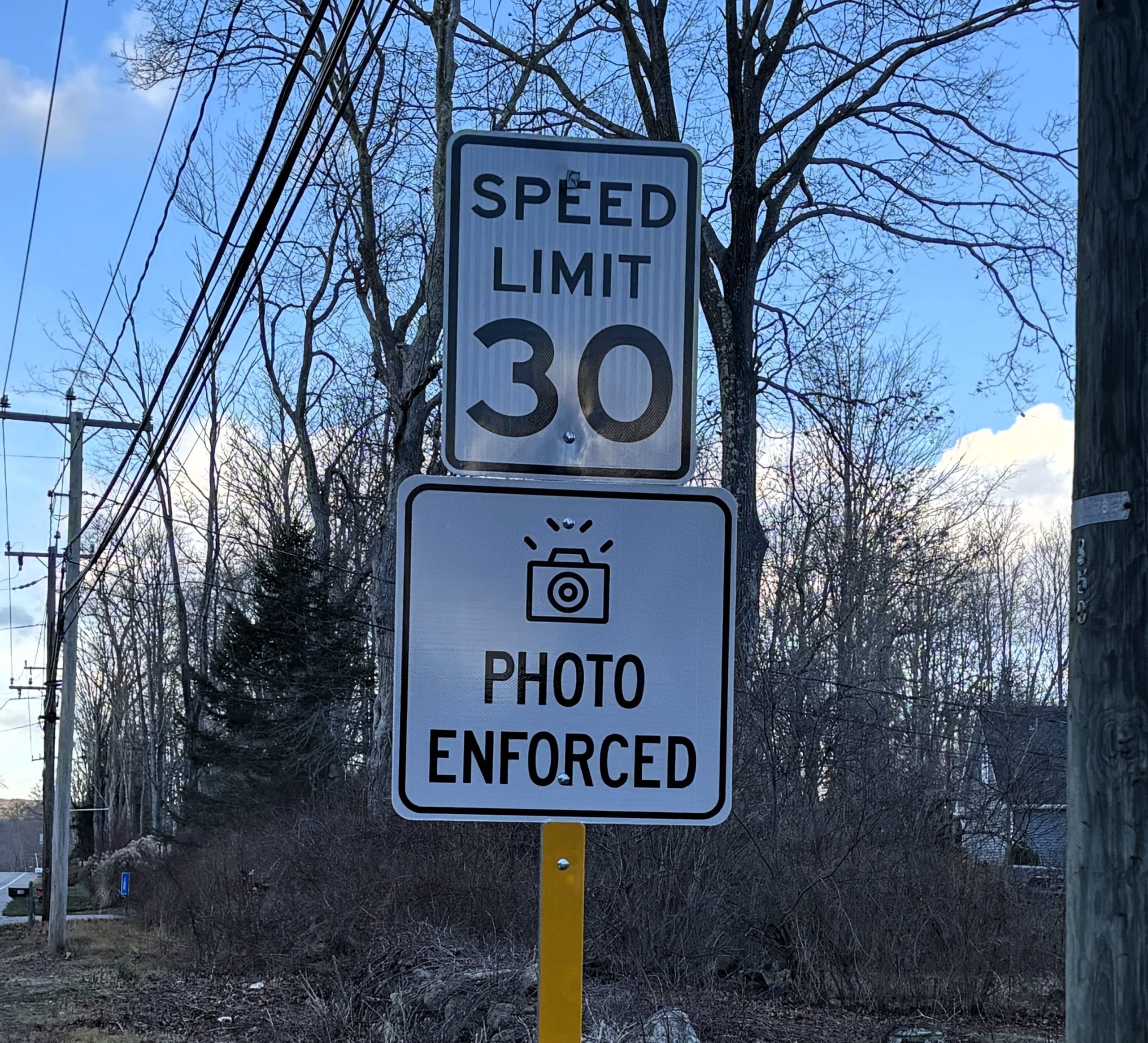
The committee has heard presentations from three traffic enforcement camera vendors this year and plans to look at two more identified by the Capital Region Council of Government as qualified vendors, Futoma said.
He emphasized the committee is charged with making recommendations to the Board of Selectmen, not with making any final decisions. If selectmen decide to pursue participation in the new state program, they will be required to hold a public hearing, update the town’s ordinances and submit a plan to the state Department of Transportation (DOT) for final approval. State-authorized plans are good for three years.
Futoma said a plan to ensure any data remains private will be part of the application to the state.
“We have the committee looking into that really closely,” he said. “We want to make sure that people’s information is protected all through the process, as the information might move from the town to the state.”
Shoemaker reiterated any calls from the committee to install the cameras will go through a thorough vetting process.
“If they make a recommendation, then the Board of Selectmen would involve the police department and our new resident state trooper and the public,” she said. “Because even though they did do a public survey, there would have to be some time for public comment.”
She said she does not know what the appetite for enforcement cameras will be among the Board of Selectmen. Voters earlier this month returned Shoemaker and fellow Democrat Jim Lampos to office, along with newly elected Republican John Mesham.
She acknowledged the list of towns interested in taking advantage of the new technology is growing. Among them is East Lyme, which will hold a Dec. 3 public hearing on a proposed ordinance to authorize automated traffic enforcement cameras in that town.
CT News Junkie this week reported Beacon Falls is the latest Connecticut municipality to be approved to install the cameras by the state. The town joins eight other municipalities approved so far: Greenwich, Marlborough, Middletown, Milford, New Haven, Stratford, Wethersfield and Washington.
Three other applications are pending review by the state Department of Transportation, according to CT News Junkie: Fairfield, Hamden and Stamford. Many other municipalities, including West Hartford, are in the process of completing their applications.
“I know there are people in the public who are concerned about privacy and how much information is shared because of the camera,” Shoemaker said. “But I also am fully aware that we have a small police department. We do have a speeding issue. And would this be a possible solution? That’s where we have to do more research.”
Find the Old Lyme Road and Public Safety Committee survey summary report and full responses here.
Author

Related Articles

Labriola Calls for Common Sense Approach in 23rd District Run
The Old Saybrook treasurer is running for the 23rd District seat on a platform of affordability, local control and bipartisan cooperation.
Old Lyme Library to Lend Laptops to Eligible Residents
Libraries are partnering with the state to close the digital divide. The goal is to expand access to the tools people need to use important services online.

Old Lyme Zoning Survey Finds Support for Flexibility, Not Major Change
Residents want to preserve Old Lyme’s small-town feel by allowing accessory apartments, limiting data centers and ensuring a say in the future of Halls Road.