

Old Lyme WPCA Debates Direction, Elects New Chair, Amid Shift Toward Sewer Alternatives
With direction from selectmen, the Old Lyme Water Pollution Control Authority is reassessing its responsibilities beyond sewers and debating wastewater strategy, testing data and long-term costs.
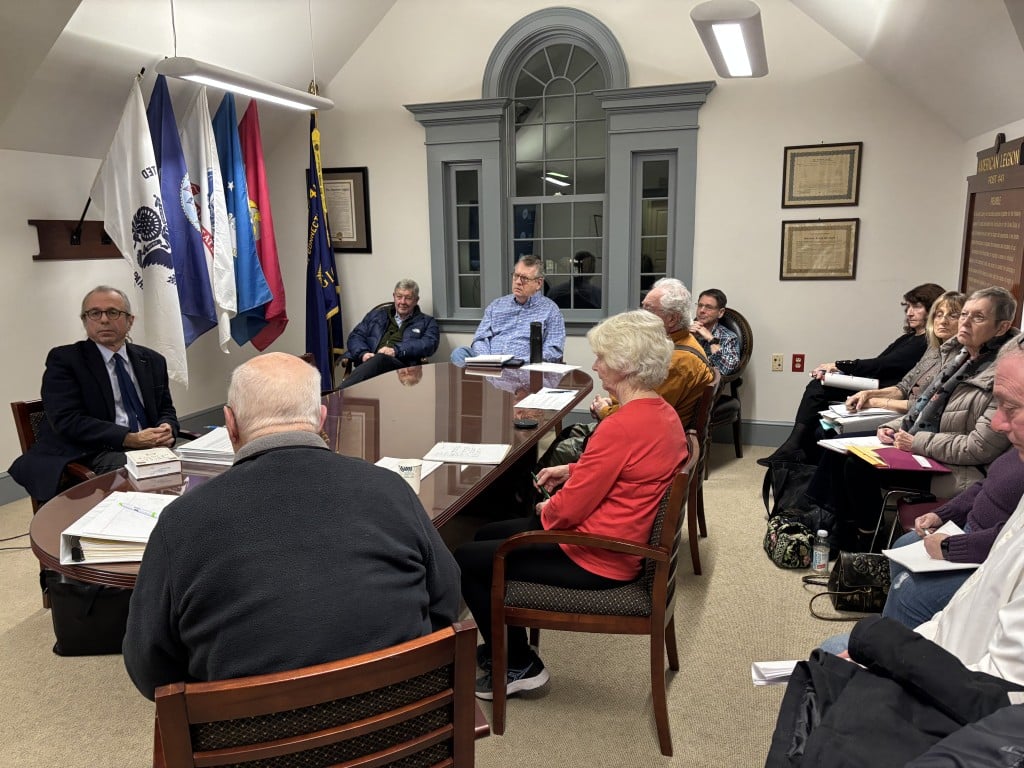
OLD LYME, CT – As town leaders explore alternatives to sewers, a reconstituted Water Pollution Control Authority this week turned its attention to mission and leadership.
During a joint meeting of the Board of Selectmen and the WPCA, First Selectwoman Martha Shoemaker emphasized the authority’s responsibility extends to water quality throughout Old Lyme.
The WPCA is empowered by a town ordinance adopted in 1995 to regulate underground wastewater systems and implement “sewer avoidance” plans. But for years, it’s been focused on how to install sewers in the public Sound View Beach area in response to pressure from the state Department of Energy and Environmental Protection (DEEP).
The current sewer plan has evolved in collaboration with three private beach associations. But voters at a townwide referendum in December came down decisively against the Sound View project.
“You are the Old Lyme WPCA. You are not the Sound View WPCA,” Shoemaker told members.
She asked the authority to begin reviewing sewer, septic and pumping ordinances and to clarify the WPCA’s mission. Any changes will require approval by both the selectmen and a town meeting.
WPCA member and Sound View Beach area resident Mary Daley, a vocal opponent of the sewer project, said regulating water bodies such as the Lieutenant River and Rogers Lake and assessing water quality have received less attention because of the sewer project.
“If we’re going to be a townwide WPCA versus a Sound View WPCA, our focus has to be expanded,” she said.
The special joint meeting came in the wake of five appointments to the WPCA made earlier this month by selectmen to fill three full and two alternate positions. Three of those appointments went to residents from the Sound View area.
Shoemaker emphasized that the results of a 2019 referendum authorizing the town to join the three beach communities remain valid, even though the recent referendum to add $11.03 million to Sound View’s project costs was not approved.
The three private beach communities are moving forward with the sewer project.
She said lawyers for the town are looking at whether Old Lyme remains responsible for its portion of a planned pump station and force main under the terms of a 2020 cost sharing agreement.
“DEEP is not going away,” Shoemaker said. “We still have a $9.5 million referendum that was passed long ago that is still valid. So we could spend up to that 9.5 without going back to referendum.”
She said DEEP representatives told her she would hear from them this month. Agency spokesman Bill Flood in a Wednesday email confirmed they will keep Shoemaker updated on progress being made by the three private beach associations.
“We will be in touch with her office shortly to continue our conversation,” he said.
Model for the State
But Selectman Jim Lampos, a Sound View resident, said officials must still reckon with the 72% of voters who came out against the project in December.
In addition to expressing concerns about steep and shifting cost estimates, opponents questioned whether outdated testing data justified the project, criticized the state’s focus on sewers over modern septic systems and raised concerns that certain communities were not required to share the burden.
“So I am prepared to present an alternative proposal to DEEP to make Sound View a pilot program for alternative systems,” Lampos said. “And that could be applicable to Hawks Nest. It could be applicable to White Sands, Rogers Lake.”
DEEP officials have maintained alternative technologies aren’t feasible due to the need for long-term maintenance and regulatory requirements. On Wednesday, Flood said the agency supports “green” solutions but believes no workable alternative has been identified for Sound View without mechanical systems. He cited a planning study that concluded sewers were the most practical and cost-effective option.
Lampos said there is precedent in Massachusetts for incorporating updated septic system regulations into plans to reduce pollution rather than relying wholly on sewers.
He said the town owes it to voters to present the state agency with a plan “based on real data that’s being used in the real world today, and that could be a model not only in all of Old Lyme, but the state.”
Selectman John Mesham said updated environmental testing is needed before major decisions are made.
“I would like a real good ground game on where we actually stand today environmentally, with hard facts and data,” Mesham said.
Several WPCA members cautioned that testing may have a limited effect. Fifteen-year member Rob McCarthy said DEEP has previously concluded septic systems are unsuitable in densely developed areas regardless of results.
“We’ve been down this path,” he said.
Flood echoed that view in Wednesday’s email.
“In determining whether a community pollution issue exists or can be anticipated, the state is not only looking at groundwater test results but also at other factors including density of development and type of soils,” he wrote. “The site conditions are inadequate to support onsite wastewater systems.”
New Leadership
Following the joint meeting, the reconstituted WPCA during its regular meeting elected Daley as chair in a 6–3 vote.
Sound View resident Dennis Melluzzo, who has worked with Daley in grassroots opposition to the sewer project for years, was elected vice chair.
After failed nominations to serve as chair and vice chair, Andrea Lombard was unanimously reappointed treasurer.
Daley said her priority is promoting transparency and a free flow of information.
“I don’t plan to hold back any information from anyone. I think that’s been one of my biggest objections with this committee to begin with, and so I do plan to be an open book,” she said.
She said she intends to follow the selectmen’s directive to examine all wastewater options, including advanced septic systems.
“We’re not ruling out sewers completely,” Daley said. “But we are going to open up our doors and look at alternatives.”
During public comment, former WPCA chair Steve Cinami addressed his successor while questioning whether the board’s new makeup reflected the townwide mission that selectmen had talked about.
“Congratulations, Mary, on your election,” he said. “I’m glad to see that Martha and Jim were able to remove the people that were an impediment for you not to be chair.”
Cinami, prior to the failed referendum, announced he would be resigning as of the end of the year.
He told Daley the authority looks “more like a Sound View WPCA than a town WPCA.”
He reiterated warnings that rejecting the sewer plan could lead to significant costs.
“I will be tracking how much money it is going to cost the town – in testing, in attorneys and in fighting DEEP – to see if it was worth not passing the referendum,” he said.
He said beach association leaders believe the town remains responsible for shared infrastructure costs of about $3.3 million, plus design costs.
“We’re at $4 million that the town will have to pay — not users, because there are no users,” he said.
Editor’s Note: This article was updated to correct the number of WPCA appointments made by selectmen.
Author

Related Articles
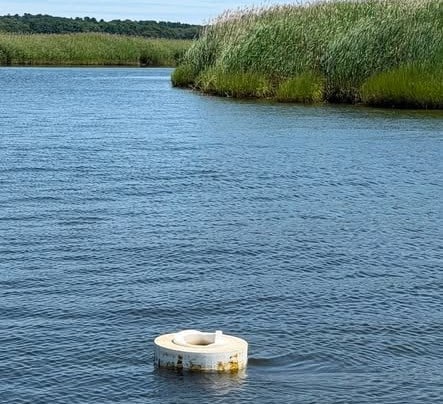
Three Newly Installed River Buoys Destroyed in Old Lyme
Harbormaster Matthew Lynch said three buoys were intentionally cut. He’s asking anyone with information to come forward.

Speak Up, Old Lyme: Resiliency and Housing on the Table Wednesday
Residents will have two chances to weigh in on major planning efforts shaping the town’s future.
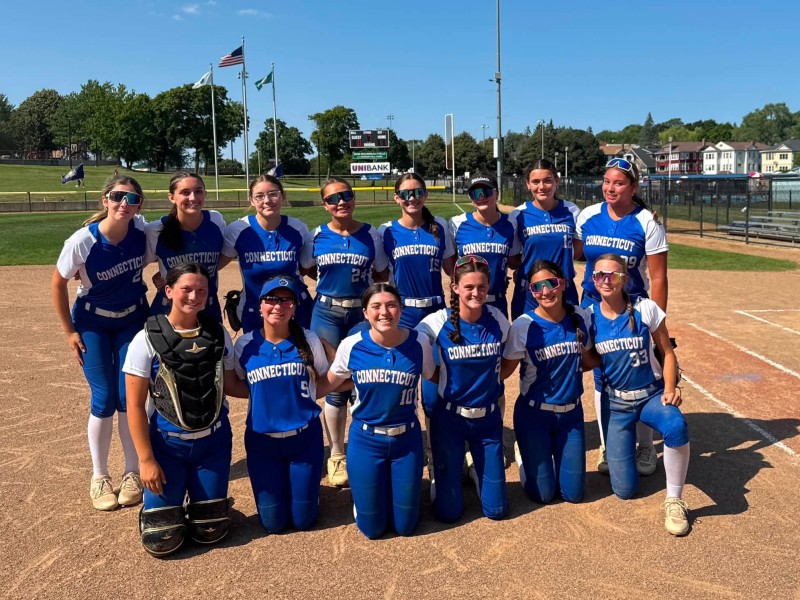
Lyme-Old Lyme’s Shoreline Wildcats Enter Regional Bracket Play Undefeated
The team, representing Connecticut in the Little League Senior Softball East Region Tournament, will begin bracket play Monday after a 10-0 win over Massachusetts.