

Ferraro Aims to Return to State Office
Charles Ferraro, a former state representative, is challenging Norm Needleman on housing, energy costs and local control.
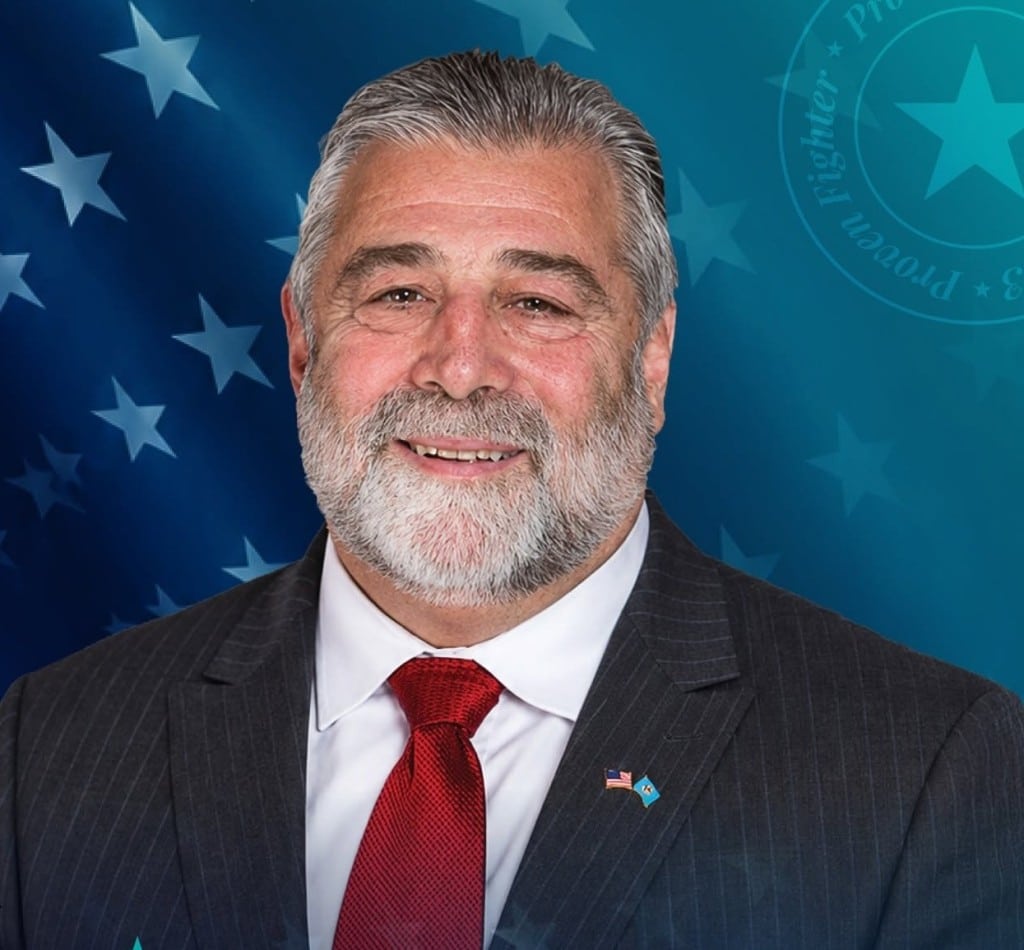
As Lyme residents start to head to the polls for early voting, state Senate candidate Charles Ferraro is echoing local criticism that the state’s new housing law does not account for the needs of rural towns.
Lyme Planning and Zoning Commission members have criticized Public Act 25-1, arguing the law was not written for rural towns like Lyme.
Ferraro – a former state representative looking to wrest the 33rd Senate District seat from four-term Democratic incumbent Norm Needleman – said he agrees.
“No one knows what’s best for a given community like the local residents and elected leaders of that community,” he said in a recent interview with LymeLine. “My opponent and his party continue to believe and pass legislation that takes local control away from residents and hands it over to large developers.”
The law was created to address the state’s housing shortage with key provisions that affect local zoning commissions. The law restricts their ability to require off-street parking for smaller residential developments and allows certain multifamily developments of two to nine units in commercial districts through a streamlined approval process. It also requires municipalities to plan for housing growth.
Ferraro noted the law has been revised from its previous iteration, which was vetoed by Gov. Ned Lamont, but said that even the current version “does not differentiate between towns, but rather forces a one-size-fits-all mandate on every town.”
He was critical of the “forced creation” of residential units in former commercial spaces that “destroys a municipality’s business tax base,” and said the bill’s parking provision “creates huge problems, especially in areas that aren’t used to street parking.”
Ultimately, he said, the new legislation needs to be repealed.
“In my opinion, the hubris that went into this bill is laughable,” he said, citing the law’s “complete disregard for local residents and officials in favor of development at any cost.”
He said his goal in the Senate will be to stop state interference in local land use decisions.
“Every town is different … but I think most enjoy the place they live and frankly don’t have the public safety resources, extra classrooms, or even basic water, electric and gas infrastructure, to absorb the type of development my opponent voted to foist on them.”
The worst part about PA 25-1, according to Ferraro?
“Nothing in the bill does what they say it does,” he said. “It doesn’t solve the housing affordability problem.”
Ferraro said the state needs to grow its economy, cut taxes and prioritize education funding to reduce local property taxes.
“That’s how housing gets more affordable,” he said.
Ferraro said he feels lawmakers “decided they needed to have a headline addressing affordable housing” and neglected other issues.
“They continue to stifle small business so it’s harder to create good-paying middle-class jobs, and with some of the highest electric rates, income taxes, and property taxes across all 50 states, no wonder it’s difficult and sometimes impossible for families to keep up,” he said.
Return to Politics
Ferraro is a former small-business owner who founded and ran West Haven Academy of Karate for 50 years before handing ownership of the studio over to his nephew.
He is also no stranger to state office, having served since 2015 in the state House of Representatives for the 117th District, which includes West Haven, Orange and Milford. He opted in 2024 not to seek a sixth term.
“My wife had wanted to relocate into something more private with more property for quite some time,” he said.
Ferraro and his wife, Geralyn – they were high school sweethearts – made the mutual decision that he would retire from the House after his fifth term and begin house-shopping, he said.
They looked at many areas before settling in Clinton in 2024, according to Ferraro.
During his decade in the state House, Ferraro said he learned some things – particularly the drawbacks of a “supermajority.”
Democrats currently hold 102 of the House’s 151 seats and 25 of the Senate’s 36 seats.
“Extended one-party rule leads to a condition that can be best termed as ‘legislative arrogance,’” he said, and as a result “new ideas are not considered, and ill-advised legislation goes unchallenged.”
He cited affordability as the biggest issue facing the state and the reason he decided to get back into state politics.
He said he’s seen the state “become more and more unaffordable for certain demographics” since he left the legislature.
He pointed to seniors on fixed incomes, college students “who graduate with over $100,000 of student loans on their backs” and young couples who can’t find affordable housing.
“I just couldn’t continue to stay on the sidelines,” he said.
He said he feels he can be more effective in the Senate because there are fewer seats there – just 36 seats in the Senate as opposed to 151 in the House.
“My voice and ideas would be more concentrated in the Senate,” he said.
Finding Common Ground
When he’s out on the campaign trail, he said energy costs are the top issue people ask him about.
“While my opponent believes that our energy policies are ‘solid,’ regular people can’t afford to pay one of the highest rates in the nation,” he said.
If elected, Ferraro said he would seek to permanently remove the oft-criticized Public Benefits charge from electric bills. According to Eversource, the Public Benefits charge includes costs mandated by the state and federal government for financial assistance and energy efficiency programs, purchasing renewable and carbon-free electricity, and funding solar and electric vehicle incentives.
He also opposes state mandates that lack state funding, arguing they force municipalities to raise property taxes.
While critical of many of the Democrats’ policies, he said he also understands the importance of bipartisan collaboration.
“Being able to work across party lines is essential to finding common ground and passing meaningful bipartisan legislation,” he said.
During his stint in the state House, Ferraro served as ranking member on the Energy and Technology Committee – the committee Needleman chairs – and he said the role “often meant reaching across the aisle and working with the other side to implement good, effective legislation.”
He said he is particularly proud of the “Take Back Our Grid” legislation to hold utility companies accountable for outages. He also was proud of House Bill 7156, which authorized the state to procure up to 2,000 megawatts of offshore wind energy.
Ferraro cited “integrity, empathy and strong communication” as the skills that served him well in the House – and he knows they would in the Senate as well.
“I have institutional knowledge – the experience to get to work on day one to advance legislation that will lower costs for Connecticut residents,” he said.
Related Articles
Needleman Weighs Housing Needs, Rural Concerns in Bid for Fifth Term
The state senator seeking a fifth term says Connecticut’s new housing law considers rural communities’ needs. He also discusses affordability, open space, utilities and education funding.
Wisialowski Focuses on Education, Human Services in Second Bid for 23rd House District
Since her 2024 run, she has joined the Old Saybrook Board of Selectmen, building on her local government experience and career serving vulnerable populations.
Embalming Amendment Goes Missing, Zoning Hearing Goes Cold
A 2024 amendment allowing embalming was omitted from a recent zoning regulation revision, derailing a hearing on a proposed Shore Road funeral home.
Comments (0)
There are no comments on this article.