

Old Lyme Looks At Reining In Rainy Day Fund
A draft policy would cap the town’s rainy day fund at 30% of annual spending, which officials said would leave about $2.6 million to put toward projects, tax relief or other needs.

OLD LYME, CT – After years of debate over how much money to save for a rainy day, a working group of the Board of Finance has drafted a policy to finally address the question.
The answer is keeping no less than 17% of total spending in reserve and no more than 30%, according to the draft Unassigned Fund Balance Policy. It was presented this week to the Board of Selectmen by finance board member Candace Fuchs.
Known in finance parlance as the unassigned fund balance and colloquially as the “rainy day fund,” the reserves are made up largely of higher-than-expected revenues and unspent funds from prior budgets.
The most recent audit from CliftonLarsonAllen put the town’s fund balance at $15.59 million as of June 30, 2025. The figure amounted to 37.02% of the town’s total expenditures.
The fund has grown from 22.2% of total spending in 2020.
She said a formal policy would cut down on the debate at the end of each budget planning season over how much of the fund balance should be used to reduce taxes.
Those discussions have generally split along party lines, with Republicans favoring larger reserves for emergencies, including powerful storms threatening the shoreline tax base, and future capital needs. Democrats have called for using a larger share of the fund to reduce taxes and to proactively plan for emergencies through resiliency initiatives.
The policy draft was submitted by a working group of finance board members made up of Fuchs, a Democrat, along with Republican Andy Russell, Democrat Anna Reiter and unaffiliated alternate member Fred Behringer.
The finance board currently is made up of four Democrats and two Republicans.
In addition to being presented to selectmen, the draft policy is being reviewed by the town’s auditors and legal counsel before coming up for a vote of the finance board.
Democratic First Selectwoman Martha Shoemaker at the meeting said money from the fund budgeted to reduce taxes over the past several years has not been needed, allowing the balance to continue growing.
The town set aside $800,000 to mitigate tax increases in 2025, 2022, 2020 and 2019 and $600,000 in 2023. This year, they allocated $1.2 million.
Shoemaker credited responsible budgeting and revenue and investment income that came in higher than projected.
Fuchs argued money shouldn’t continue to accumulate in the fund.
“It’s taxpayer money, and we need to be responsible and put it to work for the taxpayers,” she said.
The most recent figures from CTData, the state’s public data resource, in 2023 showed Old Lyme in tenth place among municipalities for the amount of the unassigned fund balance as a percentage of total expenditures. Lyme was eighth.
| Rank | Municipality | Unassigned Fund Balance | Total Expenditures | Unassigned Fund Balance as Percent of Expenditures |
|---|---|---|---|---|
| 1 | Washington | $7,267,722 | $16,310,822 | 44.56% |
| 2 | Warren | $2,550,944 | $5,913,204 | 43.14% |
| 3 | Cornwall | $2,930,844 | $7,051,261 | 41.56% |
| 4 | Roxbury | $4,114,371 | $9,926,253 | 41.45% |
| 5 | North Canaan | $5,325,041 | $13,245,144 | 40.20% |
| 6 | Branford | $49,536,168 | $125,031,751 | 39.62% |
| 7 | Groton (City) | $6,371,368 | $16,747,820 | 38.04% |
| 8 | Lyme | $3,495,354 | $9,777,543 | 35.75% |
| 9 | Sherman | $5,597,014 | $15,675,914 | 35.70% |
| 10 | Old Lyme | $12,925,106 | $37,177,088 | 34.77% |
The proposed policy would establish a minimum reserve of 17% and a preferred target range of 25% to 30% of “actual total expenditures and other financing uses” and require the finance board to review the policy at least every four years.
Fuchs said the document is based in part on recommendations from the national Government Finance Officers Association (GFOA), which recommends a minimum fund balance of 17%, or about two months of regular operating revenues or expenditures.
Healthy reserves help towns qualify for higher bond ratings, which in turn can result in favorable interest rates on municipal bonds. But Fuchs said that seems to hold true only up to a point.
“In general, what the Board of Finance has been hearing is that anything in excess of 30% really has diminishing returns,” she said.
The town in 2024 received a AAA credit rating from S&P Global Ratings, the highest rating offered by the agency.
If the unassigned fund balance exceeds 30%, the policy would direct the Board of Finance to recommend ways to use the additional funds. Examples laid out in the draft include using the funds for capital projects, infrastructure, flood mitigation, shoreline resilience, debt reduction, other one-time expenditures or tax reduction.
Fuchs said the fund is currently $2.6 million over the 30% threshold.
“Now, I’m not here to tell you how we intend to use that money, but I’m sure we all can think of a lot of great ways to put $2.6 million to work for the taxpayers,” she said.
For Republican Selectman John Mesham, deciding how to spend the excess would simply replace the annual debate about how much to keep in the fund.
“This isn’t a magic bullet about eliminating any kind of debate on where things should go,” he said. “It’s just kind of changing the focus.”
Fuchs said the Board of Finance reviewed policies from Colchester, Waterford and East Haddam and researched guidance from the GFOA and other groups.
Predictability
During a discussion on the draft policy at the Aug. 18 finance board meeting Chairman Bennett J. Bernblum, a Democrat, said taxpayers frequently ask why the town maintains such a large reserve and that a formal policy could help formalize the town’s response.
Supporters of the proposal also argued that coastal emergencies can be addressed through dedicated resilience planning rather than allowing funds to accumulate indefinitely.
They cited a 2019 state law pioneered in Branford that allows a municipality to establish a climate change and coastal resiliency reserve fund, with broader investment options than those available to the general unassigned fund.
Bernblum said he agreed with Republican finance board member David Kelsey, who was not in attendance at the meeting, that a key to determining how much savings is necessary involves identifying capital needs several years into the future.
The chairman acknowledged that could mean budgeting for more than 30% in a given year if there’s a large project down the road.
“My personal concern is just the vagueness of saying it ought to be as much as possible because of some unknown calamity in the future,” Bernblum said. “That’s too vague and unpredictable for me.”
Kelsey in a Friday phone interview said there’s no need for the policy and no way to enforce it.
“If the policy passes because one group is in charge, the next group that disagrees with it, if they get to be in charge, they’re just going to rescind the policy,” the former finance board chairman said.
He said it’s the finance board’s job to revisit the discussion annually because the town’s needs change.
Kelsey reiterated his call for the board to develop three-year projections showing how much money it will need for upcoming capital projects and other expenses. He said members must then decide how much the town can afford to take from the fund while still maintaining an appropriate cushion for emergencies like catastrophic storms.
He pointed to a large portion of the town’s tax base clustered in its beach areas.
“It’s a low likelihood, but a high consequence event,” he said about the next 100-year storm. “That’s why we’ve always had a pretty high balance.”
He described a fundamental disagreement with setting a fixed percentage for the unassigned fund balance. He said some years could require dipping into the fund until only 15% is left, “and that’s fine.”
Other years might require more savings for projects down the road, he said.
“If it turns out we’ve got a huge need and we need to retain a lot of cash, then 35 (percent) might be the right number, too,” he said.
Editor’s Note: Bernblum is president of the LymeLine Board of Directors and a financial supporter, but has no input into the editorial process, which remains completely independent.
Author

Related Articles
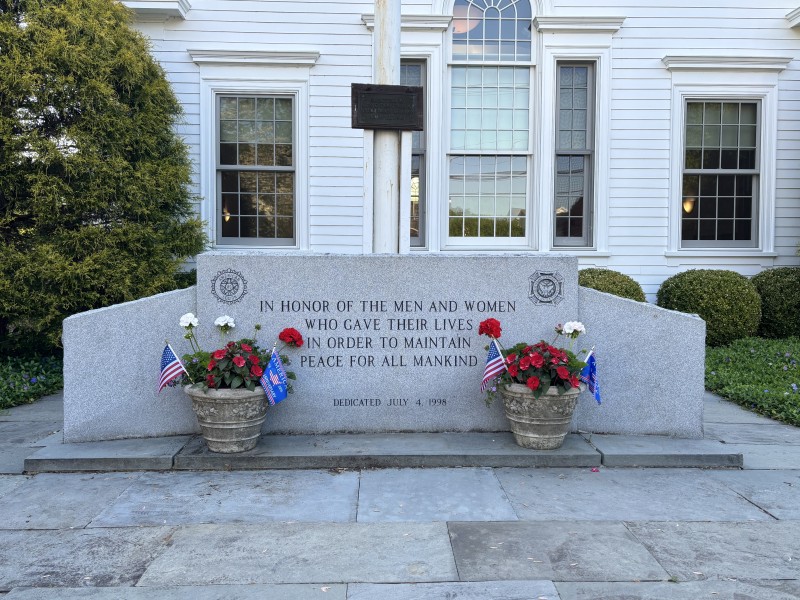
Shoemaker Overrides Historic District Commission Denial With Blue and Gold Star Memorials at Old Lyme Town Hall
Shoemaker said she is standing up for veterans by adding the markers to the military monument. The commission said they belong near the ground in a garden.
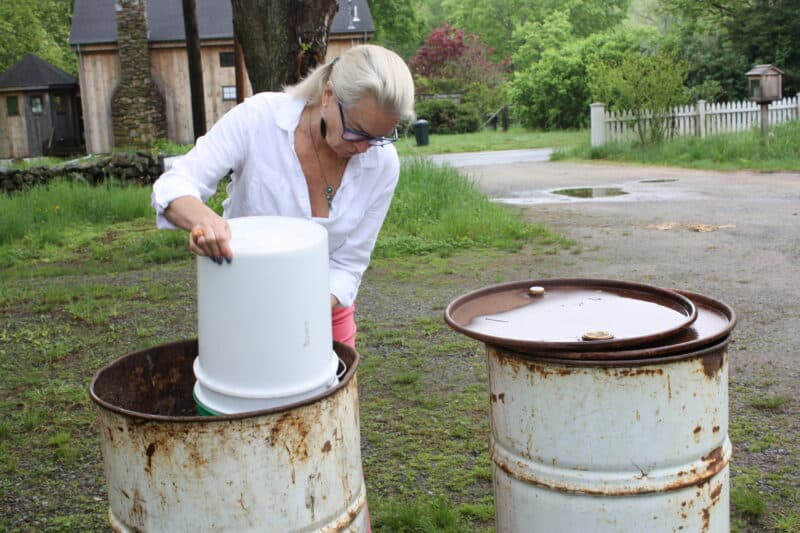
Statewide Program Identifies Lyme’s Composting, Conservation Initiatives as Success Stories
Sustainable CT recognized several local initiatives as “success stories” in efficiency, resiliency and inclusivity with the renewal of Lyme’s bronze-level certification.
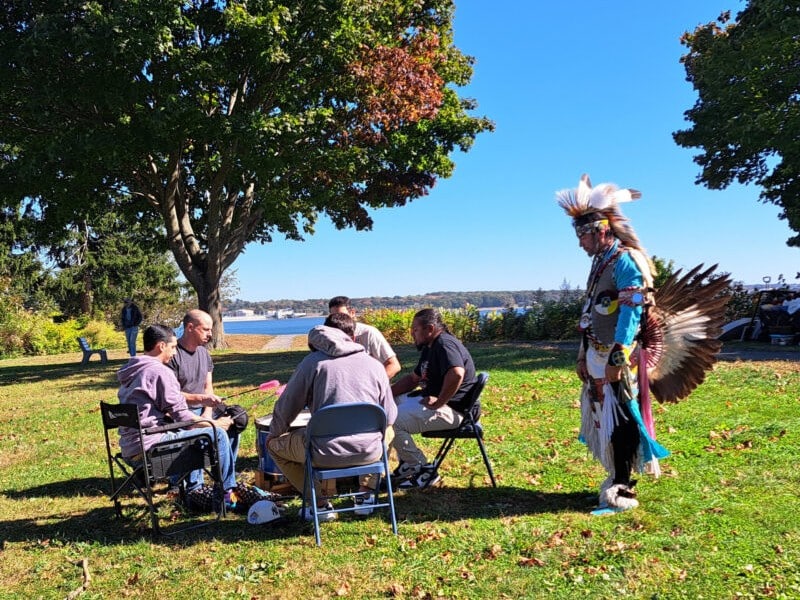
Lyme Anthropologist Works to Bring Nehantic Story to New and Old Audiences
John Pfeiffer has spent decades researching Nehantic history, archaeology and descendants ahead of Saturday’s Nehantic Heritage Day.