

Talking Transportation: The Traffic Calming Illusion
Why do we speed through other neighborhoods but demand calm in our own? Jim surveys the engineering tricks used to enforce what signs alone can’t.
While Jim enjoys a “train spotting” vacation, let’s revisit this column from awhile back…
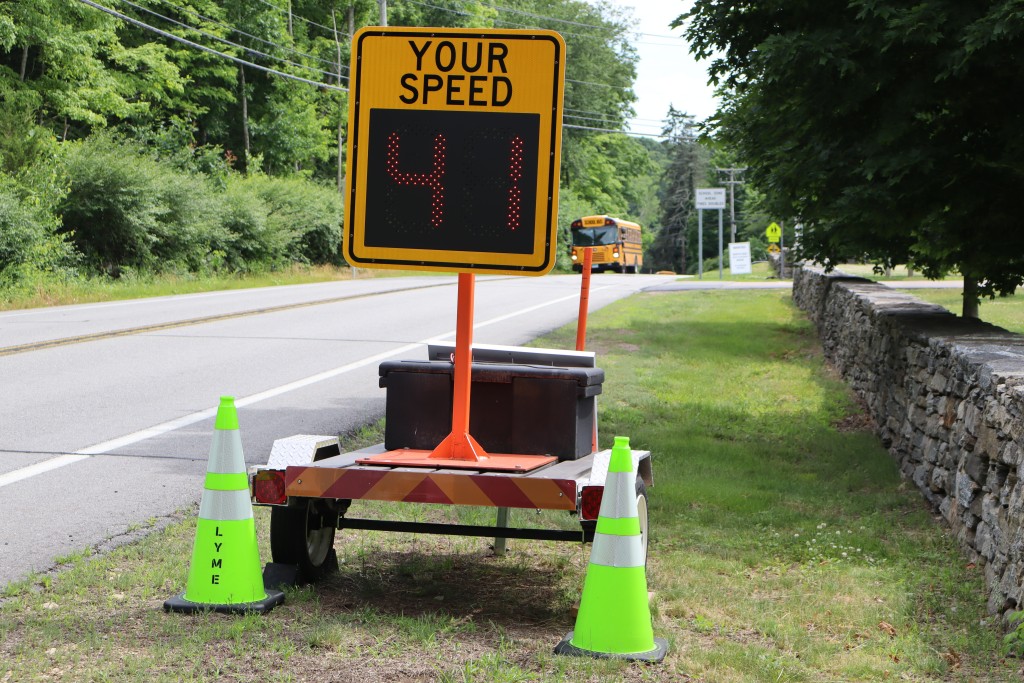
You’ve seen the bumper stickers: Slow down in town. They’re a nice thought. Completely useless, but nice. Apparently, the theory is that shame, printed on vinyl, will penetrate the skull of someone doing 45 mph in a 25 zone while texting.
I wouldn’t exactly call it road rage, but why is it that when we’re behind the wheel, our goal is to get on down the road as fast as traffic will allow, the speed limit be damned? But, once in our own neighborhoods, we transform into traffic calming zealots. It’s remarkable how quickly self-interest masquerades as public safety.
Increasingly, local neighborhoods are serving as shortcuts for GPS apps like WAZE offering drivers routes around clogged arterial streets, spreading out the traffic into our gated suburbs of the mind. But there is a way to enforce the speed limit without radar traps. It’s what traffic engineers call “traffic calming.”
More than just “speed bumps,” engineers now have a slew of street re-designs in their repertoire that can force us to reduce our speed. Among them are:
Speed Tables: Think of these as extended speed bumps with a six-foot-long ramp up, a ten-foot-long flat table and a six-foot-long ramp down. Slow down or lose your muffler.
Roundabouts: Small traffic circles with landscaping in the center make us slow down as we go around, eventually taking a right turn to continue our journey… assuming our fellow motorists know how to maneuver these rounded roadways without circling endlessly.
Chicanes: A traffic chicane is a series of alternating curves or S-shaped shifts built into a roadway. It forces drivers to steer back and forth instead of driving in a straight line. This design interrupts sight lines, narrows the travel path, and naturally forces motorists to slow down.
Bulb-outs or Neck-downs: These are extensions of the sidewalk into car parking areas at corner crossings. Again, you’ve got to slow down … or else.
Sidewalks: It’s amazing how many of our communities lack these pedestrian amenities, forcing hoofers to compete for space on the asphalt with cars. Sidewalks get pedestrians out of the traffic and encourage us to walk and leave the car at home. And PS: sidewalks are NOT for bikes.
Crosswalks: What a concept! A place where pedestrians have the right of way over cars, sometimes even mid-block and without the need for stop signs or red lights. Good concept, if it’s observed by motorists. Otherwise, pedestrians beware!
Roadblocks and Mazes: These were inspired by anti-crime efforts in drug dealing neighborhoods (“crime calming”), making it hard for drive-through drug buyers to find their way in and out of a neighborhood. Local residents know how to maneuver the maze, but casual short-cutters won’t try it again
Of course, all of these traffic calming techniques assume that the major traffic arterials, where the cars belong, can be kept flowing with their own traffic tricks.
Otherwise, we’re just playing whack-a-mole with traffic. We beat it back from the arterials into the neighborhoods, feel virtuous, then act shocked when the neighborhoods become cut-through nightmares. Turns out you can’t engineer your way out of bad urban planning. You can only shuffle the misery around.
Author

Related Articles
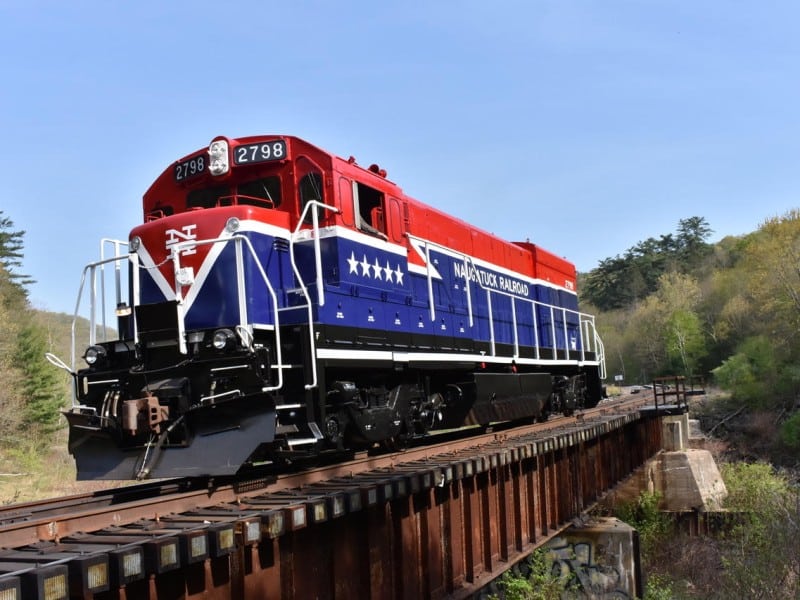
Talking Transportation: The Museum That Owns a Railroad
The museum made its first passenger runs in 1996. It will celebrate with special excursions on Saturday, Sept. 26 and Sunday, Sept. 27.
A View from My Porch: America’s Quarter Millennium – The Human Cost of Independence
Beyond deaths on the battlefield and in captivity, disease claimed many American lives. Smallpox prompted General Washington to take extraordinary action.

Talking Transportation: The For-Profit Railroad
Should Connecticut’s commuter railroads be privatized?