

On the Food Scene: Favorite Recipes for Fresh Vegetables
Connecticut food writer Stephen Fries shares recipes that celebrate fresh produce.
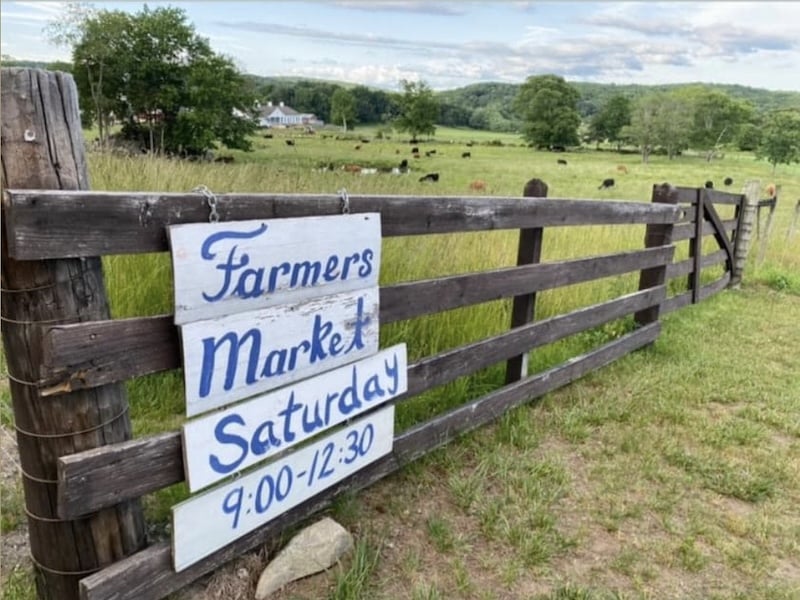
How far of a journey do you think most fruits and vegetables purchased in the supermarket travel from farms to your table? According to foodwise.org, it is about 1,500 miles on average. It depends upon the type of produce and time of year. Think about it, produce is usually picked before ripe, packed, and placed on a refrigerated truck, railroad car, or cargo ship, then off to a distribution center, and then trucked to the supermarket, where it awaits purchase. Lots of energy is used, which affects the environment. Plus, the taste is not as good as produce freshly picked from the tree, vine, or earth. Oh, the earthy aroma of those carrots or tomatoes harvested just a few miles away or from your own garden!
Those who like to garden or shop at local farmers markets often are looking for new ways to use and celebrate fresh produce in the kitchen. A survey from Aramark, the large U.S.-based food service company, found many people want to ease up on meat consumption, and 2 out of 3 want to eat more fruits and vegetables. There are resources to help learn about better nutrition and put vegetables center stage on the plate.
Check out: www.heart.org/healthyforlife and www.fyp365.com
Have you checked out the fresh bounty at your local farmers market? These stands are chock-full of freshness in a rainbow of colors. Tomatoes and corn, hallmarks of summer produce, are almost at their peak right now. Corn straight from the cob is a seasonal favorite, whether it’s grilled, boiled or microwaved. You can then shave the kernels from the cob and toss with a dab of mayonnaise, a splash of lime juice, a pinch of smoked paprika, and cayenne pepper and, voila, you have an easy side dish. Or toss the whole cob in the ingredients to eat it on the go.
At farmers markets, I often hear customers ask vendors, “What can I do with this?” while holding up unfamiliar produce. Another benefit of shopping at these markets is the shared ideas on how to turn vegetables into culinary superstars.
Check out these area farmers markets:
- Farmer’s Market at Tiffany Farms, Lyme, CT
- Waterford Farmers Market
- Old Saybrook Farmers Market, Old Saybrook, CT
- Stonington Farmers’ Market, Stonington, CT
- Madison CT Farmers’ Market, Madison, CT
- Dudley Farm Farmers’ Market, Guilford, CT
- Farmers Market at the Guilford Fairgrounds, Guilford, CT
Adding more fruits and vegetables to our diet is a simple way to make meals more healthful. A new buzzword in the food world is “plant-forward” cooking. It simply means making plant foods such as vegetables, fruits, whole grains, and legumes the main features of our plates. In fact, you probably eat plant-forward meals without even realizing it. “It’s all about letting vegetables and other healthy plant foods become the stars,” says Aramark Chef Andrew Bergholtz. “And there are countless delicious ways to achieve that.” For more about going plant-forward visit
Many of us grew up where salad was simply served as the first course of the meal, sort of an “amuse bouche” to awaken the palate. l remember salads prepared with iceberg lettuce, a wedge or two of tomato, a couple of slices of cucumber, onion, and, perhaps some croutons and imitation bacon bits sprinkled on top. Oh, and who could forget the bottled salad dressing, laden with unhealthy fats and preservatives? Today, especially during the hot weather, a salad can be the entire meal, prepared with a plethora of different greens, vegetables, herbs, fruits, beans, and myriad toppings. Homemade dressings are so simple to prepare, too, using ingredients you most likely have on hand.
Once summer is over, there is no need to have vegetables disappear from your plate. A healthy eating regimen can continue throughout the rest of the year. With the help of Danielle Majeika’s book The Vegetable Gardener’s Cookbook: 75 Vegetarian Recipes That Will Help You Make the Most Out of Every Season’s Harvest, (2019, Page Street Publishing, $21.99), the harvest of each season can be brought to anyone’s plate. Danielle shares gardening tips plus vegetarian recipes that offer inspiration in the kitchen so that we can revel in the season’s bounties, whether from a home garden, pick- your- own farms, or the farmers’ market.
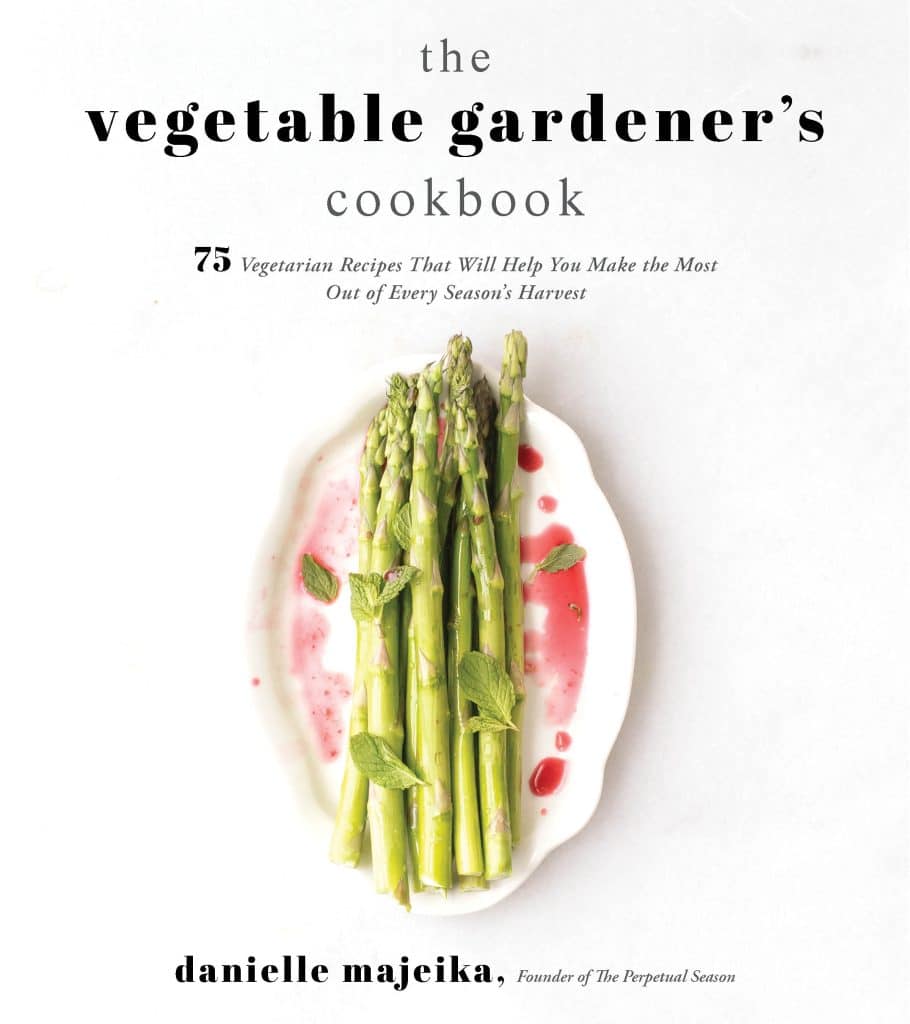
Reprinted with permission from The Vegetable Gardener’s Cookbook by Danielle Majeika, Page Street Publishing Co., 2019. Photo credit: Danielle Majieka.
Recipes included are for any meal, from breakfast to dinner, and for every season. The book is perfect for anyone looking to increase their vegetable intake and explore plant-based dishes. Majeika adds a unique spin to old classics such as Parmesan-Baked Parsnip Gnocchi with Marinara (winter), Lemon-Poppy Seed Zucchini Loaf Cake (summer), Cucumber Pear Soda (summer), and Charred Snap Peas with Chive Vinaigrette & Whipped Ricotta (spring). Before summer fades away, check out the recipes below found in the “summer” chapter. To ease into fall, below is the recipe for Blackened Red Cabbage with Lemon Caraway Butter from the “autumn” chapter for Roasted Tomato Risotto.
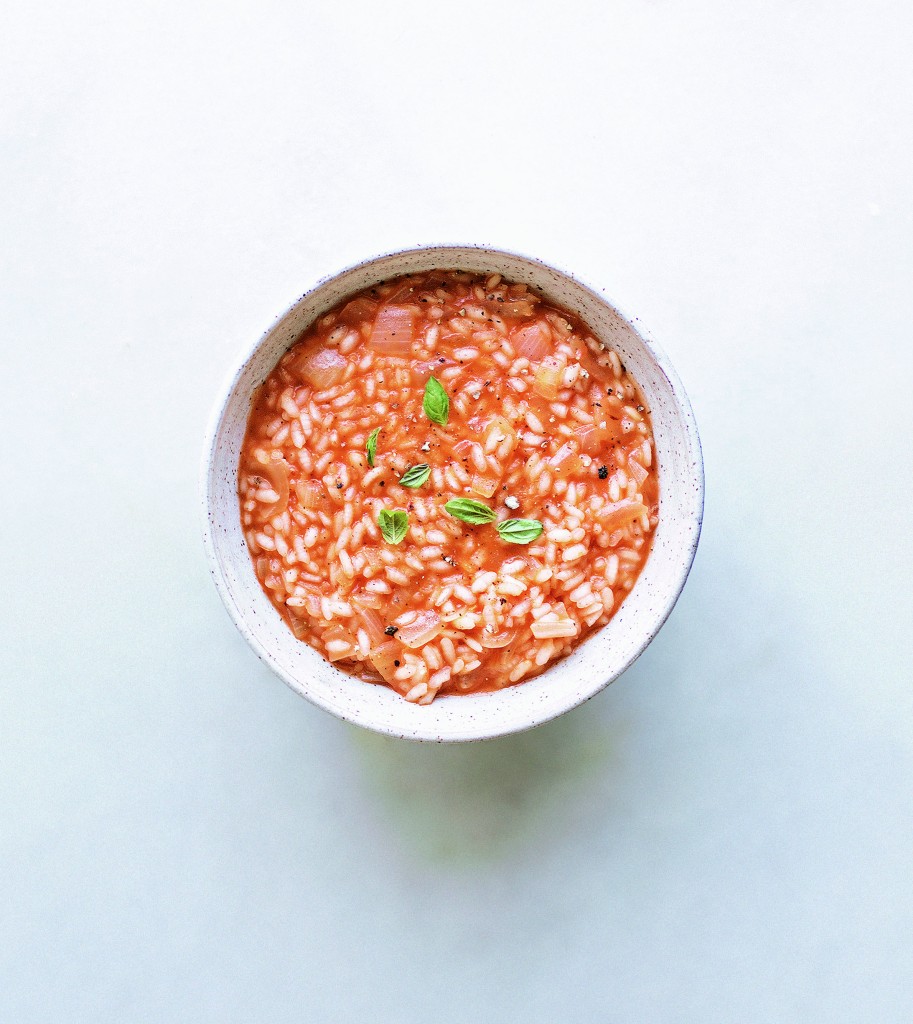
BLACKENED RED CABBAGE WITH LEMON CARAWAY BUTTER
The headnote says, “Red cabbage can often get lost in the shuffle of more ‘exciting’ vegetable options—but it is not to be misplaced or forgotten. Try serving this roasted cabbage on top of a salad or perhaps as a side to the Swiss Chard Tacos with Chili-Lime Pepitas and Queso Fresco.”
¼ cup unsalted butter, softened
1 tablespoon caraway seeds
2 teaspoons fresh lemon juice
½ teaspoon kosher salt, plus more for serving
1 tablespoon extra-virgin olive oil
½ small red cabbage
2 teaspoons apple cider vinegar
In a medium bowl, combine the softened butter with the caraway seeds, lemon juice and ½ teaspoon of salt until well blended.
Heat the oil in a large skillet over medium-high heat and add the cabbage, cut side down. Cook, undisturbed until the underside is charred, 10-15 minutes. Reduce heat to medium-low and add the infused butter. Once the butter begins to foam, tilt the skillet toward you, and spoon some butter over the top of the cabbage. Baste the cabbage every 3-4 minutes, adding more butter if necessary. Cook an additional 10-15 minutes until cabbage is knife tender. Transfer to a cutting board and halve it once more so you are left with two quarters. Drizzle with the vinegar, season with salt and serve warm. Serves 2.
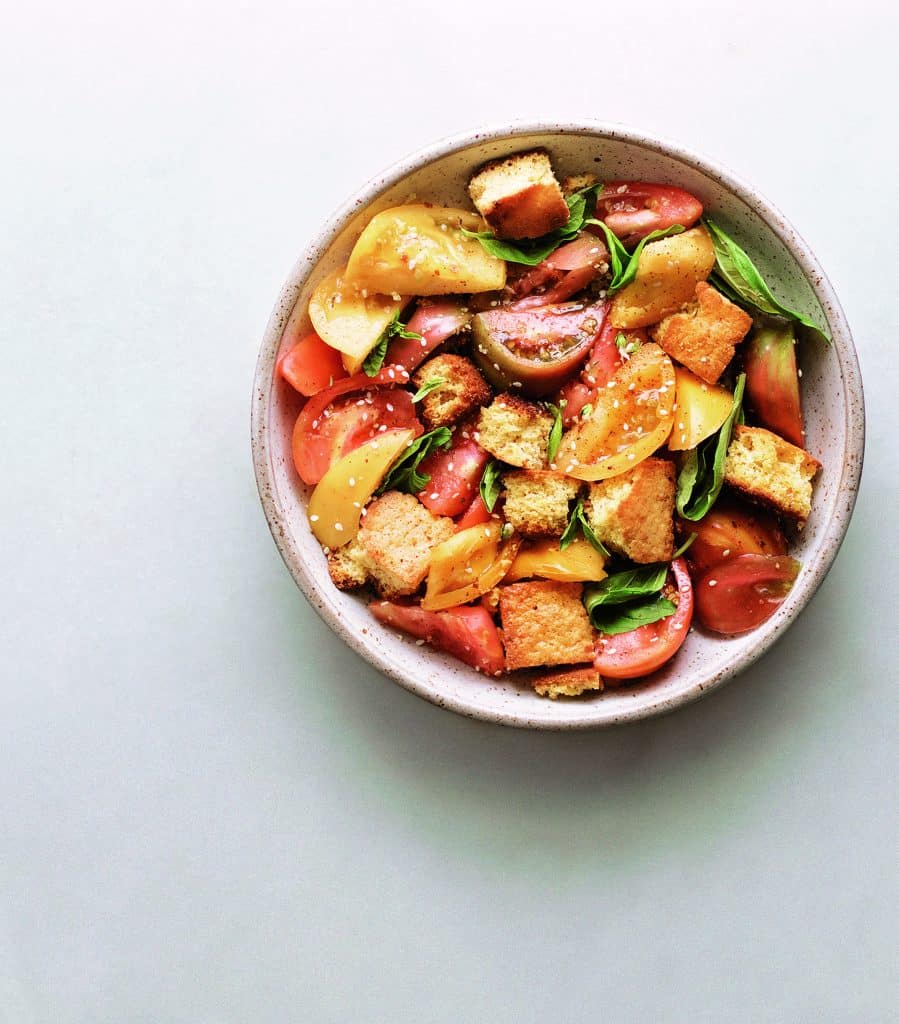
SESAME HEIRLOOM TOMATO SALAD WITH ZA’ATAR–CORN BREAD CROUTONS
The headnote says, “Corn and tomatoes have a natural affinity for each other. Try to compose this salad with the freshest available, as you always should with simple assemblages. The deal is sweetened exponentially with hints of sesame and basil. The croutons work best with day-old corn bread but can also be made with fresh bread if it’s what you have on hand.”
2 cups day-old corn bread, cubed in 1-inch pieces
2 tablespoons extra-virgin olive oil
2 teaspoons za’atar
¼ cup toasted sesame oil
2 tablespoons rice vinegar
¼ teaspoon kosher salt
⅛ teaspoon fresh black pepper
2 pounds heirloom tomatoes, chopped into 1-inch pieces
½ cup fresh basil, sliced into ribbons
Preheat the oven to 400 degrees.
Toss the corn bread with the olive oil and spray it out on a parchment-lined baking sheet. Sprinkle the za’atar over the corn bread and toss to coat. Bake for 10 minutes, until crisp and browned.
In a small bowl, combine the sesame oil, rice vinegar, salt and pepper, and whisk vigorously to combine.
Toss the tomatoes and basil with the vinaigrette. Add the corn bread croutons and toss to coat. Allow the salad to marinate for 20 minutes before serving. Serves 4 .
Tip: As tomatoes begin to ripen on the vine, a boost of potassium will deepen their sugars and sweeten their taste. Wood ash is an easy and accessible source you can apply directly to the base of your plants. Simply add it to the base and then water.
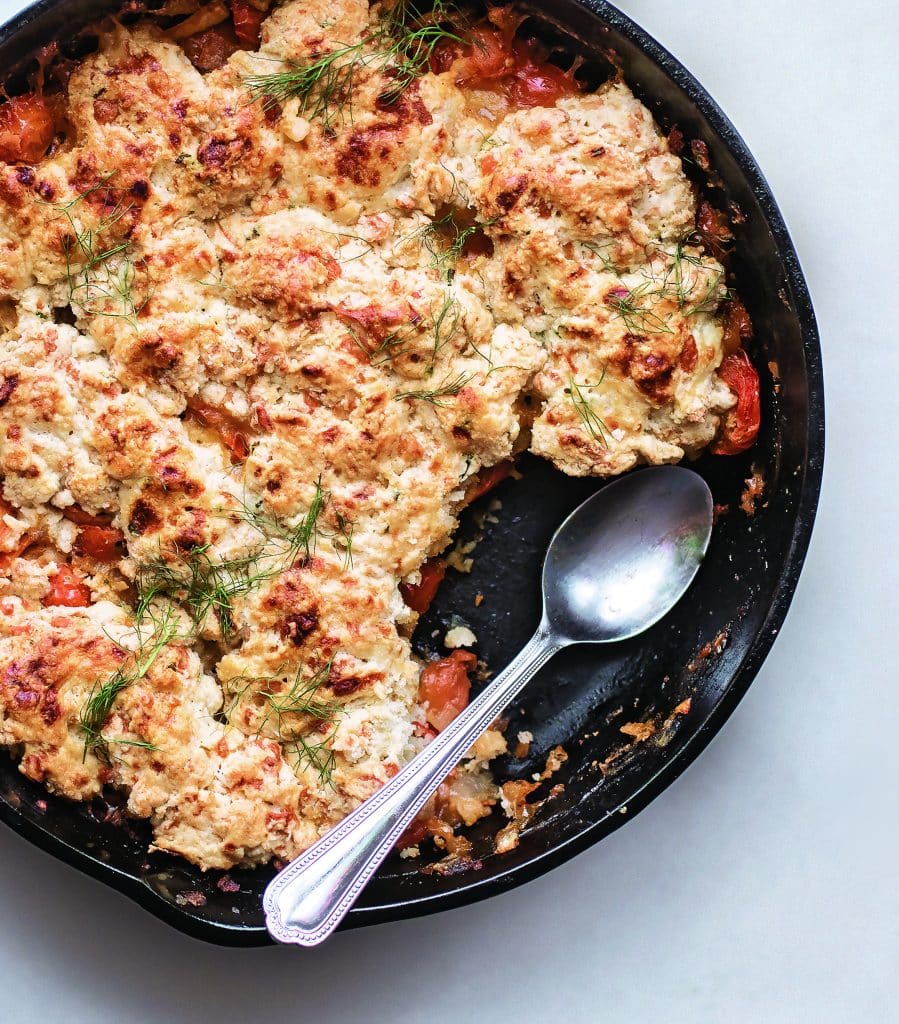
TOMATO COBBLER WITH GRUYERE CHIVE BISCUITS
The headnote says, “This savory cobbler makes a fine case for an easy summer dinner. While I’ve used cherry tomatoes here, feel free to substitute with grape or plum tomatoes. The beauty is being able to use what’s available and transforming the flavors. The filling is ripe with savory and sweet flavor, lent effortlessly by tomatoes, herbs, garlic and fennel. The biscuit topping comes together easily and is punctuated by fresh chives and nutty Gruyère cheese. Serve this hot with a fresh dinner salad composed of tender baby greens.”
Filling
¼ cup extra-virgin olive oil
2 medium onions, diced
½ fennel bulb, finely diced
Pinch of kosher salt
2 cloves garlic, minced
1 teaspoon chopped fresh thyme
½ teaspoon crushed red pepper
2 pounds cherry tomatoes, divided
1 teaspoon light brown sugar
2 tablespoons all-purpose flour
Topping
1½ cups all-purpose flour
1½ teaspoon baking powder
¼ teaspoon baking soda
½ teaspoon kosher salt
6 tablespoon cold unsalted butter, cut into small pieces
1 teaspoon finely minced chives
1 cup grated Gruyère cheese
⅔ cup buttermilk, plus more for brushing
Flaky salt, such as Maldon, for sprinkling
Preheat the oven to 375 degrees.
To make the filling, heat the olive oil in a large skillet over medium-high heat. Add the onions and fennel with a pinch of salt, and cook, stirring occasionally, until softened and golden, 5 to 7 minutes. Add the garlic, thyme and crushed red pepper, and cook for an additional minute. Add half of the cherry tomatoes and the brown sugar. Cook, stirring occasionally, until the tomatoes just begin to soften. Remove from the heat and fold in the remaining tomatoes and the flour.
To make the topping, whisk the flour, baking powder, baking soda and salt together in a large bowl. Add the butter and use a pastry cutter or your fingers to rub the mixture together until small clumps the size of peas form. Add the minced chives and Gruyère. Add the buttermilk and gently mix with a fork until a sticky dough just forms.
Transfer the tomato mixture into a 2-quart baking dish. Spoon the biscuit dough over the tomato filling, leaving space for the tomatoes to steam through. Brush the dough with additional buttermilk. Lightly sprinkle the biscuits with a few flakes of salt. Bake until golden and bubbling, 50 to 60 minutes. Allow the cobbler to rest for 15 to 20 minutes before serving. Serves 6–8.
About the Author: Stephen Fries is professor emeritus and former coordinator of the Hospitality Management Programs at Gateway Community College in New Haven, Connecticut. He has been a food and culinary travel columnist for the past twenty years and is co-founder of and host of “Worth Tasting,” a culinary walking tour of downtown New Haven and three-day culinary adventures around the U.S. He is a board member of the International Association of Culinary Professionals. For more, go to stephenfries.com.
Related Articles

Talking Transportation: What Happens When Gasoline Costs $10 a Gallon?
Columnist Jim Cameron revisits predictions made almost 20 years ago to see how they’ve held up.

A View from My Porch: America’s Quarter Millennium – The Human Cost of Independence
Beyond deaths on the battlefield and in captivity, disease claimed many American lives. Smallpox prompted General Washington to take extraordinary action.

Talking Transportation: The For-Profit Railroad
Should Connecticut’s commuter railroads be privatized?