

Frustration Mounts Over Mile Creek Road Excavation Operation in Old Lyme
A local gravel pit remains a source of tension as neighbors cite environmental concerns, the town pursues litigation and officials face questions over a renewed permit.
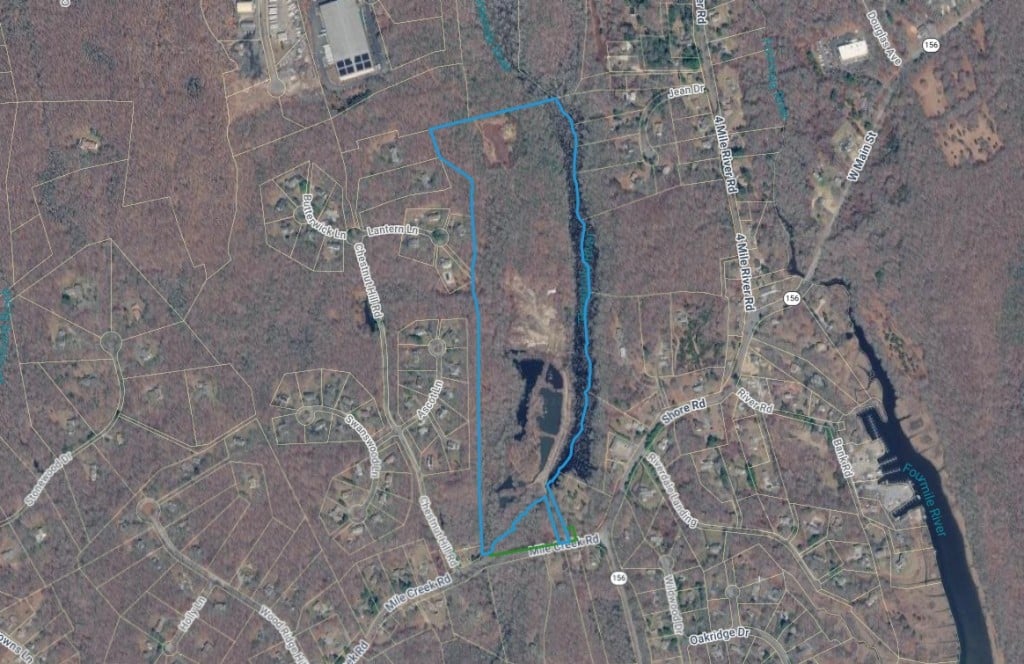
OLD LYME, CT — Frustrations about a controversial gravel pit on Mile Creek Road remain evident in an ongoing lawsuit, neighbor complaints and a local commission member cursing at the town’s land use coordinator.
Recent discussions have revolved around the reissuance of a zoning permit to 308-1 Mile Creek Road property owner Ron Swaney. The previous permit expired in 2024, at which time Land Use Coordinator Eric Knapp refused to renew it because of ongoing issues with work in the wetlands and the expiration of a Department of Energy and Environmental Protection (DEEP) stormwater discharge permit for the property.
After that, work at the site had largely stopped, Knapp said Wednesday. He had been left with the impression DEEP would not reissue its permit and, therefore, neither would he. But, in June, the state agency reissued the permit.
Doing so, according to Knapp, put him in the position of reevaluating whether to reissue permissions from the town.
“I believe I was obligated to reissue the zoning permit to allow him to recommence work on the site,” he said. “Obviously it has not been a popular decision with neighbors. It has not been a popular decision with many people. I just did not feel like I had a choice.”
Neighbors of the site have raised concerns about damage the operation is doing to the Three Mile River and corresponding wetlands.
In a phone call Tuesday, Peter Caron, who lives across the river from the site, said Swaney has been issued violations for a number of matters, including working without a permit, working in the river, placing boulders in the river and changing the course of the river.
Caron sent a letter to the Connecticut Department of Environmental Protection with concerns that the department reissued the stormwater discharge permit for the operation.
Caron said he received a “form letter” response that failed to address his concerns. He alleged Swaney repeatedly cut corners, failed to obtain required permits, disregarded the conditions of the permits he did hold and allowed critical stormwater controls to fail.
“It’s just very frustrating, very frustrating,” he said.
He argued Swaney hasn’t provided enough engineering information to show the project will keep runoff and sediment under control while meeting state water quality standards. He also argued a beaver dam cannot be relied upon as a stormwater control measure because it is a natural feature rather than an engineered device.
According to Knapp, Swaney “is in a constant battle with the beaver to keep the road open.”
Knapp, since reissuing the permit, said he has not issued any new violations and added he had spoken with Swaney Tuesday and planned to inspect the site later in the week.
“If I see things that are going on, I’ll issue new violations,” he said.
Knapp said he has issued remediation orders for past violations and he and Swaney’s attorney, Peter Alter, had come to an agreement for a remediation plan that was approved by the Inlands Wetlands and Watercourses Commission (IWWC).
Swaney on Wednesday did not respond to a message requesting comment for this story.
Frustrations Mount
At one point in the discussion at the July 29 IWWC meeting, member Michael Aurelia said Knapp was “full of s**t.”
The comment was a reply to Knapp saying the gravel pit operation had been in existence since the 1930s.
Knapp did not respond to the curse but Commission Chair Tom Machnik noted it was unprofessional.
Later in the discussion, when Knapp said he was unable to locate permits for certain activities on the site, including for an undersized culvert, Aurelia noted he did not know “how to deal with that.”
Knapp replied,“I don’t know how to deal with you.”
The conversation continued with no one seeming to acknowledge the comment.
At the end of the meeting, Aurelia told Knapp he was “sorry for getting excited” and blamed his reaction on his “half-Italian” heritage.
In a phone call Wednesday, Knapp said Aurelia had since sent him an apology. Knapp declined to comment further on the matter.
Knapp forwarded the apology to LymeLine.
“I sincerely apologize for the inconsiderate comment I made to you at the last meeting,” Aurelia wrote. “It was not only inappropriate but also unprofessional. I value the working relationship we developed over the last two plus years. I will try hard to rebuild that relationship. I hope you will let me.”
At the August 17 Board of Selectmen meeting, First Selectwoman Martha Shoemaker said she was looking into the inappropriate comment.
In a phone call Wednesday, Shoemaker said she heard Aurelia had sent the apology and had spoken with him and, as far as she was concerned, the matter was resolved.
“I think he was remorseful and I think it’s taken care of,” she said.
Aurelia on Wednesday did not respond to a request for comment.
Legal Action
The commission has also started litigation over the previous violations. The matter is before the Connecticut Superior Court in New London, with the next proceeding scheduled for a pretrial conference at noon on Oct. 2.
According to the November 2024 complaint from the town, the suit alleges a continued violation of cease and desist orders dating back to 2022 for unpermitted activities within the upland review area of the wetlands commission.
Knapp said the permit will come up for renewal again next year, when the Zoning Commission will be able to consider whether it should be reissued.
Though commercial excavation operations are not permitted in the residential zone, town officials have treated Swaney’s operation as a preexisting use in place before the current zoning regulations. Such uses are commonly referred to as being “grandfathered in.”
Knapp noted a comprehensive, two-year rewrite of the town’s zoning regulations is ongoing, with the commission seeking public input on what can be built and where. He said how to address preexisting industrial uses – including gravel pits – will be part of the process, but added the legal issues are complicated. He declined to speculate about how the changes could affect the operation.
The town has been renewing the permits on the site for 20 years, he said. The regulations allow the permits to be renewed as long as the operation does not expand and there are no new activities.
Aurelia, at the July 29 IWWC meeting, said the town has jurisdiction to implement stormwater controls and should be made aware of what Swaney is doing to control discharge. He said he has seen sediment ponds on the site filled with silt and that an engineer-designed system needs to be put in place.
Aurelia also said the river and associated wetlands are habitats for various species, and he has seen “vernal pool critters laying eggs” there.
“I wasn’t able to get out there again to see if the eggs hatched, but in my humble opinion there’s a vernal pool habitat associated with the wetlands, especially the thicker wetlands associated with that river,” he said.
In a statement, DEEP spokesman Bill Flood said the agency is aware of the town’s concerns regarding the site and understands that litigation concerning the property is ongoing.
“DEEP is not a party to the matter and cannot comment on the parties’ respective positions or characterizations of past events,” the statement reads.
Flood went on to write that the agency’s preferred approach is that stormwater be retained on-site and infiltrated into the ground, which does not require a permit.
“If the site could not achieve that approach, it would need to obtain coverage under the applicable Industrial Stormwater General Permit,” he wrote. “The site subsequently submitted an application for coverage under that General Permit.”
He said Swaney’s Stormwater Pollution Prevention Plan indicates that the stormwater enters engineered stormwater detention ponds prior to discharge to the Three Mile River.
DEEP evaluates permit applications based on statutory and regulatory requirements and information available as part of the permitting process, Flood said.
He noted the agency will conitinue to oversee compliance with the permit conditions, environmental requirements and other laws.
Comments (2)
Comments are closed.
Related Articles
Roger Tory Peterson Estuary Center Continues CT River Lecture Series With Butterfly Talk, Oct. 29
This week’s lecture focuses on monarch butterflies. The series concludes Nov. 18 with findings from the Connecticut Bird Atlas.
Old Lyme Ethics Commission Won’t Investigate Selectmen Over Beach Gathering Controversy
The resident who filed the ethics complaint says the decision leaves questions about how selectmen handled a beach gathering expected to draw people of color.

Letter to the Editor: Wisialowski Is Compassionate Public Servant
Old Lyme DTC member Mary Jo Nosal cites Wisialowski’s local government experience, professional work helping vulnerable people and commitment to the 23rd District.
The “NIMBY” folks should return to ?
The gravel pit has been open and operational for over 75 years