

Old Lyme Sewer Staging Plan Approved, Construction Set for After Labor Day
Approval of the staging sites marks another step forward for the long-planned sewer project serving Old Lyme Shores, Old Colony Beach and Miami Beach.
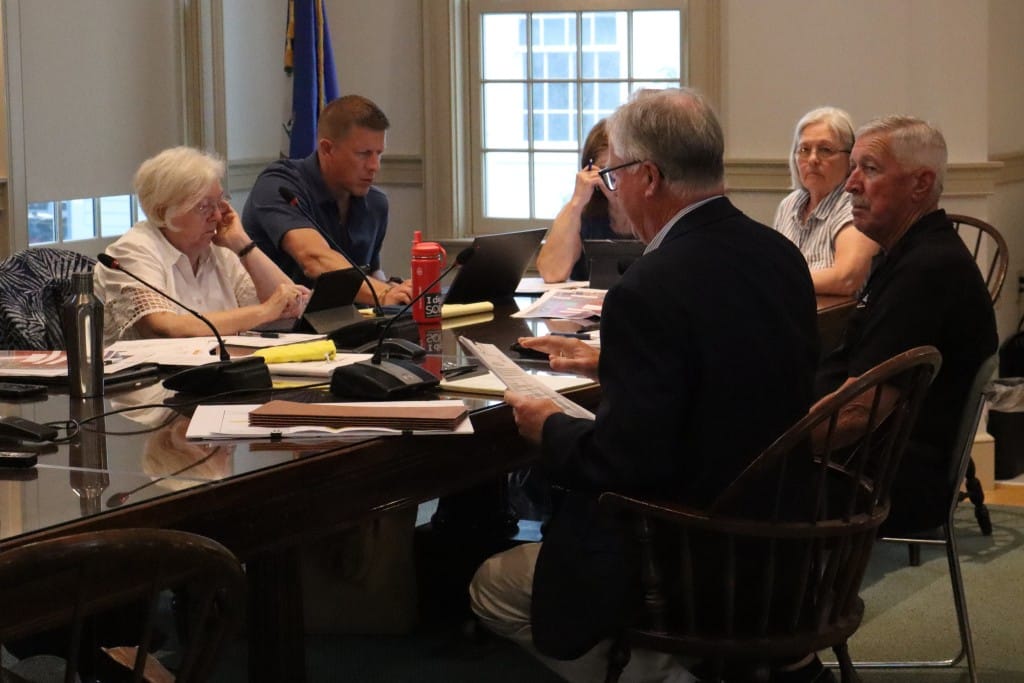
OLD LYME, CT – The Old Lyme Zoning Commission this week approved the application to amend special permits allowing 224 and 250 Shore Road to be used as staging areas for the sewer project now set to begin after Labor Day.
The application was approved Monday in a unanimous vote by participating commissioners. Newly sworn-in member Bonnie Reemsnyder, who was attending her first meeting as a commissioner and had not participated in prior hearings on the application, abstained.
After more than a decade of planning, debate and pressure from the state, the beach associations governing Old Lyme Shores, Old Colony Beach and Miami Beach are moving forward with the sewer project despite the failure of a December referendum that would have authorized additional spending on sewer infrastructure in the Sound View Beach area.
The staging areas sit on property previously approved for self-storage units at the request of Frank Maratta’s MAR Holding LLC for 224 Shore Road and Kids Realty and Pond Road LLC for 250 Shore Road. The commission in May told project officials that special permit approval is needed to allow the two sites to be used for staging for the sewer project instead.
Land use coordinator Eric Knapp noted a building permit was filed July 7 for 250 Shore Road by owner Christopher Calvanese to construct storage units. Knapp raised concerns regarding the conflicting uses of the land at the meeting.
“We cannot start construction of the storage project until the sewer project is over,” he emphasized.
Old Colony Beach Club Association Board of Governors Chairman Doug Whalen confirmed to Knapp that the lease agreement specifies the sewer staging project takes priority over the construction of storage units.
The 250 Shore Road owners in November won a court decision overturning the commission’s rejection of plans to build a self-storage facility on the site.
Representatives of Genovesi Construction and Baltazar Contractors said the project will last a maximum of 16 months, with an anticipated end in September of next year. The staging sites will be active from 7 a.m. to 5 p.m. daily.
One exception to this timeframe is work that needs to be done on Amtrak tracks in the project area.
The contractors said construction there will need to take place while the tracks are not active, which is between 1 and 5 a.m. This timeframe is dictated by Amtrak.
Attorney Brendan Sharkey, a former Speaker of the House in the state legislature, is representing the beaches in an effort to amend the special permits and begin staging.
Sharkey pointed out that the installation of the sewers is internal to the beach communities but also a collective issue that concerns the entire community.
The three beach communities are subject to a 2018 consent order requiring the three private beach associations to move forward with a sewer system intended to reduce nutrient pollution entering Long Island Sound from shoreline septic systems.
Community members who spoke during the public hearing also advocated for the use of the proposed staging areas, pointing out that in a construction project, having the staging and construction areas far apart introduces additional costs as well as time moving in between sites.
The application was approved with several conditions.
The commission emphasized the need to mitigate the impact of the project on residents living on or near the staging and construction sites.
One condition was to include dust control features in the proposed plan.
Other conditions were that contractors may not use lights outside of approved construction hours and must return the land to its original condition once the project is finished.
At the request of Reemsnyder, who was addressing a concern from a neighbor worried about potential property damage, the commission added a condition requiring contractors to reach out to nearby residents at the completion of the project “regarding outstanding negative impacts to property.”
“It’s just really asking for communication,” Reemsnyder said.
Knapp said neighbors with concerns during the project should contact him.
Related Articles

Labriola Calls for Common Sense Approach in 23rd District Run
The Old Saybrook treasurer is running for the 23rd District seat on a platform of affordability, local control and bipartisan cooperation.
Old Lyme Library to Lend Laptops to Eligible Residents
Libraries are partnering with the state to close the digital divide. The goal is to expand access to the tools people need to use important services online.
Old Lyme Zoning Survey Finds Support for Flexibility, Not Major Change
Residents want to preserve Old Lyme’s small-town feel by allowing accessory apartments, limiting data centers and ensuring a say in the future of Halls Road.