

Connecticut Port Authority Visits Old Lyme to Highlight Harbor Improvement Projects
A visit from Port Authority Director Michael O’Connor showcased improvements including navigation upgrades, an accessible public dock project and expansion of the town dock.

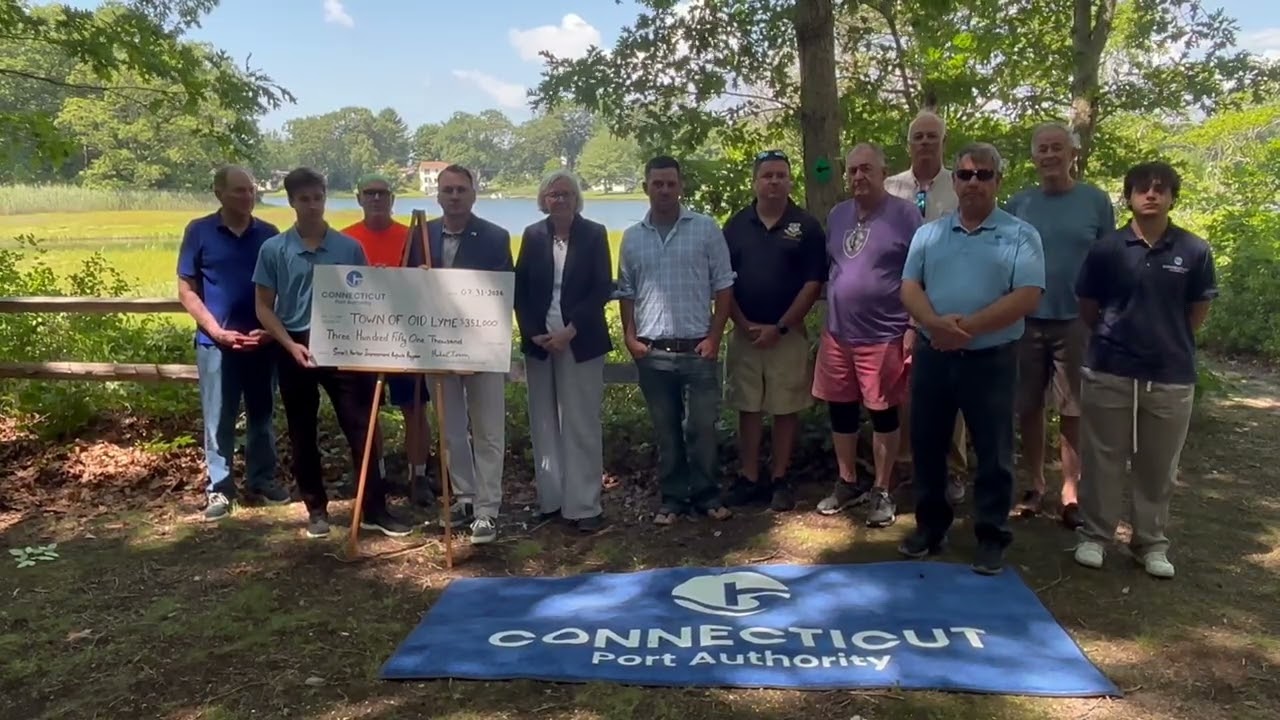
OLD LYME, CT – Connecticut Port Authority Director Michael O’Connor joined local officials Friday to showcase three Small Harbor Improvement Projects Program (SHIPP) grants supporting navigation safety, waterfront accessibility and marine emergency response.
The agency in a news release said the grants include $11,000 for replacement transient moorings, Slow No Wake markers and navigational buoys; $60,000 for the Horseneck Creek Public Access and Dock Project; and $280,000 to modernize and expand the Old Lyme Town Dock on Ferry Road. The awards represent a state investment of $351,000 toward approximately $422,000 in total project costs.
The navigation safety project will replace two transient moorings, install three Slow No Wake markers at entrances to Old Lyme’s inner waterways and replace three navigational buoys serving the Back River and Black Hall River.
Two of the original Slow No Wake markers and one replacement marker were intentionally destroyed over the past month, according to Harbormaster Matthew Lynch. He said the Bozrah-based Gilman Corporation has offered to replace them.
The Horseneck Creek project will help advance plans for a fully accessible public boating, fishing and crabbing facility at 36-1 Buttonball Road. Proposed improvements include a fixed pier, gangway and floating dock designed to provide access for users of all abilities while minimizing impacts on surrounding wetlands.
The largest grant, $280,000, will support design and construction work to modernize and expand the town dock on Ferry Road along the Connecticut River. Town officials said the project will improve access for Lynch, the Old Lyme Fire Department’s marine unit and future police marine operations, while also accommodating transient recreational boaters and strengthening emergency response capabilities.
Related Articles

Labriola Calls for Common Sense Approach in 23rd District Run
The Old Saybrook treasurer is running for the 23rd District seat on a platform of affordability, local control and bipartisan cooperation.

Old Lyme Library to Lend Laptops to Eligible Residents
Libraries are partnering with the state to close the digital divide. The goal is to expand access to the tools people need to use important services online.

Old Lyme Zoning Survey Finds Support for Flexibility, Not Major Change
Residents want to preserve Old Lyme’s small-town feel by allowing accessory apartments, limiting data centers and ensuring a say in the future of Halls Road.