
As the Academy Awards Approach, Janet Roach Looks Back on Her Oscar Nomination
Film critic Kevin Ganey’s continuing Oscars coverage shines a spotlight on a local tie to Hollywood: Old Lyme’s own 1986 Academy Award contender for Best Adapted Screenplay.
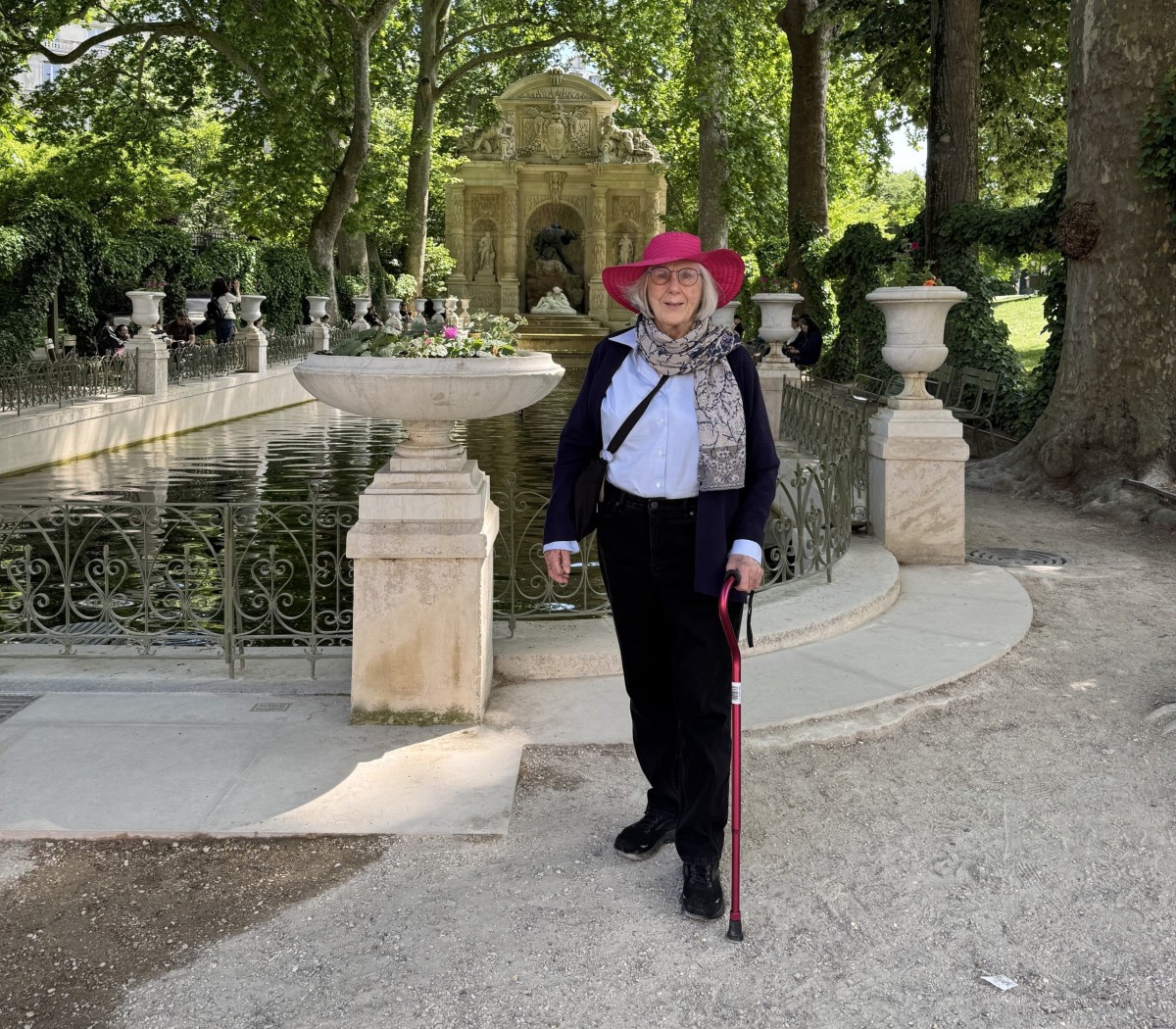
OLD LYME, CT – When Lyme and Old Lyme residents tune into the 98th Academy Awards on Sunday, it might seem like they are glimpsing Mount Olympus as the gods gather. Nearly three thousand miles from the Connecticut River Valley, Hollywood is certainly a foreign world.
But not for lifelong local Janet Roach, who received an Academy Award nomination for writing the script to John Huston’s 1985 comedy Prizzi’s Honor.
So how did a member of Lyme-Old Lyme High School’s Class of 1961 end up at the biggest night of the year for entertainment?
“I never had a plan,” Roach said. “I just walked through doors as they opened.”
However, Roach was at least certain that she wanted to be a writer as early as third grade. In fifth grade, she wrote a poem about the trailblazing immersive journalist Nellie Bly, whose legacy includes besting the fictional Phineas Fogg’s 80-day journey around the world by making the same trek in just 72 days.
“My kinda gal,” she quipped.
Journalism was one of the few industries with opportunities for women as Roach came of age. She attended Barnard College, followed by Columbia University’s graduate school of journalism, where she was taught by broadcast journalism pioneer Fred Friendly. She began her career as a CBS News researcher, traveling across the country collecting local election data ahead of the 1968 presidential election. She then became a researcher for CBS Weekend News, hosted by Roger Mudd on Saturdays and Harry Reasoner on Sundays. Both would serve as mentors for Roach, and she would become a producer by age 25. This was followed by a stint with Walter Cronkite’s CBS Evening News and then 60 Minutes and then producing documentaries for public television.
But Roach’s entry into the movie industry happened when a planned documentary on photojournalist Eve Arnold was shelved due to scheduling and logistical constraints. Despite this, a friendship blossomed between the two of them. And it was Arnold who eventually introduced her to the legendary Hollywood director John Huston, whom she instantly bonded with.
“In some measure, I think it was Irish recognizing Irish,” she said.
The Academy Award-winning director of The Maltese Falcon, The Treasure of the Sierra Madre and The African Queen was now her pen-pal.
This social network also included writer Richard Condon after producing a 60 Minutes segment on writers residing in Ireland for tax incentives. Condon’s credits included the Cold War-thriller novel The Manchurian Candidate, which would become a movie starring Frank Sinatra and Laurence Harvey. Condon, Roach said in jest, “had the great paranoid imagination of the twentieth century.”
Several years later, on a visit to Huston’s compound on Mexico’s Bahia de Banderas, Roach brought him the galley proofs of Condon’s novel Prizzi’s Honor which Condon had sent her for comments.
“John Huston was a prodigious reader and bringing him books was something I could do for him,” she said.
On her next visit, she and Huston discussed Condon’s first draft of a screenplay. After consulting her feminist perspective on the two women characters, Huston said to her: “How’d you like to try your hand at rewriting this?”
“Do you say no to that?” Roach said of the moment.
Roach spent the next six weeks penning a new draft with Huston as her mentor. She credited her background in journalism for helping her understand the need to distinguish the characters. She recalled experience adapting her writing for unique and distinguished voices that included Harry Reasoner, Bill Moyers and Ed Bradley.
“None of the journalism work was wasted. It was all film school.”
Prizzi’s Honor would star Jack Nicholson, Kathleen Turner and John Huston’s daughter, Angelica. It was shot in Los Angeles and New York. Roach was only present during the New York shoots and was on set every day. Roach’s task was to rewrite a scene if the blocking – the physical arrangement of equipment and actors – proved too difficult to film as intended. Every rewrite was done on a yellow legal pad. Chairs were only provided for the director and actors, so she always sat on the ground as she worked. One day, Jack Nicholson offered her his own chair to do the rewrites comfortably.
Roach had nothing but praise for the leading man, and said his generosity extended to catering wrap parties for the cast and crew every Friday.
Prizzi’s Honor was released in theaters on June 14, 1985. Roach attended the premiere with Richard Condon, who gave her a hug and a kiss at the end of the screening and joked with her “Thank God it’s still funny!”
After the premiere, Roach returned to journalism. It would be six months before she would receive an Academy Award nomination, and the thought of Oscar buzz did not cross her mind. She was taken by surprise while working in the editing room of NBC that she and Condon had been nominated for Best Adapted Screenplay.
“It’s weird to say,” she recalled, “but I hadn’t anticipated it and was getting on with my life.”
Roach and Condon would go on to win the Writer’s Guild Award and the BAFTA Award for Best Adapted Screenplay. Asked where she kept the trophies, she guessed they were in her attic.
The 58th Academy Awards took place on March 24, 1986. Roach says her flight to LA was covered, but she stayed with local friends, provided her own dress and was accompanied by her attorney. Alan Alda, Jane Fonda and Robin Williams hosted. She was seated next to Horton Foote, a screenwriter whose credits included To Kill a Mockingbird and Tender Mercies and was also nominated in her same category for The Trip to the Bountiful. At one point she got up to use the restroom and could not find her empty seat when she returned. Her spot was occupied by a seat-filler, a person whose job was to temporarily occupy people’s seats so there were no gaps in the rows for the TV cameras.
As Best Adapted Screenplay was presented, she said she and Horton Foote held hands as they anticipated the dramatic moment. Kurt Luedtke’s script for Out of Africa took home the prize and, ultimately, Best Picture. However, she gushed about watching Anjelica Huston win Best Supporting Actress and seeing her father, John Huston, in tears.
Roach stayed for the whole ceremony and briefly attended the Governor’s Ball before deciding to call it a night.
The next morning, John Huston hosted a brunch, and everybody commiserated on their losses – save for Anjelica.
But in the end, Roach did not feel compelled to be in Hollywood, which she says was “not very open to women at the time.” Her movie career was based on her association with Huston, who passed away a year later in 1987.
Roach emphasized that her Hollywood experience was not the norm. Every established figure she worked with was incredibly kind and generous to her. Their relationships were cordial, not competitive. Calling her experience “an education,” she ultimately learned: “You can make a bad movie out of a good script, but you can’t make a good movie out of a bad script.”
Being nominated for an Oscar brought her membership to the Academy of Motion Picture Arts and Sciences, which would involve nominating future movies and voting for winners. She is allowed to vote for all categories but takes most seriously her obligation to Best Screenplay and Best Picture. Because so much is at stake for the nominees’ careers, she must swear she watched the movies. In the past, nominated movies would be mailed to her as a VHS or DVD. Nowadays it is all digitally streamed.
This year, Roach said she didn’t have any trouble nominating movies. She gushed about every nominee for Best Picture. Her eyes are on Sinners and One Battle After Another, but is hoping for Hamnet to win.
Roach also curates programs of classic movies at the Lyme Public Library. Her current series is “Just for Fun” and is screening classic comedies from across the world. The schedule can be found on the Lyme Public Library’s website.
Author

Related Articles
Old Lyme Town Band, High School Wind Ensemble to Perform Friday
The bands will combine for a free concert featuring fan favorites and guest-conductor Anthony Susi’s own ‘Jubilee March.’

Musical Masterworks Explores ‘The Sacred and the Profane,’ March 14 & 15
The concerts at the First Congregational Church of Old Lyme feature chamber works from Debussy, Bach, Britten and more, with pre‑concert talks.

Banish the Winter Blues with Celtic Tunes at Old Lyme Library, March 11
Join the Confluence Ensemble for fiddle, flute, and jigs at this free Irish concert. Registration is recommended.
Comments (0)
There are no comments on this article.