
RiverCOG Lays Out Regional and Local Options Under State Housing Law
Here’s what a new state housing law means for towns like Lyme and Old Lyme, and how they can choose a path for housing growth within their borders.
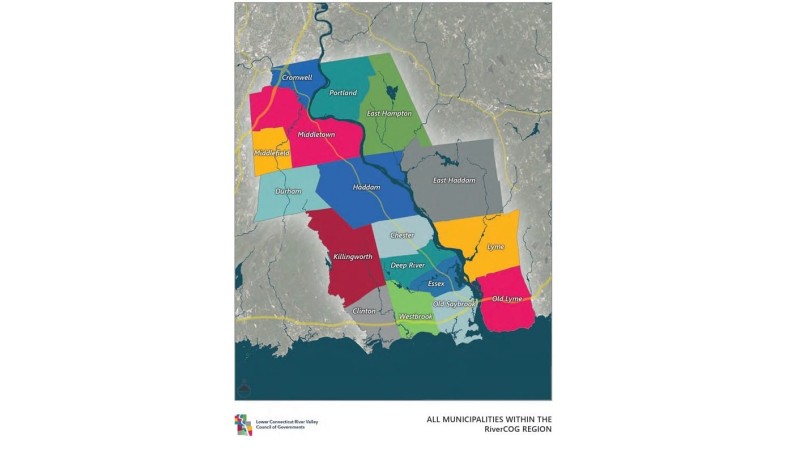
ESSEX, CT – Officials across the Lower Connecticut River Valley Council of Governments (RiverCOG) planning region are gearing up to respond to a sweeping state law designed to increase the availability of housing.
During a joint meeting Tuesday of RiverCOG’s regional housing and economic development committees, Deputy Director Megan Jouflas outlined a multiyear timeline that begins with the state Office of Policy and Management setting housing growth targets – the specific number of housing units each region must plan for – by Dec. 1.
A regional housing needs assessment, due by June 2027, will then spread the regional target across RiverCOG’s 17 cities and towns from Middletown to Old Lyme. The next step is the creation of a regional Housing Growth Plan, due in July 2028, to turn those numerical targets into a realistic, on-the-ground strategy.
HB 8002, which became law on Nov. 26, was created to address the long-standing housing shortage in a state where consultants found the number of low-income families exceeds the number of affordable units by more than 120,000.
Municipalities have the option to sign onto the regional plan or develop their own local plans, but they have to decide no later than 30 days after RiverCOG announces how the region’s housing target will be allocated. Towns that choose a target different from the one recommended by RiverCOG will be required to provide a written explanation. They must also file annual progress reports with the state, which will make them eligible for expected housing growth funding beginning in 2028.
Towns that choose to draft their own plans will be expected to spell out where and how housing can realistically be built. That includes taking stock of developable land, outlining ways to broaden housing options – including for residents with intellectual or developmental disabilities – and evaluating whether infrastructure, such as wastewater systems, can support growth. The state law also requires a clear timeline for putting those strategies into action.
RiverCOG staff members said they will start reaching out to chief elected officials, planners and zoning officials in the coming month. Then they’ll branch out in other forums, such as planning and zoning commissions or joint public meetings, based on what works for each municipality.
Jouflas emphasized RiverCOG’s plan to work closely with the member towns so their unique needs and preferences are reflected in the regional plan.
“Whatever policies and goals and strategies each municipality chooses to use is going to be up to them,” she said.
In Lyme, Selectman and Affordable Housing Commission member Tom St. Louis will serve as the town’s representative to the regional committee, with commission Chair Jim Miller named as the alternate. First Selectwoman Christy Zelek said Wednesday the appointments are expected to be made at Monday’s Board of Selectmen meeting.
In Old Lyme, the town’s Affordable Housing Commission January meeting minutes note the town must designate a representative to begin attending regional meetings in February. The term of the current RiverCOG housing representative, commission Co-Chair Jennifer Miller, expires Jan. 31.
‘Throw a Rock and You’ll Hit Ledge’
St. Louis at Tuesday’s regional meeting was among those seeking clarity on the requirement to provide an inventory of “developable land” in each municipality.
So was Killingworth First Selectman Eric Couture, who wondered what qualifies as developable.
“We have so much ledge that you can throw a rock and you’ll hit ledge,” Couture said.
The state law defines developable land as areas that could feasibly support residential or mixed-use projects “based on commercially reasonable assumptions” as of Jan. 1 of this year. It excludes protected open space, wetlands, certain steeply sloped areas and land used for public purposes.
Several members raised concerns about how factors like limited access, septic suitability and ownership constraints will be treated.
Jouflas emphasized that inventories, created with the help of digital mapping tools, will require “ground-truthing” through field observations to determine if a site is appropriate for development.
Lyme Planning and Zoning Commission alternate member Baylee Drown noted not all preserved properties in town – where half the land mass is protected as open space – include deed restrictions or easements preserving them in perpetuity.
She gave the example of a parcel donated to the Lyme Land Trust with the intent to preserve it, but without a “legal restriction on it of any sort.”
Jouflas said her reading of the state law indicates the land would still fall under the exemption for land committed to a public purpose.
RiverCOG Executive Director Sam Gold concurred.
“I would argue that the land trust, being a nonprofit providing a public good, would fall into that category,” he said. Still, he recommended land trusts place permanent legal restrictions on all holdings – “just as a good practice.”
‘Small Fixes’
Among other provisions, the state law requires towns to allow buildings with two to nine residential units – from duplexes to cottage clusters – in commercial or mixed-use zoning districts as long as public health or safety isn’t compromised. The requirement goes into effect July 1.
The law also eliminates minimum off-street parking requirements for new buildings with fewer than 17 apartments, with limited exceptions in conservation and traffic mitigation districts.
Jouflas said the agency has issued a bid request for a zoning consultant to help towns draft required zoning changes and is working to clarify options related to parking requirements.
Gold, the RiverCOG director, characterized housing growth as “somewhat dependent” on the availability of developable land.
“Every town does have developable land, but some towns are more constrained than others,” he said.
He predicted the upcoming short legislative session, which spans February to May, will not include any large housing bills. But he reiterated the need for “small fixes” and clarifying language to make last year’s sweeping law easier to implement.
“I don’t expect any big changes happening to the bill,” he said.
Author

Related Articles

Young Inventors Put Empathy into Action at Lyme-Old Lyme Middle School
Sixth graders in Lyme-Old Lyme Schools’ Invention Convention program combined creativity and compassion to solve problems at home and across the globe.
Automated Speed Cameras May Be Coming To CT Highways
State Rep. Devin Carney said he’s “not a huge fan” of automated speed cameras. He cited underlying issues, like a shortage of state troopers, that need to be addressed.

Selectmen Consider Abandoning Plan for Pedestrian Bridge, Key Feature of Controversial Halls Road Vision
Plans for a pedestrian bridge over the Lieutenant River, now expanded to include a fishing pier, have selectmen questioning whether the project is worthwhile.