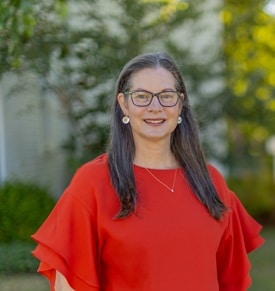
Sheryl Shilosky (D): Old Lyme Candidate for Region 18 Board of Education
Biography:
My name is Sheryl Shyloski, and I am running for our Board of Education. I am currently a School Psychologist working in a neighboring high school, and am also a Board Certified Behavior Analyst. I have been an educator for over 20 years, working in both residential and public school settings. As a School Psychologist, I have had the privilege of working with students from pre-K through high school. My husband, a special education teacher, and I currently have one child in the Region 18 schools. We enjoy spending our free time outside, be it camping, rock climbing, or fishing.
1. Why are you running for the Region 18 Board of Education, and what skills or experiences make you the right candidate for that role?
Combining my perspective as a school psychologist and my personal commitment as a parent allows me a unique perspective that I believe would be invaluable within our Board of Education. Throughout my professional career I have worked closely with students who experience special needs, and I have a deep understanding of the laws and requirements of districts to ensure that all students are able to have their needs met. I hope to share my understanding of special education and student needs to advocate for the success of every child in our community. Having worked across each grade level, I have a deep knowledge of the developmental needs of children in the school setting and how their growth can be supported through school connections, activities, and curriculums.
My professional skills also include experience in ensuring that all students’ social and emotional needs are supported in the school setting. Within our society we have seen a rise in student mental health needs, and in the schools we have seen how this impacts our students on a daily basis. I plan to bring my experience in mental health to serve students across the district, so that when they are in school all can experience a safe and supportive environment.
As a member of the Connecticut Education Association, I have also been a union representative within my district. I regularly witness firsthand both the dedication of teachers and the impact of their contributions. Teachers play the most vital role in our children’s education, and deserve support to engage their best efforts at a time when this profession has been often attacked. I am excited to ensure that the teachers voice remains active at the table, and that planning for students should always take into consideration the people who have to implement the various curriculums and district initiatives.
2. In order of importance, what do you see as the top three challenges facing Region 18 over the next four years?
The first challenge is the growing impact of student mental health needs. Increasing numbers of students are struggling with anxiety, depression, and related concerns across all grade levels. This has been compounded by the influence of social media and technology, which erode self-esteem and limit opportunities for developing strong interpersonal skills. These struggles affect not only student learning but also the overall safety and climate of our schools. Region 18 must continue to provide school-based supports, be it staffing or curriculum, and ensure that all staff have the training to identify and respond to early signs of mental health struggles. Beyond the classroom, schools must create partnerships with families and continue to coordinate with community resources to address ways in which all students can increase their resilience and address their mental health needs.
The second challenge is the increasing prevalence of students requiring individualized supports. More students are being identified across Connecticut as needing services through Individualized Education Plans (IEPs) or Section 504 Plans. Region 18 must be creative in finding ways to meet these needs while also ensuring that Tier 1 supports, those available to all students, are strong enough to address concerns before they rise to the level of disability. This requires a focus on both individualized planning and universal strategies that help every student succeed in the classroom.
The third challenge is retaining and attracting teachers and support professionals. Schools nationwide are experiencing significant staffing shortages, and Region 18 is not immune. When we lack robust staffing, teacher-student ratios increase, and the quality of instruction and support suffers. Recruiting strong new teachers and retaining seasoned professionals is essential, especially as burnout continues to drive many educators out of the field. We need to ensure that teachers feel valued, respected, and supported so that they can continue to deliver the high-quality instruction our students deserve.
By addressing these challenges Region 18 will continue to maintain our academic excellence and standards. Meeting these needs head-on will require collaboration, creativity, and a shared commitment to both students and the educators who serve them.
3. How can the school board help keep costs under control while maintaining the district’s reputation for academic excellence and extracurricular opportunities?
Special education has become one of the fastest-growing areas of cost for districts, particularly due to the increase in outplacement services. Special education services are mandated by state and federal laws, yet the State of Connecticut significantly underfunds districts in this area. As a result, local districts are left covering high tuition and transportation costs, which can quickly balloon. At the same time, a recent state report revealed that many outplacement schools do not consistently provide the level of highly skilled instruction that families and districts expect.
In my experience as a school psychologist, I have seen the benefits of building strong, high-quality programs within districts. When we train or hire staff with specialized skills, and when we build trusting partnerships with families, students who might otherwise be placed out of district are able to return and thrive in their home schools. Importantly, building this capacity not only reduces current costs but also helps prevent future outplacements, ensuring that students can be successfully educated in their community while still meeting all legal obligations.
The benefits extend beyond finances. Integrating students with significant needs into their home schools strengthens the entire community. Students who may have been seen as “different” gain acceptance and meaningful peer relationships, while their classmates develop empathy, leadership, and a deeper understanding of the challenges others face. These experiences enrich the academic and social environment for all learners, aligning with research that shows inclusive practices lead to stronger outcomes.
I support prioritizing investment in in-district capacity through professional development, targeted programming, and collaborative relationships with families. In this way, Region 18 can move toward reducing reliance on costly outplacements, and continue to provide the academic excellence and extracurricular opportunities that define the district. This approach not only addresses immediate budget pressures but also creates a sustainable path forward where every student has the opportunity to succeed.
4. Amid the ongoing national debate over parents’ rights, how should the Board of Education handle conflicts between parents and the district over curriculum, instruction, learning materials or student support?
I believe the strength of any school district rests on its ability to listen, collaborate, and ground its decisions in what is best for students. I seek out evidence-based solutions and approach challenges with the belief that no problem is unsolvable when people are committed to working together. When I don’t have the answer, I am quick to admit it and see it as an opportunity to learn. This spirit of collaboration and curiosity is essential when navigating conflicts around curriculum, instruction, learning materials, or student supports.
The first step is always open dialogue between families and schools. Decisions should never be made in isolation. Teachers, administrators, parents, and community members all bring valuable perspectives, and while consensus may not always be possible, the decision-making process should be transparent and grounded in educational research on what best supports student learning and growth. Whether the matter involves a new curriculum initiative or specially designed instruction for students with unique needs, choices must be guided by practices proven to foster success, not by external political agendas.
Region 18’s administrators also play a vital role, as they are often the first to hear parent concerns and must support teachers in navigating sensitive issues. It should be a core value of our district that every parent’s concern is listened to respectfully and that every student’s needs are taken seriously. Trust is built when families know their voices matter, even if the final decision differs from their initial position.
With nearly 20 years working in public schools and being married to a teacher, my life is deeply connected to the relationship between public education and our broader society. As a school psychologist, I have seen firsthand the dedication of teachers and the impact of strong school-community partnerships. Whether through my service as a Student Services Representative in my local education association or by securing grants to connect the public with meaningful school-based projects, I have consistently sought to strengthen these relationships. These experiences have prepared me to help Region 18 navigate challenging conversations with fairness, evidence, and a steadfast focus on what serves students best.